




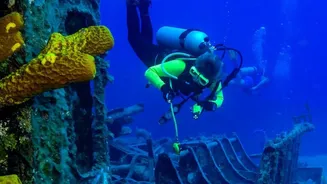
A Ghost Ship on the Seabed
In the waters near Kekova Island in Antalya, a region famous for its partially submerged Lycian and Roman ruins, archaeologists have identified a scattered collection of artifacts resting nearly 100 feet below the surface. These remnants belong to a trade
vessel that sank between 4,400 and 4,700 years ago, during the Early Bronze Age. This timeline places the ship's final voyage around the same period the great pyramids were being constructed in Egypt. What makes the find so unusual is the complete absence of the ship's wooden hull. Over millennia, marine organisms and the warm Mediterranean water consumed every trace of the timber, leaving only the durable cargo behind as evidence of the disaster. Despite the lack of a physical ship, researchers have pieced together its story from the clues it left behind. Based on the spread of its cargo, they estimate it was a modest vessel, approximately 33 feet long, designed for carrying goods across the sea.
The Cargo That Tells a Story
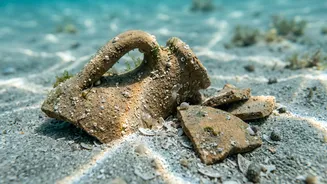
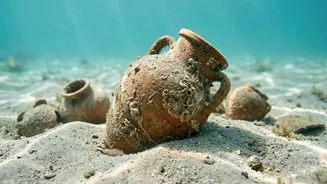
The ship's ghostly impression is outlined by what it carried: more than 30 ceramic storage jars, known as amphorae, and three large stone anchors. Initially, when the site was first documented in 2022, the shape of the amphorae led researchers to believe they were only a few centuries old. However, further analysis revealed a design distinctive to the Early Bronze Age, with two handles, a flat base, and a ridge around the middle. This style matched pottery found at archaeological sites in Egypt and the Middle East from the same period, confirming the wreck's incredible age. The discovery of these jars makes this find the oldest known shipwreck in the world, surpassing a 4,200-year-old wreck previously found off the coast of Greece. Experts believe the amphorae, some of which still contain a glossy residue, were likely filled with goods such as olive oil or wine for trade.
Rewriting Ancient Maritime History
This 4,700-year-old collection of jars is more than just old pottery; it is a time capsule from the dawn of complex maritime trade. The discovery provides concrete evidence of organised, long-distance sea trade happening much earlier than previously confirmed. According to Professor Hakan Öniz of Akdeniz University, who led the expedition, the find offers profound insights into the lives of ancient seafarers and the trading connections that shaped the Bronze Age world. The ship was likely travelling from the eastern Mediterranean, perhaps with cargo originating from the Jordan Valley, on its way to major trade hubs in the Aegean. Its sinking in the notoriously treacherous waters off the Turkish coast provides a snapshot of an economic system that was already surprisingly sophisticated, moving goods like metals, textiles, and pottery across vast distances.
The Science of a Sunken Past
Dating a shipwreck without a ship presents a unique challenge. Normally, archaeologists would use radiocarbon dating on the wooden timbers of the hull. In this case, they had to become historical detectives, relying entirely on the cargo. The specific shape and manufacturing style of the amphorae served as a historical fingerprint, allowing experts to pinpoint their origin to the Early Bronze Age with confidence. Australian archaeologist Karin Sowada, an expert on ancient pottery, confirmed the find as the oldest known remains of a seagoing ship. Now, the focus shifts to what is inside the jars. Scientists are carefully analysing the preserved residue within some of the intact amphorae. This microscopic analysis could reveal precisely what goods were being traded, offering a rare taste of the Bronze Age economy and the daily lives of the people connected to this ancient vessel.