
What is Vehicle-to-Vehicle (V2V) Communication?
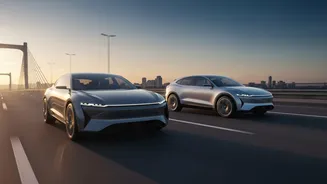
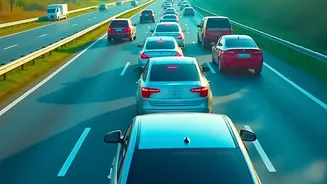
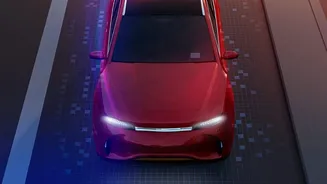
Think of V2V as a social network for cars, but instead of sharing photos, they're sharing life-saving data. Using a dedicated short-range radio signal, V2V-equipped vehicles continuously broadcast small packets of information up to ten times per second.
This data includes their speed, direction, braking status, and location. Nearby vehicles receive these messages, creating a 360-degree awareness of the surrounding traffic. Unlike cameras or radar, this technology can 'see' through other vehicles or around corners, giving drivers a crucial head-start on potential dangers. This system is the first step in a broader ecosystem called Vehicle-to-Everything (V2X), which will eventually allow cars to communicate with traffic signals, pedestrians, and road infrastructure.
How It Warns You About Hazards
The true power of V2V lies in its ability to warn you about hazards you can't see. For example, if a car several vehicles ahead slams on its brakes, your car would receive an 'Emergency Electronic Brake Light' warning instantly, long before you see the brake lights yourself. This allows you to slow down and potentially prevent a chain-reaction collision. The system can also issue forward collision warnings, alert you if someone is driving the wrong way, or notify you of an approaching emergency vehicle. At intersections, it can warn if it's unsafe to proceed due to cross-traffic, a common cause of accidents. These alerts are delivered through visual displays, sounds, or even vibrations, giving the driver vital seconds to react.
India's Push for Safer Roads
India's government is taking significant steps to make this technology a reality. The Ministry of Road Transport and Highways (MoRTH) has issued a draft notification proposing that V2V communication systems become mandatory for all new cars, trucks, and two-wheelers (Categories L, M, and N) manufactured from October 1, 2028. This follows a phased approach, with a standard (AIS-230) coming into effect from October 2027 for vehicles voluntarily fitted with the system. To facilitate this, the Department of Telecommunications has already de-licensed the 5.9 GHz spectrum band required for these devices to communicate, removing a major regulatory hurdle. The push is a direct response to India's high number of road fatalities and is seen as a major leap forward in proactive accident prevention.
The Hurdles on the Highway
While the vision is compelling, the road to a fully connected vehicle network in India has its challenges. A primary issue is the transition period. The system's effectiveness depends on how many vehicles are equipped with V2V technology. For years, new 'talking' cars will share the road with millions of older, non-connected vehicles, limiting the safety benefits. There are also infrastructural challenges, including the need for robust 5G network coverage across the country, not just in cities, for the broader V2X system to function optimally. Furthermore, cybersecurity is a major concern. Ensuring that these communication systems are secure from hacking or spoofing is critical to prevent malicious false alerts and protect user data privacy. Finally, the cost of these systems and the potential for retrofitting older vehicles remain significant economic considerations.
When Will Your Car Start Talking?
According to the government's proposed timeline, you can expect to see V2V technology become a standard feature in all new vehicles sold in India from late 2028 onwards. The phased rollout starting in 2027 is designed to give manufacturers time to adapt their production lines and supply chains. While widespread adoption will take several years, the initial implementation will complement existing safety features like Advanced Driver Assistance Systems (ADAS). Industry experts believe that while the West may already have some V2X features, India is on a path to adapt the technology within the next few years, driven by government mandates and growing consumer demand for safety. The focus is on creating a system tailored for Indian road conditions, which includes a diverse mix of vehicles and unpredictable traffic patterns.