


The Image That Sparked Curiosity
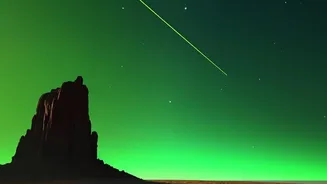
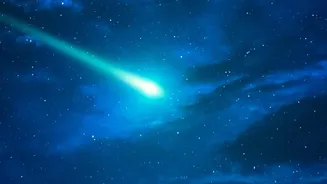
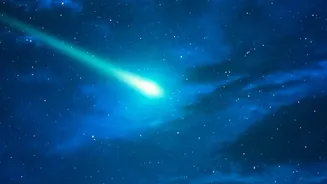
The picture in question, released by NASA as its Astronomy Picture of the Day, shows a brilliant meteor that was captured during a long-exposure shot of the Lacerta Nebula. Taken from the dark skies of Nevada, the image traces the fiery path of a small,
pebble-sized meteoroid as it vaporized in Earth's atmosphere. While such images are common, this one stood out. Along its bright trail, the meteor exhibits a dramatic and distinct shift in its colour palette, a phenomenon that doesn't quite line up with our standard understanding, prompting a closer look from the scientific community.
A Rainbow in the Night Sky
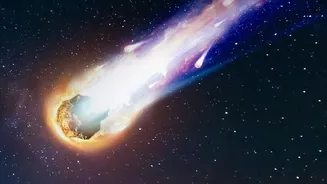
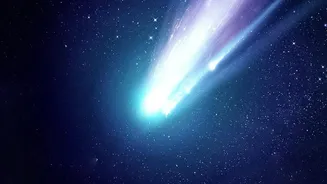
The colours of a meteor, or 'shooting star', are not random; they are a direct result of chemistry and physics. As a meteoroid enters our atmosphere at incredible speeds—often over 50,000 kilometres per hour—the intense pressure and friction heat it to thousands of degrees. This extreme heat causes two things to happen. First, it excites the atoms of the meteoroid itself, causing them to glow. Different elements burn with different colours, like a cosmic flame test. Sodium, for instance, produces a bright orange or yellow light, while iron glows yellow. A greenish tint often points to nickel or magnesium, and a rare violet hue suggests the presence of calcium.
Decoding the Colours
The second source of colour comes from the air around the meteor. The superheated atmospheric gases, primarily nitrogen and oxygen, also become ionized and glow, often producing a reddish light. The final colour we see depends on a complex interplay between the meteor's composition, its speed, and its altitude. Faster meteors tend to show off the colours of their own elements, while slower ones might allow the red glow of the atmosphere to dominate. Scientists use spectroscopy to break down this light, allowing them to decipher the chemical makeup of objects from across the solar system without ever touching them.
The Anomaly in the Picture
What makes NASA’s new photograph so intriguing is the sequence and intensity of its colour changes. The meteor appears to shift from a brilliant blue-green, typically associated with magnesium, to a vibrant orange, indicative of sodium, in a remarkably short span. While meteors can have mixed compositions, such a clean and rapid transition is unusual. It raises questions about how the meteoroid broke apart. Did a magnesium-rich outer layer vaporize completely to suddenly reveal a sodium-rich core? Or is there another, less understood interaction between the meteor's plasma and the upper atmosphere at play? This is the sharpened question that has physicists and astronomers buzzing.
More Than Just a Pretty Picture
This single image serves as a powerful reminder that there is still much to learn about the constant stream of material that enters our atmosphere. Understanding a meteor's composition tells us about its parent body, whether it's an asteroid or a comet like Swift-Tuttle, which is responsible for the upcoming Perseid meteor shower. These objects are remnants from the formation of our solar system, offering clues about its primordial ingredients. By refining their models of how meteors produce light, scientists can more accurately interpret the data from every shooting star, turning fleeting moments of beauty into valuable scientific insights. This new photo isn't just a puzzle; it's an opportunity to deepen our knowledge of the cosmos.