





A Celestial No-Show
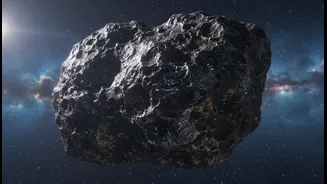
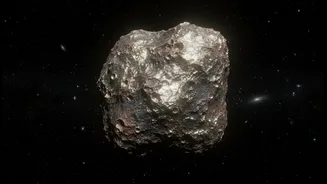
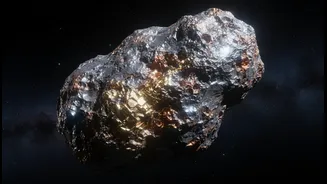
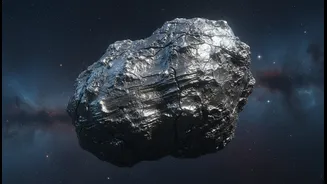
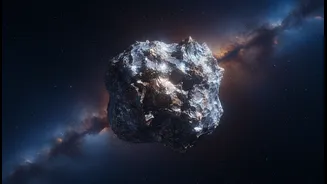
The story began in August 2025. Astronomers at NASA's Jet Propulsion Laboratory were preparing to observe a near-Earth object called 1998 SH2 during its close, but perfectly safe, pass of our planet. This 380-metre rock, discovered in 1998, was classified
as a 'Potentially Hazardous Asteroid' simply because its orbit occasionally brings it near Earth. Using the Deep Space Network planetary radar, they pointed their instruments to where decades of data told them the asteroid should be. But it wasn't there. The precisely calculated rendezvous was missed, and for a moment, the asteroid was lost. Soon after, an observatory in Brazil located it, confirming that 1998 SH2 had drifted significantly from its predicted path. This was a huge clue: some force other than gravity was giving the rock a tiny, unexpected push.
The Prime Suspect: A Hidden Tail
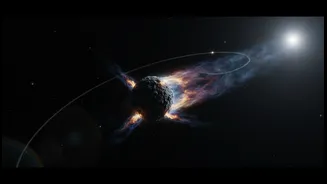
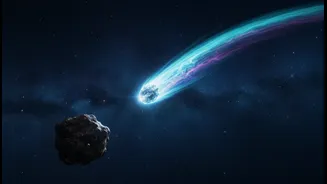
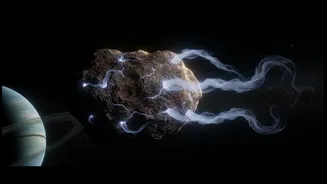
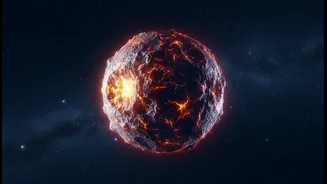
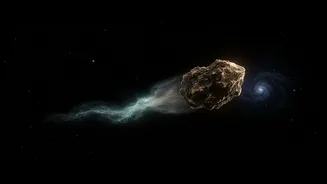
For scientists, an object moving in a way that gravity alone cannot explain points to one culprit: cometary activity. The theory was that 1998 SH2 wasn't just a lifeless rock. Instead, it was likely venting gas into space, creating a minuscule amount of thrust that, over time, altered its trajectory. This process, known as outgassing, happens when the Sun's heat turns ice on the object’s surface directly into gas. This is what gives traditional comets their signature glowing coma and spectacular tails. The problem was that in all the years of observing 1998 SH2, no such features had ever been seen. If it was a comet, it was a comet in disguise. The challenge was laid down: prove the an object that looked like an asteroid was actually behaving like a comet.
The Smoking Gun
Following the orbital mystery, researchers scrambled to get time on some of the world's most powerful telescopes. In September 2025, teams at the Canada-France-Hawai'i Telescope on Maunakea and the European Southern Observatory's Very Large Telescope in Chile turned their powerful optics toward the enigmatic object. The data they collected, analysed over the following months and published in mid-2026, provided the stunning confirmation. The images revealed a faint, narrow tail of dust trailing behind 1998 SH2. It was so subtle that it had evaded detection for decades, but it was undeniably there. The asteroid was officially unmasked. The Minor Planet Center has since assigned it a dual designation, P/1998 SH2, recognising its new status as a comet.
Blurring the Cosmic Lines
This discovery places 1998 SH2 into a fascinating and growing category of celestial bodies known as 'active asteroids' or 'main-belt comets'. Traditionally, science has drawn a clear line: asteroids are rocky, inert bodies mostly found in the asteroid belt between Mars and Jupiter, while comets are icy 'dirty snowballs' from the outer solar system that become active near the Sun. But objects like 1998 SH2 exist in a grey area, challenging these neat definitions. They have the orbit of an asteroid but exhibit the behaviour of a comet. This find is particularly notable because it's the first time astronomers have successfully predicted an object was a comet based on its orbital deviations before visually confirming its tail.
Why These 'Hidden' Comets Matter
Identifying these 'dark comets' is more than just an academic curiosity; it has profound implications for planetary defense. The orbits of inert asteroids are highly predictable, governed solely by gravity. But a comet's path can be changed by the unpredictable fizz of its outgassing jets. A hidden comet, previously thought to be a predictable asteroid, introduces a new level of uncertainty when calculating potential impact risks for Earth. Understanding that a fraction of the near-Earth object population may be these camouflaged comets helps scientists refine their models. It also provides clues about the history of our solar system, particularly how water and other volatile compounds might have been delivered to the early Earth by such objects billions of years ago.