



The Sterile Bubble of Security
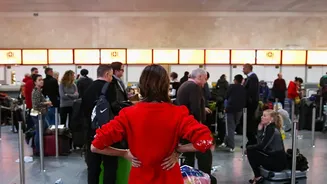
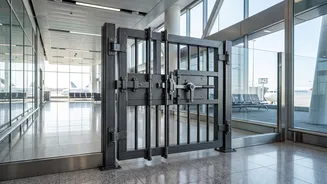
The most significant reason you cannot simply walk off and back onto a plane is security. Once you pass through the airport's security screening, you enter what is known as a 'sterile' area. The aircraft, once connected to the gate and boarded, becomes
an extension of this secure zone. When the cabin doors are closed, the plane is considered a sealed, secure environment. Allowing a passenger to leave and re-enter would breach this integrity. Officials would have no way of knowing for certain if that person picked something up or was given an item in the jet bridge or terminal. This breach would require, at a minimum, that the passenger be re-screened. In a more extreme scenario, it could trigger a full security sweep of the aircraft, involving de-boarding all passengers and causing a significant delay.
The Crucial Headcount
Before any flight can depart, the flight crew must conduct a precise passenger count and reconcile it with the flight manifest. This isn't just about making sure everyone is on board; it's a critical safety and regulatory requirement. This manifest is used by air traffic control and is essential in the event of an emergency. If a passenger disembarks, the headcount becomes inaccurate. The crew would have to conduct a new count, and gate agents would need to update the manifest. If that passenger’s checked baggage is already in the hold, security protocols often require that the bag be located and removed before the flight can depart without its owner. This process of finding one specific bag in a packed cargo hold is time-consuming and guarantees a delay.
The Domino Effect of Delays
Modern aviation operates on an incredibly tight schedule. An aircraft might be scheduled for multiple flights in a single day, and every minute on the ground counts. A seemingly small act, like letting one person off the plane, can set off a chain reaction of delays. The process involves more than just opening the door. The jet bridge may need to be repositioned, ground staff alerted, and paperwork adjusted. This delay could cause the flight to lose its carefully allocated takeoff slot from air traffic control. Missing that slot means the pilots have to get back in a queue, which could add anywhere from a few minutes to over an hour to the departure time. These delays not only frustrate everyone on board but also have significant financial costs for the airline and can disrupt connections for dozens of other passengers.
Preparing for Pushback
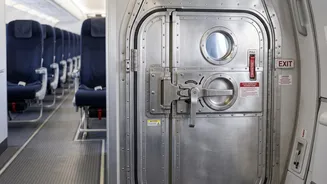
Once the cabin doors are closed, the flight crew begins the final preparations for departure. This is a complex sequence of events that includes arming the emergency slides on the doors, completing final checklist procedures, and communicating with ground crew to get clearance for pushback from the gate. Re-opening a door after it has been 'armed' is a procedural headache that interrupts this critical preflight workflow. The door would have to be disarmed before it could be opened safely, and the entire sequence would need to be restarted. While it seems simple to the passenger, each step is part of a standardised safety protocol designed to ensure the flight is ready for a safe departure, and interrupting it is not something crews take lightly.