




A Legacy of Rapid-Fire Learning
For decades, the philosophy in spaceflight, particularly at government agencies like NASA, was that failure is not an option. Missions were designed to be as close to perfect as possible before they ever left the launchpad, a process that is slow and
incredibly expensive. Then came SpaceX, which adopted a radically different approach inspired by the tech industry: build, fly, fail, fix, repeat. This "hardware-rich" development means intentionally pushing prototypes to their limits to see where they break. While a rocket exploding on the launchpad or disintegrating mid-air looks like a catastrophic setback, for SpaceX, it's an efficient way to gather real-world data that computer simulations can't predict. This philosophy was perfected with the Falcon 9, which saw numerous boosters crash into the ocean or on drone ships before the company perfected the art of propulsive landing.
The Anatomy of a 'Successful' Failure
A Falcon 9 crash is not just a fireball; it's a data-generating event. Every SpaceX vehicle is packed with sensors that stream telemetry—data on temperature, pressure, velocity, and stress—until the very last moment. When a booster failed to land in 2018, for example, a problem with the hydraulic system for its steering grid fins was pinpointed. The rocket, even in a state of failure, autonomously tried to correct its spin and land softly, providing invaluable information on the system's robustness. Similarly, a 2016 launchpad explosion was traced to a complex breach in a helium pressure vessel within the liquid oxygen tank. Investigating these failures forces engineers to understand the complex interplay between components under extreme stress, leading to more resilient designs. Every failure provides a lesson that is immediately applied to the next iteration, rapidly accelerating the path to reliability.
The Unique Challenge of the Moon
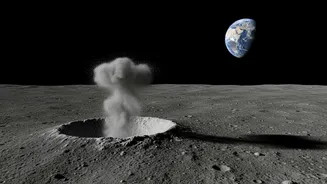
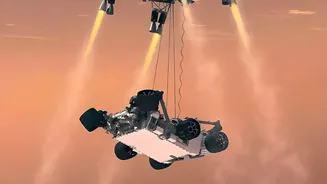
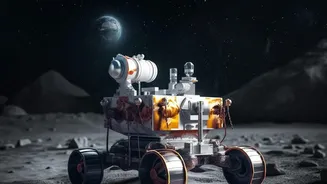
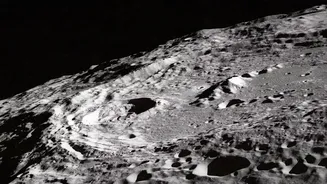
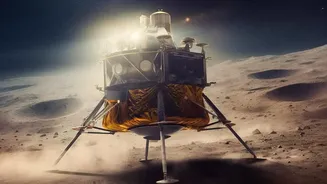
Landing on the Moon is a profoundly different and more difficult challenge than landing a booster on Earth. Earth's atmosphere, while a hurdle for launch, is a huge asset for landing, allowing for braking with parachutes and aerodynamic control surfaces. The Moon has virtually no atmosphere, meaning a lander is entirely reliant on its engines for deceleration from orbital speeds. Furthermore, the Moon's gravity, though only one-sixth of Earth's, is a constant pull. A lander's engine must provide just enough thrust to slow the descent without accidentally causing the vehicle to start ascending again—a delicate balance. The lunar surface is also an uncooperative landing strip, covered in craters and boulders that can be difficult to see until the final moments of descent, as the Apollo 11 crew famously discovered.
From Ocean Barges to Lunar Plains
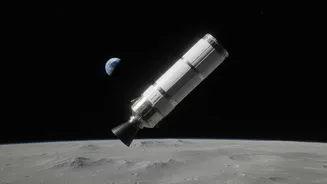
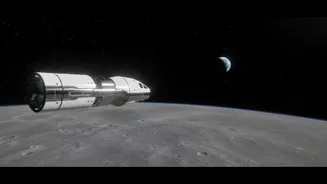
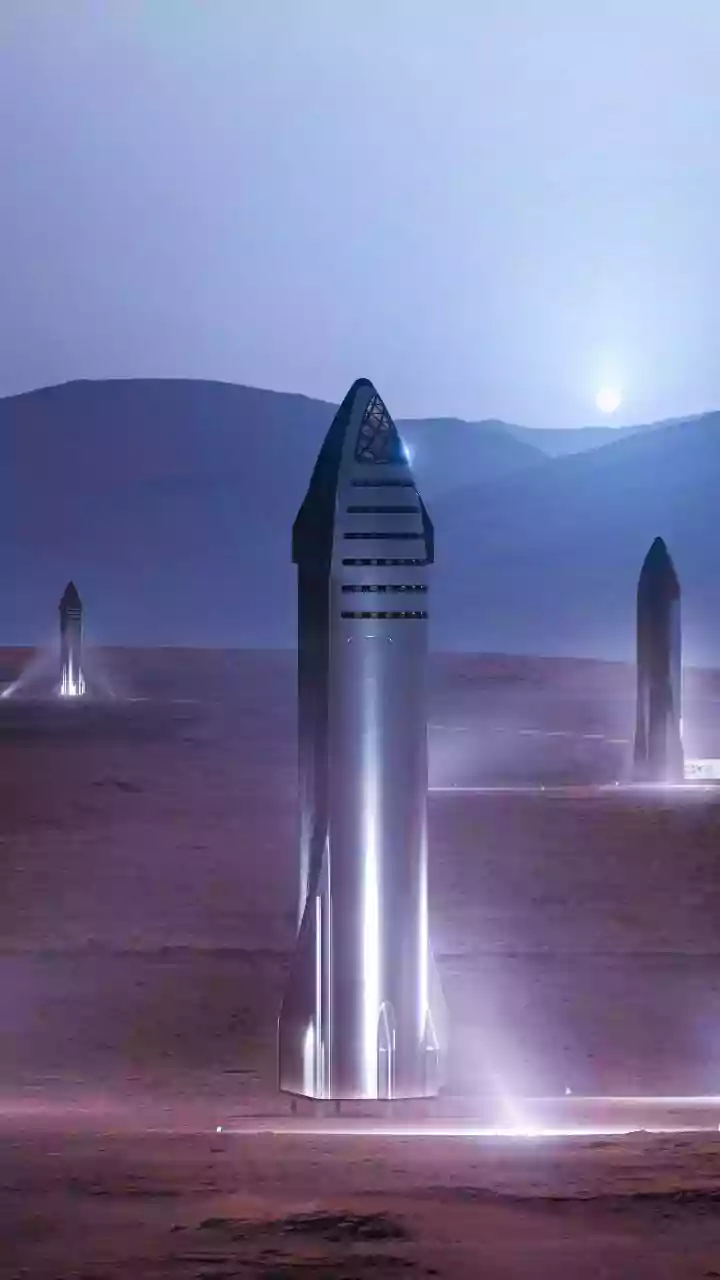
This is where the data from Falcon 9's dramatic landings becomes so valuable. SpaceX has amassed an unprecedented library of information about how to perform propulsive landings. They have tested engine throttling, guidance algorithms, and control systems under a wide variety of real-world conditions. This experience is directly applicable to the problems of a lunar landing. The challenge of adjusting a single engine's thrust to gently touch down on a moving drone ship is a smaller-scale version of the problem a lunar lander faces. NASA has selected SpaceX to develop a version of its Starship vehicle as a human landing system for the Artemis program. The confidence to award such a critical contract is built, in part, on the demonstrated success born from SpaceX's many past failures and the robust landing systems they produced.