




The Popular Claims: A Garden Panacea?
The internet is filled with anecdotal evidence and videos suggesting that ginger water is a miracle solution for plants. The claims are broad and appealing to any home gardener. Proponents suggest that a diluted 'tea' made from fresh ginger can act as
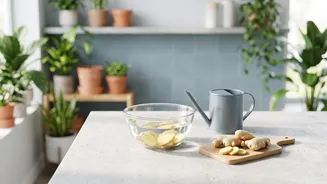
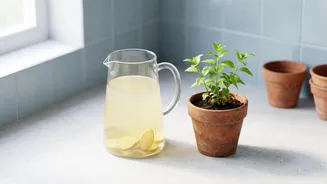
a powerful rooting hormone, encouraging cuttings to sprout new roots with impressive speed. It is also touted as a natural fertilizer that strengthens plants, improves nutrient absorption, and leads to greener leaves. Furthermore, many believe its natural antimicrobial and antifungal properties can protect plants from diseases like root rot. The instructions are usually simple: grate or blend fresh ginger, steep it in water, strain the liquid, and apply it to the soil or as a foliar spray.
What's in Ginger? A Look at the Science
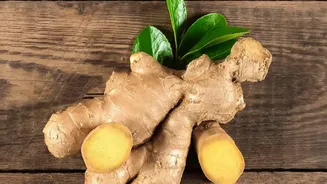
To understand if these claims hold water, we first need to look at what ginger is made of. Ginger rhizomes (the part we eat) are rich in bioactive compounds, most notably gingerols and shogaols. These are responsible for its pungent flavour and are known to have potent anti-inflammatory and antioxidant effects in humans. Ginger also contains essential minerals like potassium and magnesium, which are indeed crucial for plant health. Several scientific studies have also confirmed that ginger extracts and essential oils possess significant antifungal and antimicrobial properties against a range of plant pathogens. The core question, however, is whether these properties translate into tangible benefits when applied as a simple, diluted homemade water.
Myth vs. Reality: The Rooting Hormone Claim
The idea that ginger water is a 'natural rooting hormone' is one of the most widespread claims. However, there is little to no scientific evidence to support it. Proper rooting hormones used in horticulture are typically formulations of auxins, a class of plant hormones that specifically signal root formation. While some plants root easily in just water, a true test of a rooting agent requires using a plant species that is difficult to root and comparing it against a control group (cuttings with no treatment). To date, no rigorous scientific studies have demonstrated that the compounds in a simple ginger water solution act as effective rooting auxins for cuttings. Ginger itself sprouts easily, which might be the source of this myth.
Myth vs. Reality: The Antifungal and Fertilizer Claims
The antifungal claim has more scientific grounding, but context is critical. Studies showing ginger's effectiveness use concentrated ginger essential oils or extracts. For instance, one study found that a concentration of 1250 parts per million (ppm) of ginger essential oil was needed to achieve 100% inhibition of a specific fungus. It is highly unlikely that a homemade ginger tea, made by briefly steeping a small amount of ginger in water, would reach a high enough concentration of these active compounds to have a significant protective effect in the soil. Similarly, while ginger contains potassium, the amount present in a diluted ginger water solution is negligible compared to what a plant needs for robust growth. Plants are better served by a balanced fertilizer that provides the necessary range of macro and micronutrients.
Potential Downsides and Expert Advice
While unlikely to cause major harm in small amounts, homemade remedies are not without risks. Since they lack precise instructions for mixing and application, their effects can be unpredictable. The sugars naturally present in ginger could potentially encourage the growth of mould or attract unwanted pests when applied to the soil. Furthermore, many gardening experts caution against relying on such unproven DIY solutions. They can waste time and effort that could be spent on proven horticultural practices. The 'natural equals safe' assumption is a common misconception; even natural substances can be harmful if used improperly.