
More Than Just Melting
Making a candle is a science, and temperature is the most critical variable. It’s not just about turning solid wax into a liquid; it’s about controlling a series of chemical processes that determine your candle's final quality. From scent strength to a flawless
finish, every stage is dictated by heat. Overheating or underheating the wax at key moments can ruin your fragrance oils, create unsightly flaws, and waste both time and materials. Think of a thermometer not as an accessory, but as the most essential tool in your kit. Mastering temperature control is mastering the art of candle making itself.
The Scent Throw Sweet Spot
The most common frustration in candle making is a weak scent throw—when a candle smells great unlit but offers little aroma when burning. This is almost always a temperature issue. Fragrance oils need to be added when the wax is hot enough to create a strong molecular bond. For most soy and paraffin waxes, the ideal range is between 180-185°F (about 82-85°C). If you add the oil when the wax is too hot, the delicate top notes of the fragrance can evaporate or 'burn off' before they ever have a chance to be locked into the wax. You're essentially cooking away the scent. A few degrees can make all the difference between a fragrance that fills a room and one that barely whispers.
When Wax Is Too Cool
On the other end of the spectrum, adding fragrance oil to wax that has cooled too much is just as problematic. If the wax isn't hot enough (generally below 180°F), the oil won't bind and integrate properly. Instead of creating a stable, homogenous mixture, the fragrance can separate from the wax. This leads to a weak and inconsistent hot throw because the scent isn't evenly distributed. In some cases, it can even cause the fragrance oil to seep out of the finished candle, creating an oily surface known as 'sweating'. This not only ruins the candle's appearance but also means your expensive fragrance oil is going to waste.
The Perfect Pour for a Flawless Finish
Once your fragrance is perfectly mixed, you can't pour it into the container just yet. The pouring temperature is all about aesthetics and structure. Pouring wax when it's too hot is a primary cause of sinkholes, which are craters that form around the wick as the wax rapidly cools and contracts. It can also cause the wax to pull away from the glass, creating unappealing 'wet spots'. Conversely, pouring too cool can result in a lumpy, uneven top surface and increase the likelihood of 'frosting', a natural crystallization common in soy wax. For a smooth, professional-looking finish, you must let the scented wax cool down to the correct pouring temperature—often between 125-145°F (52-63°C) for soy wax—before pouring. Pre-warming your jars slightly also helps the wax cool evenly, preventing defects.
Your Temperature Roadmap
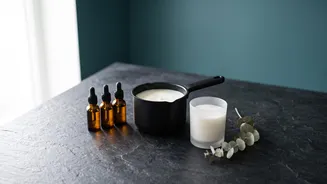
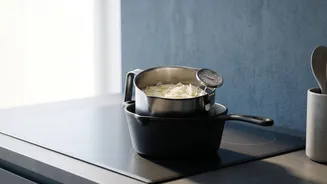
To avoid guesswork, follow this simple temperature roadmap. First, gently melt your wax in a double boiler until it reaches 180-185°F. Use a thermometer to monitor it constantly; never let it get scorching hot. At this temperature, add your measured fragrance oil and stir gently but thoroughly for two full minutes to ensure a perfect bond. Then, remove the wax from the heat and let it cool, stirring occasionally. Keep a close eye on your thermometer. When the wax reaches the pouring temperature recommended by your wax supplier (for soy, this is often much cooler), pour it steadily into your prepared containers. Patience during this cooling phase is the secret to avoiding those dreaded surface flaws.