



What Just Happened at the South Pole?
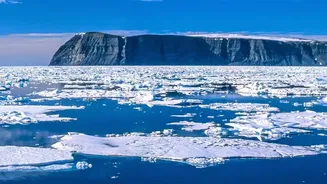
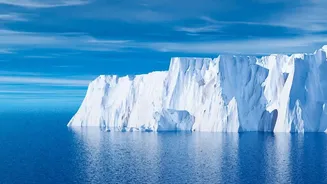
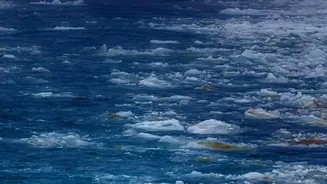
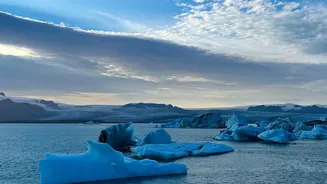
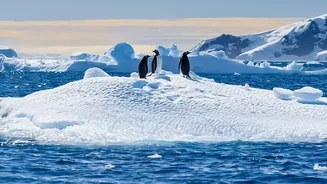
Every year, the sea ice floating on the ocean around Antarctica expands during the winter, reaching its largest extent, or 'maximum,' around late September. This year, that peak was alarmingly small. On September 14, scientists at the U.S. National Snow
and Ice Data Center (NSIDC) noted that the sea ice likely reached its maximum at 17.59 million square kilometres. This figure is about 1 million square kilometres below the long-term average—an area roughly twice the size of Spain. While there can be daily fluctuations, subsequent declines in ice coverage led scientists to confirm this as the 2026 maximum, officially ranking it as the third-lowest winter peak since satellite records began in 1979.
A New and Worrying Pattern
A single low year might be dismissed as an anomaly, but this is part of a larger, more disturbing pattern. The four lowest Antarctic winter sea ice maximums ever recorded have all occurred in the last four years. This is a stark reversal. For decades, unlike the steady decline seen in the Arctic, Antarctic sea ice extent was relatively stable and even showed modest growth. Around 2016, the system seemed to flip, and the ice has been in a prolonged low state ever since. Scientists who were once cautious are now pointing to a clear shift. “This is not a one-off event any more,” said Dr Ariaan Purich, a Southern Ocean expert. “We are seeing low winter after low winter.”
What Is Causing the Ice to Vanish?
There isn’t one simple answer, but a combination of factors appears to be at play. One leading theory is that warmer ocean water is being pulled up from the depths to the surface, making it harder for ice to form and stick around. Changes in atmospheric circulation, potentially influenced by this year's El Niño pattern, may have also contributed by altering storm tracks and churning up the ice, particularly in areas like the Amundsen Sea. For years, a layer of less salty, colder water at the ocean's surface helped shield the sea ice from the warmer, saltier water below. Now, it seems that protective barrier has weakened, allowing decades of stored ocean heat to be unleashed.
Why This Distant Record Matters for India
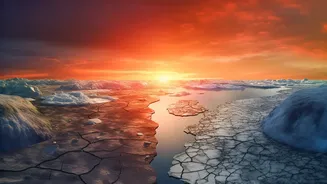
What happens in Antarctica does not stay in Antarctica. The vast white sheet of sea ice acts as a giant mirror, reflecting the sun's energy back into space and helping to regulate the planet's temperature. Less ice means more of the dark ocean is exposed, which absorbs heat and creates a feedback loop that accelerates global warming. This disruption to the Earth's cooling system has far-reaching consequences, influencing global weather and ocean currents. While the direct links are still an active area of scientific research, major changes at the poles can affect atmospheric circulation patterns that influence weather systems across the globe, including the vital Indian monsoon. The loss of sea ice can also expose the continent's massive land-based ice shelves to warmer ocean waves, accelerating their melt and contributing to global sea-level rise—a critical concern for India's long coastline.
An Uncertain Future
The persistence of these low-ice conditions is raising serious concerns among scientists about a permanent state change in the Antarctic. The loss of sea ice has profound impacts on the unique Antarctic ecosystem, from the phytoplankton at the base of the food chain to iconic species like emperor penguins that rely on stable ice to breed. As the continent emerges from its winter darkness, scientists are watching closely to see if the melt season will also be extreme. Another record-low summer could have dire consequences for the stability of the floating ice shelves that hold back Antarctica's continent-sized glaciers. The ongoing trend serves as a powerful reminder of how interconnected our global climate system is, and that changes in the most remote parts of the world can have effects that ripple across the entire planet.