




The Sobering Statistics
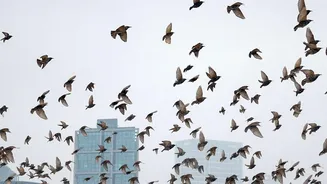
The State of India’s Birds (SoIB) 2023 report, a collaborative effort of 13 government and non-government organisations, paints a grim picture. After analysing data from nearly 30,000 birdwatchers, the report concluded that of the species assessed for long-term
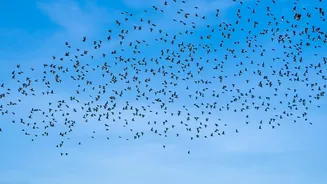
trends over 30 years, a staggering 60% have declined. Migratory birds are among the hardest hit. Long-distance migrants, especially those travelling from the Arctic and Eurasia, have seen their populations fall by over 50%. Shorebirds that breed in the Arctic have been particularly affected, with declines nearing 80%. The report identifies 178 species as being of high conservation concern, requiring urgent attention to prevent them from disappearing from our skies.
Why Their Numbers Are Falling
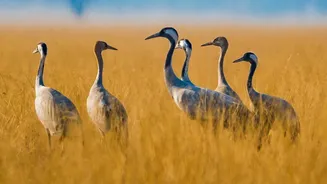
The reasons for this widespread decline are complex and overwhelmingly linked to human activity. The most significant threat is habitat loss and degradation. India's wetlands, crucial stopover and wintering sites for migratory waterfowl, are vanishing due to urban expansion and pollution. Changes in agricultural patterns, such as a shift away from traditional crops, have also disrupted food sources for birds like the Demoiselle Crane. Furthermore, environmental pollutants, including pesticides and veterinary drugs like diclofenac, have had a devastating impact, particularly on vultures and other carrion-feeders. The expansion of infrastructure, such as power lines and wind turbines, poses a direct threat of collision, while light pollution can disorient birds during their nocturnal migrations. Superimposed on all these pressures is the overarching threat of climate change, which disrupts the delicate timing of migration and food availability.
Birds of Special Concern
While the declines are broad, some species are in a particularly perilous state. Many duck species, both resident and migratory, have shown steep declines. The once-common Siberian Crane, which undertook a 4,000-mile journey to winter in places like Keoladeo National Park, has not been reliably sighted in India since 2002, a silent testament to the pressures along its flyway. Other species of high conservation concern include the Great Indian Bustard, Bengal Florican, and Spoon-billed Sandpiper, all of which are critically endangered. However, the report isn't entirely bleak. A few adaptable species, known as generalists, are thriving. The Indian Peafowl, our national bird, has shown a remarkable increase, expanding its range into new habitats like the high Himalayas. Similarly, the Asian Koel, Rock Pigeon, and House Crow are also doing well, largely because they can adapt to human-modified landscapes.
More Than Just Birds
The decline of migratory birds is not just a loss for birdwatchers; it's an alarm bell for the health of our entire ecosystem. Birds are vital environmental indicators. Their disappearance signals broader problems like water contamination, pesticide saturation in our food chains, and the degradation of natural habitats that provide essential services to humans. Birds play crucial roles in pollination, seed dispersal, and controlling insect populations. A fall in insect-eating birds could have knock-on effects for agriculture. A decline in scavengers like vultures can impact waste disposal and disease control. Ultimately, the fate of these birds is interwoven with the health of the rivers, wetlands, forests, and grasslands that we all depend on.
A Call to Action
Reversing these trends requires a concerted effort. India has a National Action Plan for the Conservation of Migratory Birds, which provides a framework for protecting species and their habitats along the Central Asian Flyway. Conservation efforts are underway, from expanding protected areas to community-led initiatives. In Nagaland and Manipur, local communities have transformed hunting grounds for Amur Falcons into conservation success stories. Citizen science is also playing a critical role. Platforms like eBird allow thousands of birdwatchers to contribute valuable data that informs reports like the SoIB. Individuals can contribute by supporting wetland preservation, reducing pesticide use, and participating in local conservation activities. Protecting these global travellers requires a combination of robust policy, on-the-ground action, and a collective awareness of the stakes involved.