







That crunchy cucumber in your salad or refreshing raita seems like the perfect vegetable. But what if we told you it's not a vegetable at all? Botanically speaking, the humble cucumber is actually a fruit. Let's peel back the layers on this.
The Great Produce Identity Crisis
It feels like
a trick question, but it's true: the cucumber is scientifically classified as a fruit. This often comes as a surprise, as its entire culinary existence is based on its role as a vegetable. We add it to savoury salads, sandwiches, and cooling side dishes, not fruit salads or desserts. This confusion arises because we tend to classify produce in two different ways: botanically (based on science) and culinarily (based on how we cook and eat it). While our kitchens and taste buds tell us one thing, plant science tells a completely different story.
Botanically Speaking: What Makes a Fruit?
The scientific definition of a fruit is very specific. A fruit develops from the flower of a plant and contains the seeds that allow the plant to reproduce. Think of an apple with its core of seeds, or a mango with its large central stone. The key characteristics are that it originates from the plant's ovary after flowering and serves as the vessel for seed dispersal. In contrast, the term 'vegetable' is a broader, more general culinary term. Botanically, a vegetable refers to any other edible part of a plant, such as its roots (carrots), leaves (spinach), stems (celery), or even flower buds (broccoli). Since there isn't a strict scientific category for 'vegetable', the term is mostly used in the context of cooking.
The Cucumber's Life Cycle
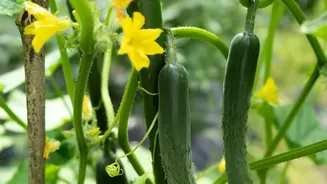
A cucumber plant perfectly illustrates the botanical definition of a fruit. The plant first produces bright yellow flowers. Most cucumber varieties have both male and female flowers on the same plant. The female flowers have a tiny, immature cucumber-shaped swelling at their base, which is the ovary. After pollination, typically by bees, this ovary at the base of the female flower swells and matures, eventually becoming the cucumber we know and eat. Inside this cucumber are the seeds. Because it develops from the flower's ovary and contains seeds, the cucumber is, by definition, a fruit. In fact, some botanists classify it more specifically as a 'pepo', a type of berry with a hard outer rind.
Why We Call It a Vegetable
The reason we all think of cucumbers as vegetables comes down to their culinary use. In the kitchen, we group foods by their flavour profile and how they are used in dishes. Vegetables are typically more savoury, less sweet, and form the main part of a meal. Fruits are generally sweet or tart and are often used in desserts, snacks, or juices. The cucumber, with its mild, refreshing, and savoury taste, fits perfectly into the culinary world of vegetables. This distinction is so common that in 1893, the US Supreme Court legally designated the tomato—another botanical fruit—as a vegetable for trade and tax purposes, based on its common use in main courses rather than as a dessert.
Other Fruits in Disguise
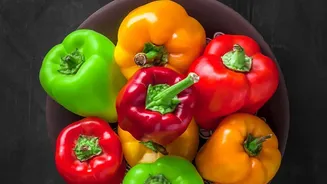
Cucumbers are not alone in this identity mix-up. Many other items in the produce aisle that we treat as vegetables are also botanical fruits. This includes all types of squash and pumpkins, which belong to the same family as cucumbers. Tomatoes, bell peppers, chillies, aubergines (eggplant), okra, and even green beans are all fruits because they grow from the plant's flower and contain seeds. Avocados and olives are also technically fruits; they are classified as single-seeded berries and stone fruits, respectively. Once you start looking for a seed-bearing structure that grew from a flower, you'll find fruits hiding all over the vegetable section.