




Meet a Resilient World
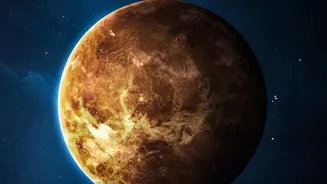
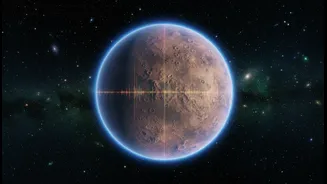
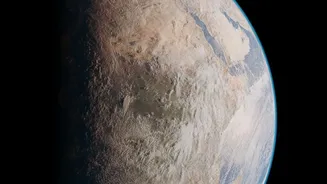
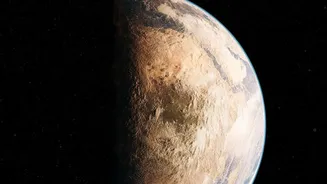
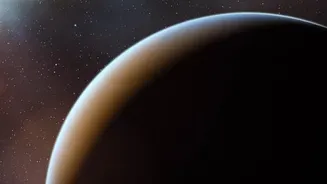
The planet at the centre of this remarkable discovery is named LHS 1140 b. Located about 48-49 light-years from Earth, it's classified as a 'super-Earth'—a rocky world significantly larger and more massive than our own planet, but smaller than ice giants
like Neptune. Specifically, it has a radius about 1.7 times that of Earth and a mass nearly 5.6 times greater, suggesting a dense, rocky composition. This world orbits a red dwarf star, the most common type of star in our Milky Way galaxy. While it sits in the 'habitable zone'—the orbital region where temperatures could allow for liquid water—the very existence of its atmosphere is a major surprise.
The Challenge of a Red Dwarf
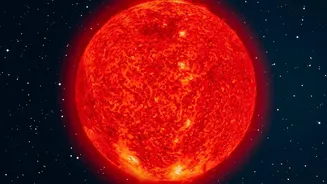
Living next to a red dwarf star is not for the faint of heart. These stars are known for being magnetically active and can unleash powerful flares of high-energy radiation, especially in their youth. This violent activity is usually a death sentence for the atmospheres of any closely orbiting planets, stripping them away over millions of years. For this reason, many scientists have been pessimistic about the potential for planets around red dwarfs to retain the conditions necessary for life. The conventional wisdom suggested that any primordial atmosphere would be blasted into space, leaving behind a barren, airless rock.
A Planetary Puzzle Solved
LHS 1140 b defies these expectations. Recent observations have provided the strongest evidence yet that this super-Earth has managed to hold onto its atmosphere for billions of years. The breakthrough came from detecting helium escaping from the planet's upper atmosphere. This faint signal, captured by powerful telescopes, acts as a definitive signpost for a much more substantial atmosphere lying beneath. The fact that this planet, orbiting a star estimated to be at least 3.1 billion years old, still has a gaseous envelope is a testament to its resilience. It suggests that some planets are much better at protecting themselves than previously thought.
A New Hope for Habitability
This discovery significantly broadens the search for life beyond Earth. Red dwarf stars are incredibly common, so knowing that their planets can retain atmospheres makes them prime targets for future investigation. While the detection of an atmosphere doesn't confirm habitability—let alone life—it is a critical first step. The atmosphere of LHS 1140 b could be thick and rich with gases like nitrogen and carbon dioxide, or it could be something else entirely. Its estimated surface temperature, without accounting for an atmosphere, is quite cold, but a gaseous blanket could create a greenhouse effect, potentially warming the surface enough for liquid water to exist.
What Comes Next?
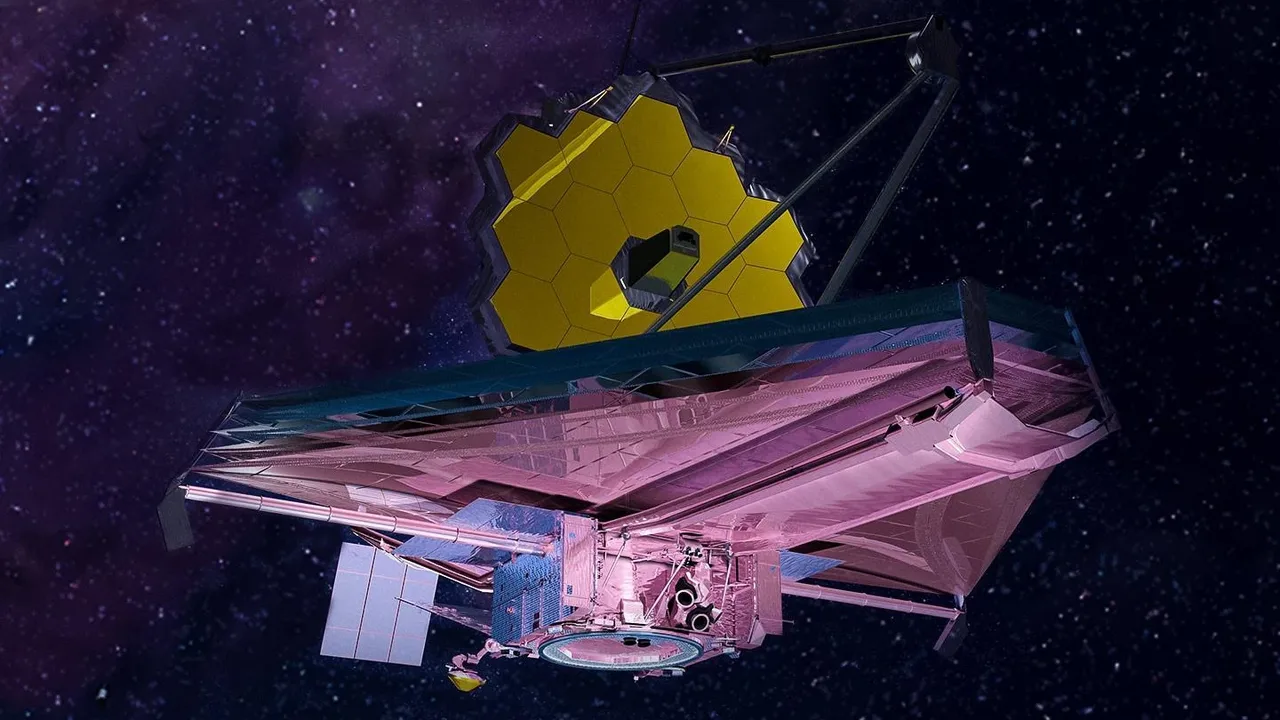
LHS 1140 b has now become a priority target for astronomers. The next challenge is to determine what its atmosphere is made of. Using advanced observatories like the James Webb Space Telescope, scientists will try to analyze the starlight filtering through the planet's atmosphere. This technique, called transmission spectroscopy, allows them to look for the chemical fingerprints of different gases like water vapour, methane, and carbon dioxide. Uncovering the composition and pressure of this distant world's air will provide crucial clues about its climate and whether it truly has the potential to be a habitable world.