



The Art of the Stick
Using a stick to hold hair in place is one of the oldest hairstyling techniques in the world. For thousands of years, across cultures from ancient Egypt and Rome to China and Japan, people have used pins and sticks made of wood, bone, ivory, and metal
to secure their hair. These weren't just practical tools; they were often ornate pieces of jewelry that could signify social status or cultural affiliation. Today, an everyday object like a pencil or chopstick can serve the same purpose, blending ancient ingenuity with modern resourcefulness. It's a stylish nod to history and a lifesaver when you're in a pinch.
How to Create the Classic Pencil Bun
The pencil bun is the quintessential no-tie hairstyle, perfect for those with medium to long hair. It may take a little practice, but once you master the technique, it takes only seconds. Start by gathering your hair into a ponytail with one hand, as if you were about to tie it. Next, twist the ponytail tightly from the base all the way to the ends. Once it’s fully twisted, coil the hair around the base to form a tight bun, holding it in place with one hand. Now, take your pencil and hold it in your free hand. Push the tip of the pencil through the outer edge of the bun, aiming it towards your scalp. Weave it through the base of the bun against your head and push it out the other side. The key is to catch hair from both the bun and the base to create a secure lock.
Mastering the French Twist
For a more elegant look, the French twist is an excellent alternative that can also be secured with a stick. Begin by gathering your hair into a low ponytail, but don't tie it. Twist the hair upwards, folding it back against your head as you go. Continue twisting and tucking the ends of your hair into the vertical seam you’ve created. Hold the twist firmly against your head with one hand. With the other hand, insert the pencil or hair stick sideways through the top of the twist. Weave it down through the twist, catching hair from the fold and securing it against the hair on your scalp. This creates a sophisticated style that holds surprisingly well without any elastics.
Tips for a Secure and Healthy Hold
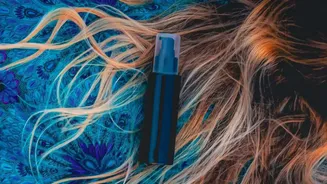
While these styles are convenient, it's important to avoid damaging your hair. Consistently wearing tight buns can lead to breakage and even a type of hair loss called traction alopecia. To prevent this, make sure your bun or twist isn't painfully tight. You shouldn't feel a strong pulling sensation on your scalp. It also helps to vary the position of your bun—sometimes high, sometimes low—to avoid stressing the same follicles every day. Be mindful of your tool as well. A pencil with a sharp, splintery tip can snag and break strands. Opt for a smooth pen, a dedicated hair stick, or even a pair of chopsticks. If you have fine or slippery hair, a spritz of texturizing spray or dry shampoo can provide extra grip to help the style hold longer.
Other No-Tie Options
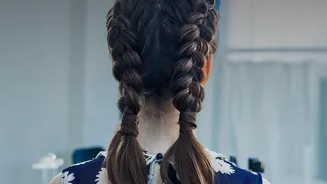
Once you're comfortable with a pencil, you can explore other styles that don't require any tools at all. The twisted bun, for example, is great for very long hair. After twisting your hair into a coil, you can form a loop and pull the end of your hair through the center to secure it. Another option is a simple braided bun. Create a loose braid and then wrap it around itself, tucking the end into the base. For those with very long hair, a looped bun can be made by creating a loop with your hand, wrapping the ends around the base, and then flipping the loop over the entire bun to lock it in place. These techniques rely on tension and strategic tucking to hold your hair securely.