
What Does an Ocean's 'Decline' Mean?
When scientists talk about the Pacific's 'decline', they aren't referring to its water level. The amount of water in the ocean isn't disappearing. Instead, the ocean basin itself—the giant bowl holding the water—is getting smaller. This change is driven
by plate tectonics, the constant, large-scale motion of the Earth’s crust. While the Pacific Ocean is shrinking, other oceans, like the Atlantic, are actually growing. This cosmic balancing act is a fundamental part of our planet's life cycle, where continents drift, and the shapes of oceans are redrawn over millions of years.
The Culprits: Trenches on the Ocean Floor
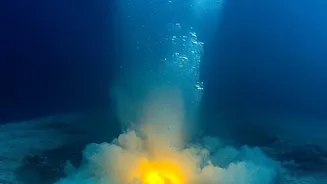
The reason for the Pacific's shrinkage lies in the deep, dark trenches that line its edges, such as the famous Mariana Trench, the deepest point on Earth. These trenches are actually massive geological features called subduction zones. Here, the older, denser oceanic crust of the Pacific plate is being forced to slide, or subduct, underneath the lighter continental plates that surround it. Think of it as a planetary recycling system: old ocean floor is consumed back into the Earth's mantle. While new seafloor is being created at ridges in the middle of the ocean, the rate of destruction at the edges is winning out, causing the overall basin to contract.
A 'Ring of Fire' Connection
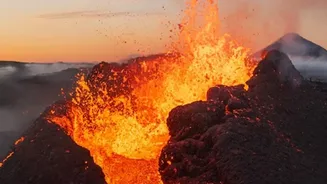
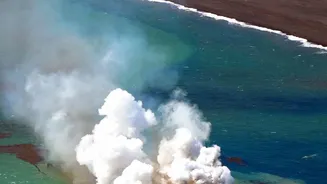
These subduction zones around the Pacific are known collectively as the 'Ring of Fire'. This isn't just a catchy name; it’s one of the most geologically active regions on the planet. The immense friction and pressure from one plate diving beneath another melts rock, creating magma that fuels the numerous volcanoes that dot the coastlines of places like Japan, New Zealand, and the Americas. This same process is responsible for about 90% of the world's earthquakes and the majority of its tsunamis. So, the same force that is slowly closing the Pacific is also the source of some of nature’s most powerful and dramatic events.
How Fast Is It Disappearing?
Before you sell your beachfront property, it's important to understand the timescale. This is geology, not a weekend project. The Pacific Ocean is shrinking at a rate of about one inch (or 2.5 centimetres) per year. While that may not sound like much, over geological time, it adds up. Australia is currently drifting towards Asia at about seven centimetres a year, closing the gap between the continents. This slow but relentless march is imperceptible in a human lifetime, but it is powerful enough to completely reshape the world map.
The Birth of a New Supercontinent
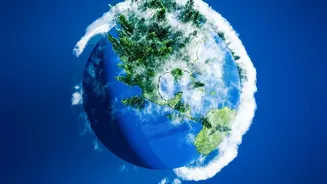
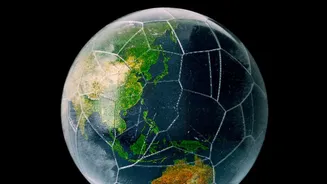
So, what happens when an ocean closes? According to supercomputer simulations, the continents will eventually collide. Scientists predict that in about 200 to 300 million years, the Pacific Ocean will close completely, smashing the Americas into Asia and Australia. This colossal collision will forge a new supercontinent, which researchers have already named 'Amasia'. This is part of a grand supercontinent cycle, where Earth’s landmasses merge and break apart roughly every 600 million years. The world we know is just a temporary arrangement in the planet's long and dynamic history.