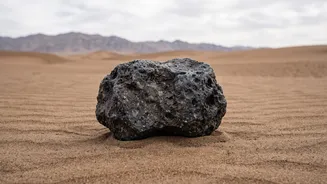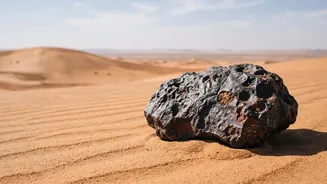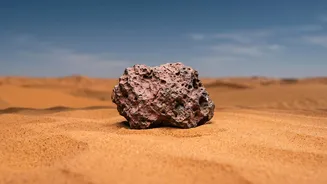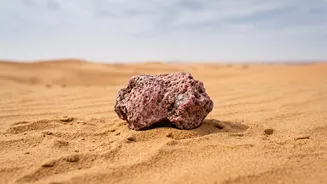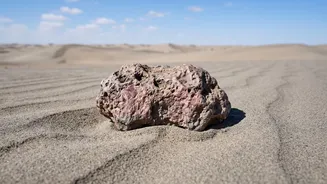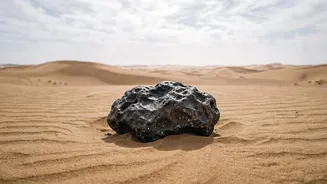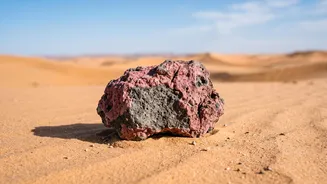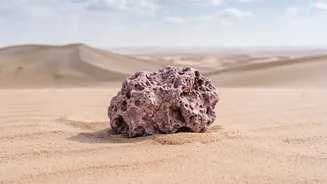




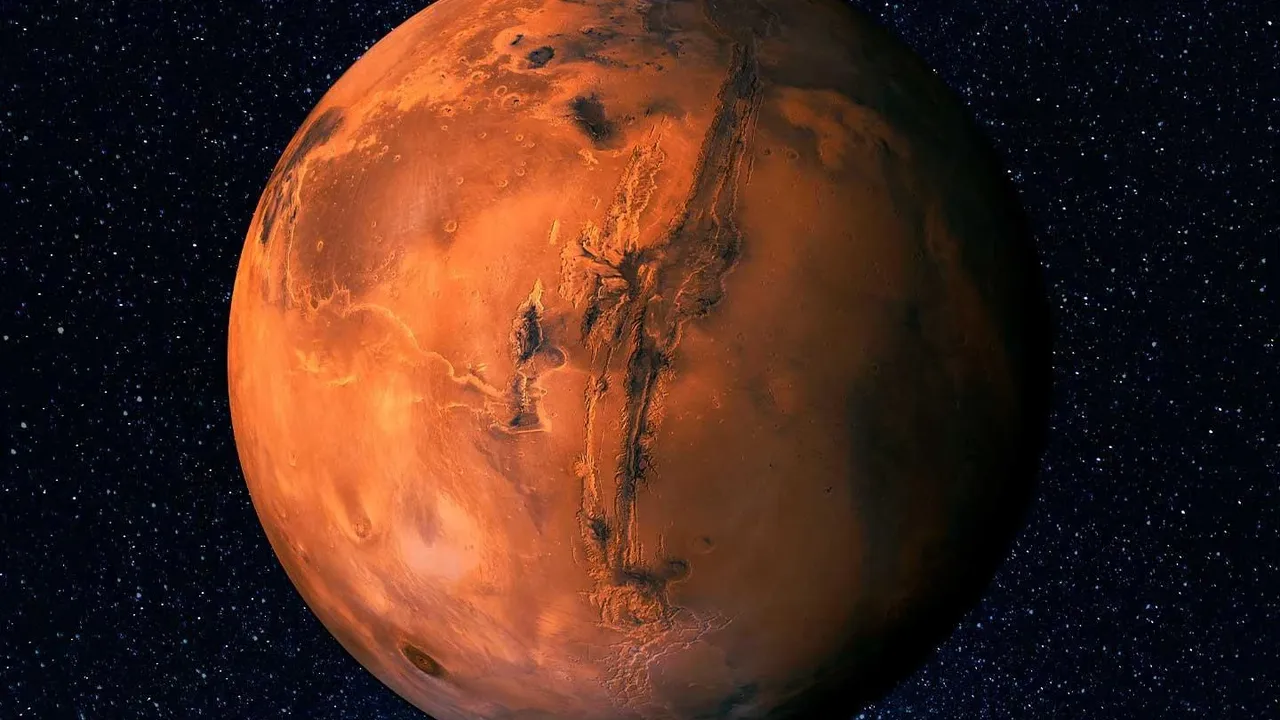
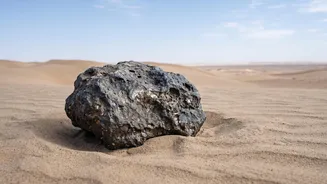
In 2022, meteorite hunters in the Sahara Desert discovered a striking, rose-coloured stone. Recent analysis has revealed a truly stellar origin: this rock is a 4.1-billion-year-old piece of Mars, offering an unprecedented glimpse into its ancient past.
A 'Rosetta Stone' From the Red Planet
The meteorite, named Teghaza 001 after the salt plain in Mali where its eight fragments were found, weighs a total of about 800 grams. While over 400 Martian meteorites have been identified on Earth, Teghaza 001 is exceptionally rare. It is one of the three oldest ever discovered, with scientists dating its formation to more than 4.1 billion years ago. Its unique composition and immense age have led some NASA scientists to call it a 'Rosetta Stone' for Mars. It provides a physical sample of the planet’s crust from a period when life was just beginning to emerge on Earth, offering a window into a time and place we have never been able to study so directly before.
The Martian Fingerprint
How can scientists be so certain a rock found in an African desert came from another planet? The confirmation comes from a combination of tell-tale clues. The first major piece of evidence lies in tiny pockets of gas trapped within the meteorite's mineral structure. When compared to the atmospheric data gathered by NASA's Viking landers in 1976, the composition of these trapped gases is a perfect match for the thin Martian air. Further analysis of oxygen isotopes—different forms of the oxygen atom—provides another layer of confirmation. The specific ratio of these isotopes in Teghaza 001 is characteristic of Martian rocks and distinct from those originating on Earth or from asteroids, effectively serving as a planetary fingerprint.
A Violent Birth and a Long Journey
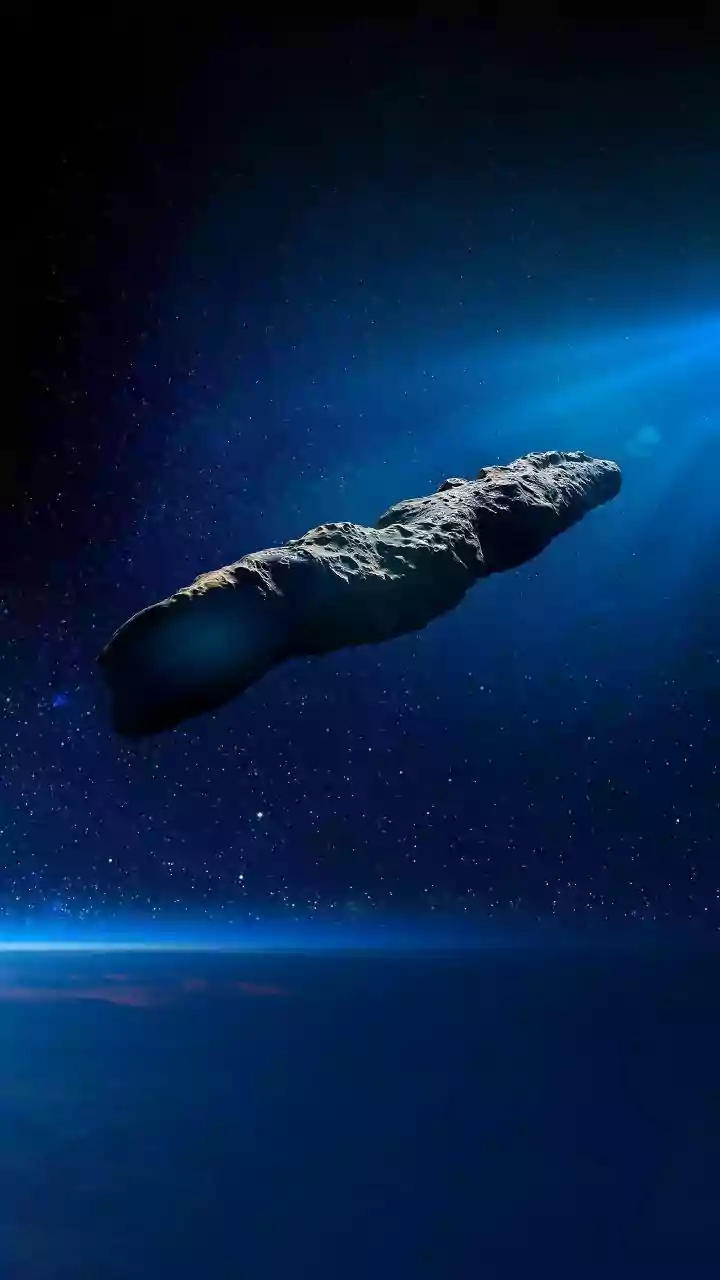
The story of Teghaza 001 is one of cosmic violence and incredible endurance. Billions of years ago, it formed from cooling magma in the Martian crust. Much later, a powerful asteroid or comet impact struck Mars with enough force to blast chunks of the planet's surface into space, overcoming its weaker gravity. This fragment then became a meteoroid, likely orbiting the sun for millions of years before its trajectory intersected with Earth's. Plunging through our atmosphere, it became a fiery meteor before landing in the vast, arid landscape of the Sahara—a perfect place for a dark, unusual rock to stand out against the sand and wait for discovery.
Clues of an Ancient Watery World
Perhaps the most exciting revelation from Teghaza 001 is the strong evidence of its interaction with water. Unlike most other Martian meteorites, which are primarily unaltered volcanic rock, this sample shows signs of chemical alteration by subsurface water around 4.1 billion years ago. This suggests that Mars once had a more dynamic water cycle, with liquid water present not just on the surface but within the crust itself. The meteorite’s distinctive blend of igneous minerals, including feldspar and pyroxene, tells a two_part story: first of its formation from cooling magma, and second of its transformation by water deep underground. This reinforces a growing body of evidence that early Mars was a much wetter, and potentially more habitable, planet than the dry, dusty world we see today.
A New Piece of the Martian Puzzle
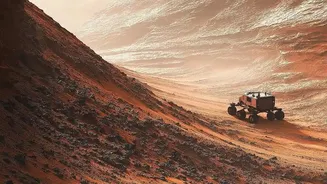
Teghaza 001 is not just old; it represents a piece of Mars we've never seen before. Its chemical and mineral composition is unlike any other Martian meteorite in our collection and does not match the geology of any of the landing sites explored by rovers. However, data from NASA's Mars Reconnaissance Orbiter shows that its mineralogy is a match for the planet's ancient, heavily cratered southern highlands. While its exact origin point will remain a mystery, scientists have identified 13 potential source craters. This ‘free’ sample return mission gives researchers a tangible piece of Mars's oldest terrain, allowing for analyses that are impossible to perform with remote rovers, and helping to piece together the evolutionary story of our planetary neighbour.