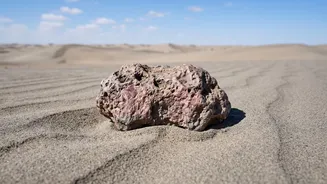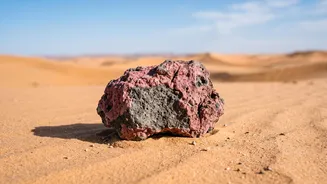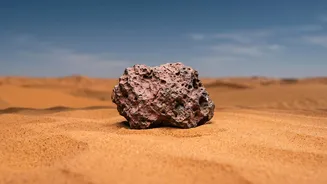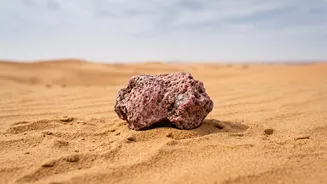




Deep within the vast, golden expanse of the Sahara Desert, a unique, rose-coloured stone lay waiting. Discovered in 2022, this rock has now been identified as a 4.1-billion-year-old visitor from Mars, offering a rare portal into its ancient past.
A Cosmic Discovery in the Desert
The Sahara
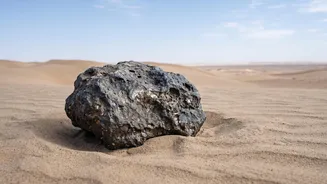
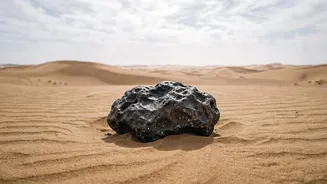
Desert is one of the best places on Earth to find meteorites. Its dry climate preserves these fallen space rocks for millennia, and their dark, often burnt exteriors stand out against the pale sand. In 2022, meteorite hunters in Mali came across several fragments of a unique, nearly two-pound stone with a striking rosy hue. Named Teghaza 001 after the salt plain where it was found, the rock began a journey from the desert sands to the world's most advanced laboratories. What scientists would uncover would place this humble stone among the most significant planetary samples ever found on Earth.
The Violent Journey From Mars to Earth
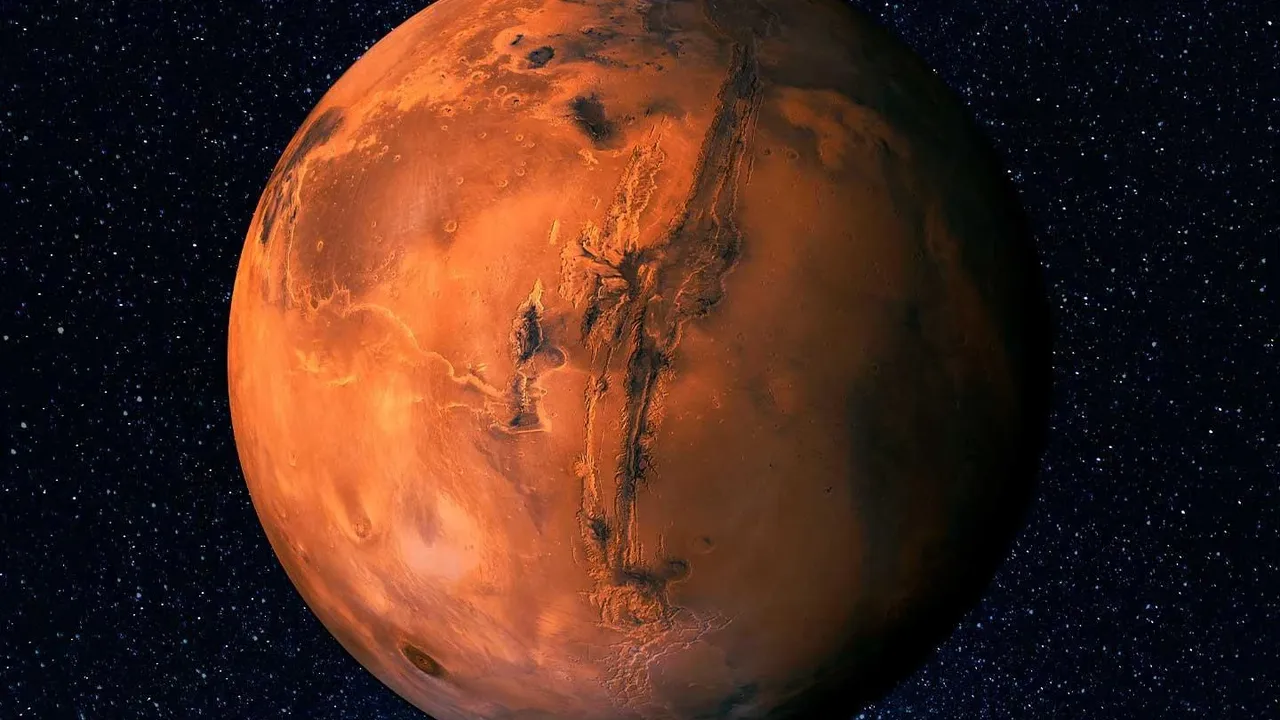
How does a piece of Mars end up in an African desert? The answer lies in cosmic violence. Billions of years ago, a massive asteroid or comet would have slammed into Mars. The force of this impact was so immense that it blasted chunks of the Martian crust into space, overcoming the planet's weaker gravity. These fragments then drifted through the solar system, sometimes for millions of years, before some were eventually caught by Earth's gravitational pull. Hurtling through our atmosphere, they become meteors, and the few that survive the fiery descent to land on the surface are what we call meteorites—in this case, a precious ambassador from another world.
Reading the Rock's Martian Passport
Confirming a rock is from Mars is a meticulous process. Scientists can't just look at it; they have to read its chemical 'passport'. The definitive proof often lies in tiny pockets of gas trapped within the meteorite's minerals. When analyzed, the composition of these gases—the specific mix of elements and their isotopes—is a perfect match for the Martian atmosphere as measured by NASA's Viking landers in the 1970s. For Teghaza 001, researchers at the University of New Mexico first confirmed its Martian origin by comparing its oxygen isotopes to the known fingerprints of other Mars rocks. This test proved it was part of a small but extraordinary club of just over 400 known Martian meteorites on Earth.
A Rosetta Stone for a Watery Past
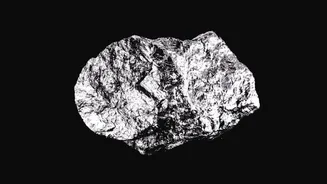
What makes Teghaza 001 truly special is its incredible age and composition. Using advanced dating techniques on zircon crystals within the stone, scientists determined it was altered by water at least 4.1 billion years ago, meaning the rock itself is even older. This makes it one of the three most ancient Martian meteorites ever discovered. Unlike most other samples, which are much younger, Teghaza 001 provides a snapshot of Mars during its infancy. Its unique mix of volcanic minerals shows it formed from cooling magma and was then significantly altered by water. This finding is crucial evidence that early Mars was a geologically dynamic world with a robust water cycle, far from the cold, dry planet we see today. One reviewer even dubbed it a 'Rosetta Stone for Mars' for its potential to unlock the secrets of the planet's early, and possibly habitable, environment.
A New Chapter in Exploring the Red Planet
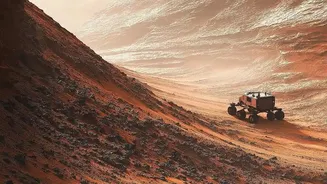
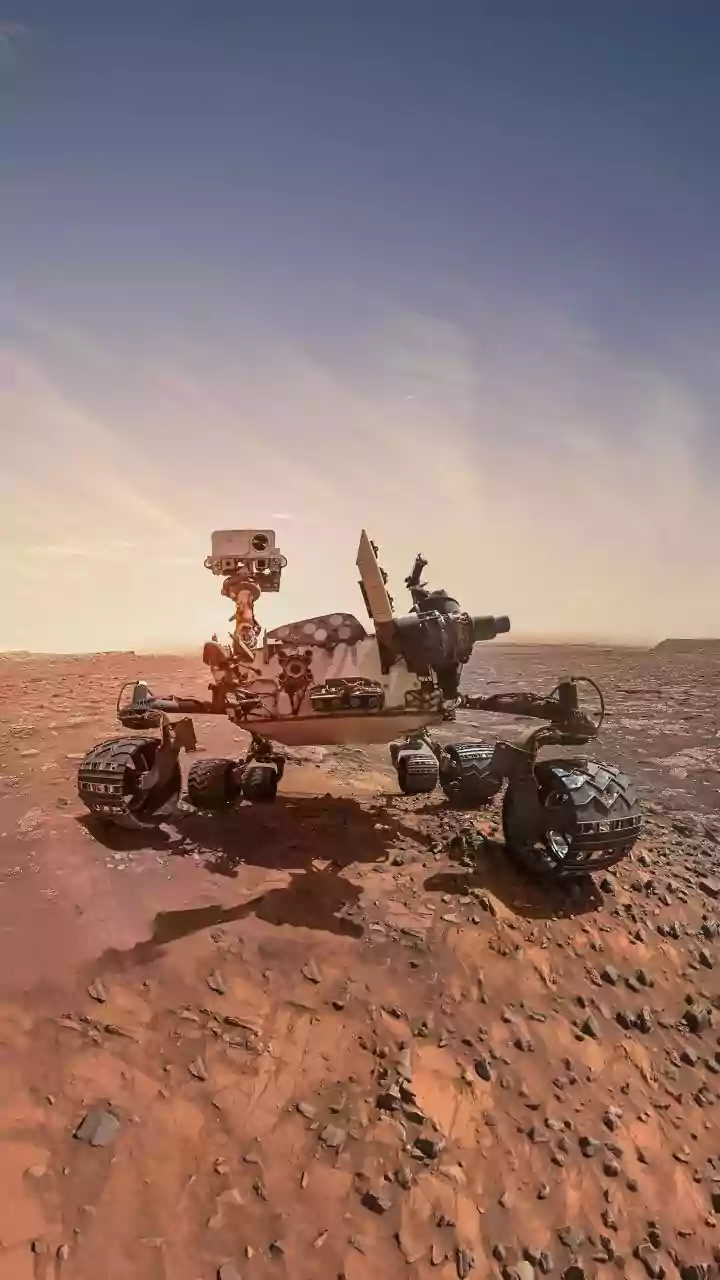
Teghaza 001 is more than just an old rock; it's a piece of Martian history we've never had access to before. Its chemistry matches observations from NASA's Mars Reconnaissance Orbiter of the planet's ancient southern highlands, a region from which we've never previously had a sample. While rovers like Perseverance are doing incredible work on the surface, they are limited to their landing sites. This meteorite provides a physical sample from a completely different part of Mars, for free. It gives scientists a deeper understanding of how Mars formed, why it lost its water while Earth did not, and whether it ever possessed the conditions necessary to support life.