






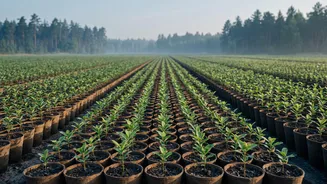

A Planet-Sized Promise
The commitment to restore vast swathes of our planet isn't from a single treaty but a collection of powerful global initiatives. The headline promise comes from the UN Decade on Ecosystem Restoration (2021-2030), which rallies nations to prevent, halt,
and reverse the degradation of ecosystems worldwide. This builds on earlier efforts like the Bonn Challenge, a global goal launched in 2011 to bring 350 million hectares of degraded and deforested land into restoration by 2030. Combined with national commitments under climate and biodiversity conventions, these pledges total over a billion hectares. Restoration is more than just planting trees; it’s about bringing entire landscapes—forests, grasslands, wetlands, and farmlands—back to health, allowing them to function ecologically and support the communities that depend on them.
Why the World Needs Healing
The stakes could not be higher. According to the UN, around 1.5 billion hectares of land are currently degraded globally. This isn't just a loss for nature; it directly impacts human well-being. Degraded land undermines food security, reduces the availability of clean water, and makes communities more vulnerable to extreme weather events like droughts and floods. Healthy ecosystems, on the other hand, are our greatest allies. Restoring forests and landscapes helps capture and store massive amounts of carbon, making it a critical tool in the fight against climate change. It also revitalises biodiversity, secures livelihoods, and strengthens rural economies. The economic case is compelling, with studies suggesting that every dollar invested in restoration can bring multiple dollars in economic benefits.
The Hurdles on the Ground
If restoration is such a clear win, why is progress so slow? Recent reports paint a sobering picture. A 2026 analysis by the IUCN found that while restoration is advancing, it covers only a fraction of what has been promised. One of the biggest obstacles is financing. There is a massive gap between the funds required for large-scale restoration and the money actually being invested. Furthermore, many governments have policies that work against their own goals, such as agricultural subsidies that encourage land degradation. Another major barrier is insecure land tenure. Local and indigenous communities are often the most effective stewards of the land, but without clear rights, they have little incentive or security to invest in long-term restoration projects. Finally, restoration is complex. It requires long-term planning, scientific knowledge, and deep engagement with local stakeholders to succeed, which is difficult to scale up quickly.
India's Own Restoration Story
India has emerged as a key player in the global restoration movement. The nation made one of the largest pledges under the Bonn Challenge, committing to restore 26 million hectares of degraded and deforested land by 2030. According to a June 2026 progress report, the country has made significant strides, having already brought nearly 22 million hectares under restoration through various initiatives. These efforts involve a mix of interventions, including afforestation, natural regeneration, agroforestry, and watershed management. Ambitious projects like the Aravalli Green Wall and the MISHTI initiative for mangrove restoration are underway. However, India also faces immense challenges, including immense population pressure on land, conflicts over land use, and the need to balance rapid economic development with environmental protection. Success will depend on sustained political will and effective implementation on the ground.