



A Promise, Not a Powertrain
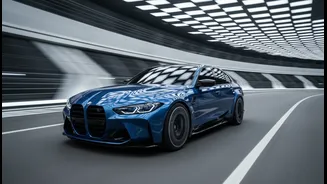
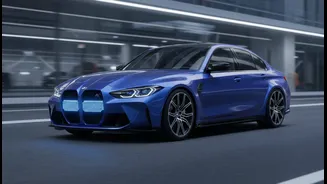
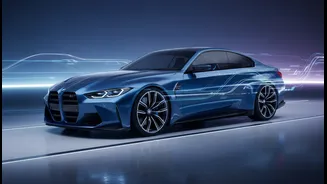
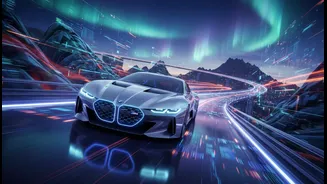
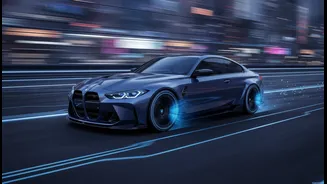
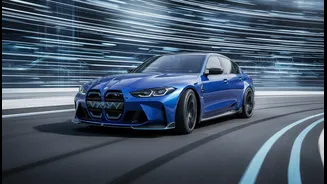
In a move that settles years of speculation, BMW M's CEO, Frank van Meel, has confirmed that the brand’s first high-performance electric sedan will not be called the “iM3.” Instead, it will carry the same unadorned M3 badge that has defined the segment
for four decades. Van Meel's reasoning is simple: the M3 has always been the M3, regardless of its engine. He argues that the name represents a promise of ultimate driving dynamics, not a specific type of technology. Whether it had a four-cylinder, a V8, or the current twin-turbo inline-six, the character of the car remained. By refusing a separate name, BMW is betting that the soul of the M3 is transferable to a new, electric generation.
A Forty-Year Legend
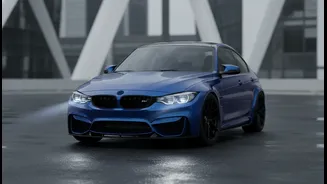
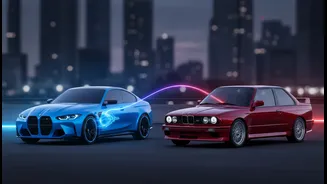
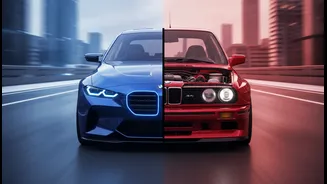
To understand the weight of this decision, you have to look at the M3's history. The story began in 1986 with the E30 M3, a boxy, race-bred homologation special built to dominate touring car championships. It established the M3 as a benchmark. Subsequent generations evolved the formula: the E36 introduced a smooth inline-six, the E46 is remembered for its high-revving symphony, the E92 controversially adopted a V8 engine, and the current G80 brought turbocharging and all-wheel drive into the fold. At every step, purists questioned the changes, yet the M3 not only survived but thrived, proving its identity was more about the overall experience than any single component. This history is the foundation for BMW's confidence.
The Neue Klasse Revolution
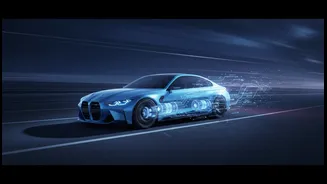
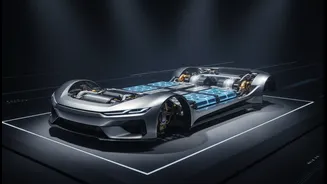
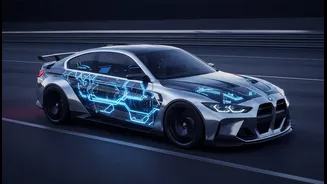
The future electric M3, expected around 2027, won't just be a current model with batteries swapped in. It will be built on BMW’s dedicated “Neue Klasse” electric platform. This isn't just a new chassis; it's a complete technological overhaul featuring an 800-volt architecture for faster charging and a new generation of battery cells. The performance version will feature a quad-motor setup, with one electric motor for each wheel. This allows for incredibly precise, instantaneous torque vectoring managed by a central computer system that BMW calls the “Heart of Joy.” The result, BMW promises, is a level of handling and agility that even the best mechanical systems can't match.
A Different Path From Rivals
BMW’s strategy is a clear departure from its main rival, Mercedes-Benz. Mercedes established a dedicated “EQ” sub-brand for its electric vehicles, leading to models like the EQE and EQS. Its high-performance division created the Mercedes-AMG EQE. However, even Mercedes is reportedly rethinking this approach, finding the naming convention confusing and planning to phase out the EQ badge. By sticking with “M3,” BMW is leapfrogging that entire process, betting that its legacy brand is strong enough to define the product, regardless of how it's powered. It's a confident, perhaps even arrogant, move that assumes the M badge is more powerful than any EV-specific branding.
Two M3s, One Legacy
Perhaps the most interesting part of this strategy is that BMW isn't forcing anyone's hand. Alongside the development of the electric M3, the company is also engineering a next-generation gasoline-powered M3. This model will continue to use a revised version of the celebrated inline-six engine and will not be a hybrid. This dual-path approach acknowledges that the transition to EVs won't happen overnight. It allows the brand to cater to its traditional enthusiast base while simultaneously defining the future of its performance icon. For the first time, customers will have a choice: an M3 powered by electrons, or an M3 powered by explosions.