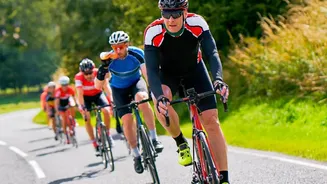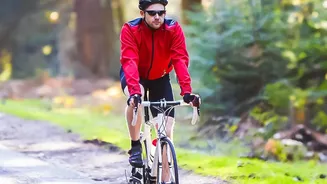





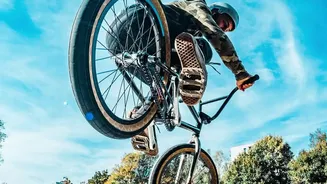
Cycling and skating both promise a thrilling sense of freedom, but they rely on very different principles of balance. Understanding the unique physical demands of each can make you a better rider or skater and deepen your appreciation for both.
Stability: Built-In vs. Self-Made
The most
significant difference lies in where the stability comes from. A bicycle is an inherently stable object once it's in motion. Thanks to a combination of gyroscopic effects from the spinning wheels and the geometry of the front fork, a moving bike actively wants to stay upright. A slight lean causes the front wheel to steer into the lean, correcting your balance automatically. This is why it's easier to balance on a fast-moving bike than a slow one. Roller skates, on the other hand, offer zero inherent stability. Your body is the only thing keeping you from falling. Balance is entirely 'self-made,' relying on constant, conscious adjustments of your weight and posture over a very small, unstable base.
Dynamic vs. Static Balance
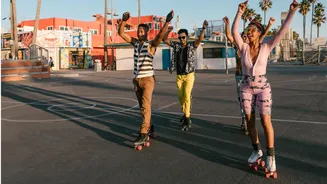
Both activities involve dynamic balance—the ability to remain stable while in motion. However, skating places a much heavier emphasis on it. You are constantly shifting your weight from one foot to the other to generate momentum, a process that demands continuous micro-adjustments. Cycling, while dynamic, involves a more predictable, fixed-plane movement pattern. The bigger challenge for skaters is static balance: the ability to hold a position. Just standing still on skates without rolling or wobbling is a skill in itself, something a cyclist only contends with when coming to a complete stop.
The Core: Your Centre of Command
In both sports, your core—the muscles of your abdomen, obliques, and lower back—is crucial for stability. On a bike, a strong core provides a solid platform, allowing your legs to transfer power to the pedals efficiently without wasting energy by rocking your upper body. It connects your upper and lower body into a single, stable unit. While cycling engages the core, skating demands even more from it. Every push, glide, and turn originates from your centre, and your core muscles are in a constant state of engagement to keep your torso upright and stable over your moving feet.
Legs and Ankles: The Fine-Tuning Tools
While both activities provide a great leg workout, the way the muscles are used for balance differs significantly. Cycling primarily strengthens the large muscles like the quadriceps, hamstrings, and glutes through the repetitive motion of pedaling. Your feet are locked onto the pedals, so your ankles play a minor role in balance. Skating is a masterclass in ankle strength and proprioception—your body's awareness of its position in space. The small muscles in your feet and around your ankles are constantly firing to make tiny adjustments, feeling the surface and keeping the skate directly beneath your centre of gravity. Skating also heavily recruits the hip abductor muscles on the outside of your hips to maintain stability during the single-leg glide phase.
Upper Body and Arms: Steering vs. Swinging
Your upper body's role in balancing is also distinct. In cycling, your arms and shoulders are primarily for steering and support. You use the handlebars to make corrections, and your upper body acts as a stable anchor. While important, the movements are relatively subtle. In skating, your arms are dynamic tools for balance and propulsion. You swing them to counterbalance the movement of your legs and to generate momentum, much like a sprinter does. They are active participants in the rhythm of your movement, helping to keep your body aligned and adding power to your stride.