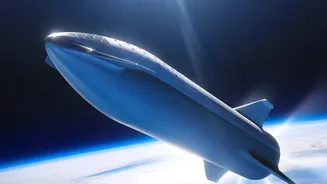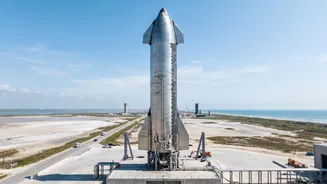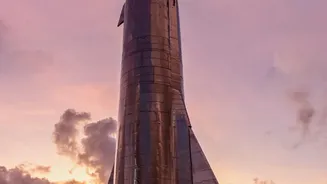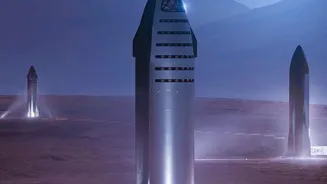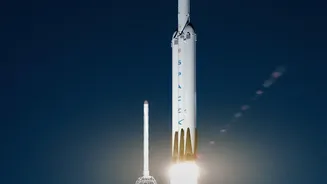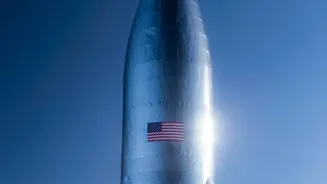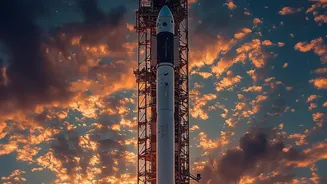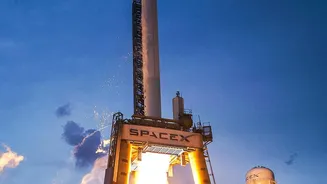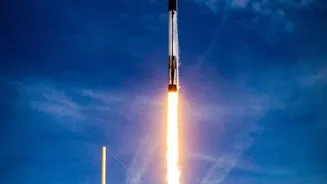

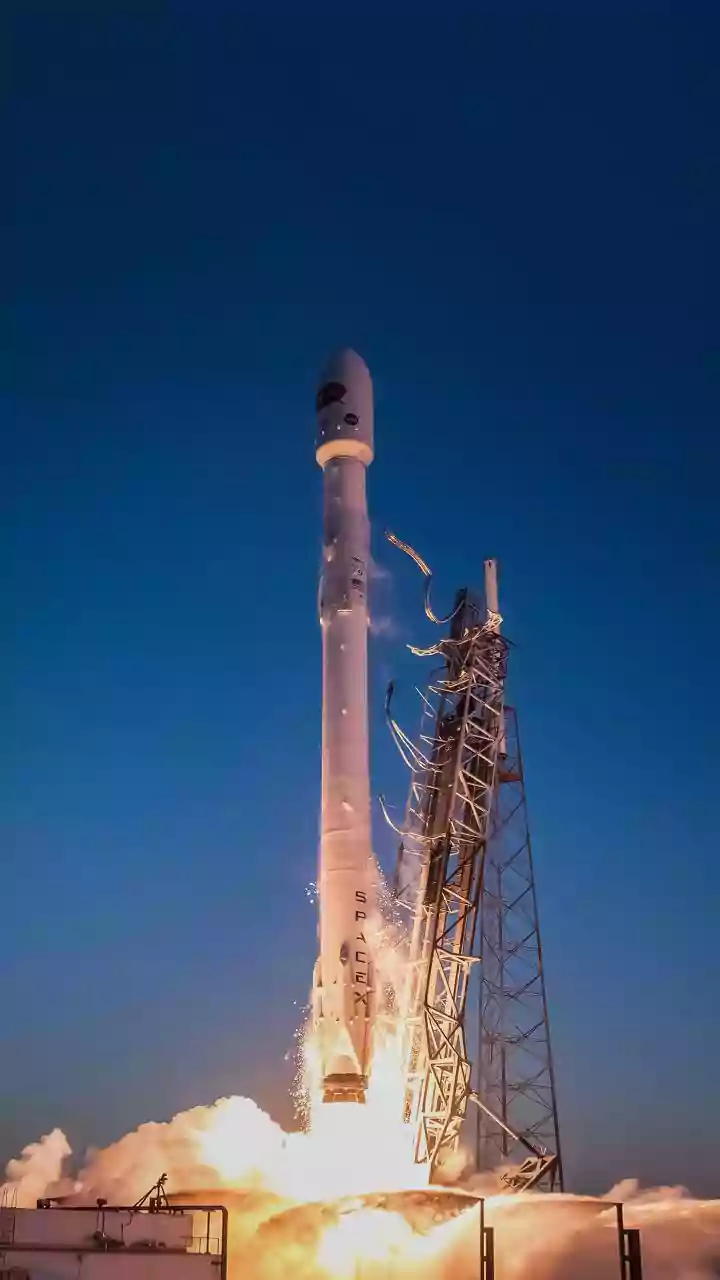
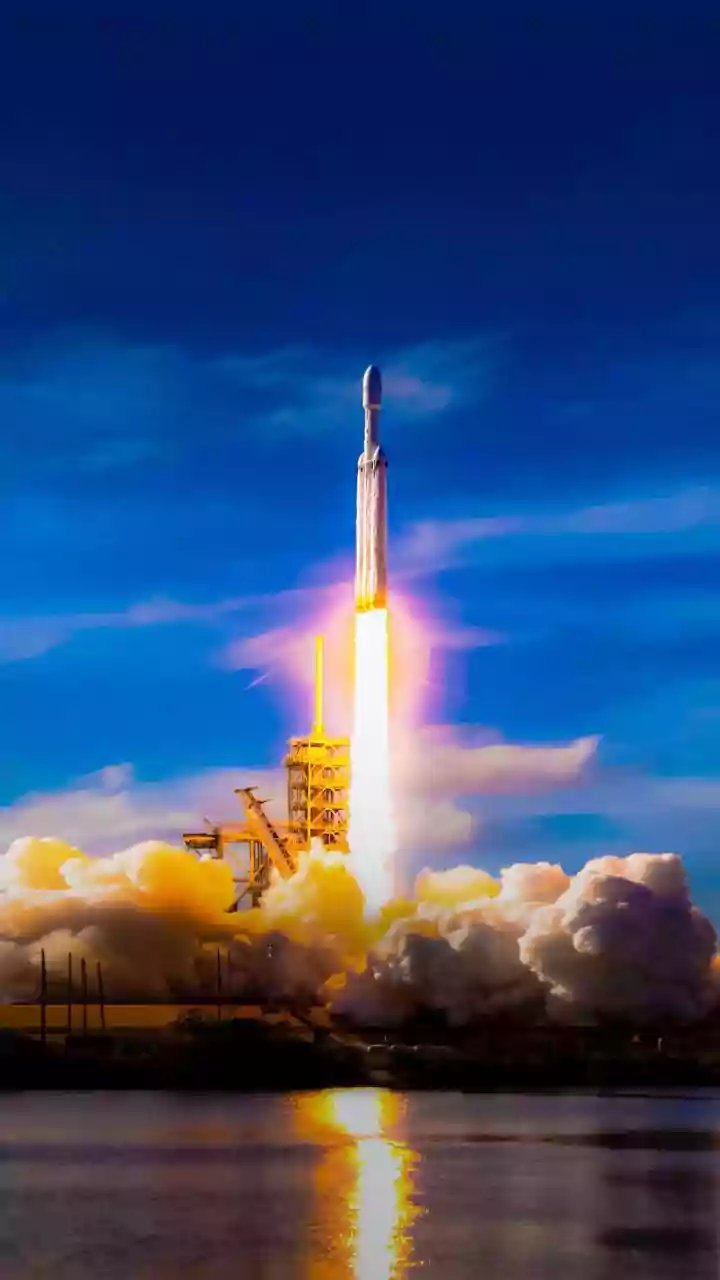
SpaceX's latest Starship flight on November 14 was a spectacular display of progress, culminating in the historic catch of the upper stage. But amid the celebration, a crucial goal remains elusive: the 'double catch'.
The Holy Grail: What is a Double Catch?
In the world of rocketry, the ultimate
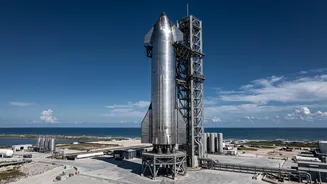
dream is airline-like reusability. Imagine an aircraft that is discarded after a single flight; the cost would be astronomical. That is the current paradigm in spaceflight, and it's what SpaceX aims to shatter with Starship. The 'double catch' is the cornerstone of this vision. It refers to the recovery of both parts of the Starship system—the massive Super Heavy booster and the Starship upper stage—by catching them in mid-air with giant mechanical arms on the launch tower, nicknamed 'Mechazilla'. On the November 14 mission, while the Starship spacecraft was successfully caught after orbiting the Earth for 22 hours, the Super Heavy booster's catch was aborted, and it was diverted for a splashdown in the Gulf of Mexico. This makes achieving a full, two-part recovery the next major hurdle.
Why the Catch Matters More Than Landing
SpaceX's own Falcon 9 rocket already lands its first stage for reuse. So why the obsession with a complex, high-risk catch maneuver? The answer lies in efficiency and speed. By catching the booster and ship, SpaceX can eliminate the need for heavy, complex landing legs on the vehicles themselves. This saved weight translates directly into more payload capacity, meaning more satellites, cargo, or eventually, people can be sent to orbit and beyond for the same amount of fuel. Furthermore, catching the stages directly at the launch mount means they can theoretically be inspected, refuelled, and stacked for another launch in a fraction of the time it would take to recover them from a landing pad or a barge at sea. This rapid turnaround is the key to unlocking the 'airplane-like cadence' of launches that Elon Musk envisions, which is fundamental to the business cases for Starlink and Mars colonization.
The November 14 Flight: Half a Victory
The 15th test flight was a mission of incredible ambition. The plan was to launch Starship, have the Super Heavy booster return for a catch within minutes, while the upper stage completed 14 orbits, deployed 26 Starlink satellites, and then returned for its own catch nearly a day later. The upper stage's journey was a resounding success. It reached orbit, deployed its satellite payload, survived a fiery re-entry, and was deftly caught by the tower's 'chopstick' arms in a stunning, sci-fi-like finale. However, the Super Heavy booster's return did not go to plan. Due to what was described as minor engine underperformance and a subsequent low fuel state, the automated systems aborted the catch to avoid risking damage to the launch tower and diverted the booster for a water landing. While the loss of the booster was a setback, the successful orbital flight and ship recovery provided invaluable data.
The 'Chopsticks': A Towering Technical Challenge
The Mechazilla tower and its catching arms are an engineering marvel, but the maneuver they must perform is fraught with risk. The Super Heavy booster returns from the edge of space to perform a powered landing, hovering and sliding sideways to align perfectly with the arms. The Starship upper stage faces an even greater challenge, returning from orbital velocity at thousands of kilometres per hour. It must use its heat shield and flaps to slow down and steer itself with pinpoint accuracy back to the launch site, all before its final landing burn and capture. The tolerances are incredibly fine. Success requires flawless performance from the vehicle's sensors, flight computers, and engines, as well as the ground-based tower systems. As the November 14 flight showed, any small anomaly—like a slight underperformance in an engine—can cause the system to default to a safer, but less ideal, outcome.
What Comes Next for SpaceX
Following the successful catch of Ship 42, Elon Musk stated the vehicle brought back a 'motherlode of data' for improving the crucial heat shield. Though the historic ship could likely be refurbished to fly again, it will instead be put on public display, a testament to its achievement. The focus now shifts to the next flight. Engineers will analyze the cause of the booster's fuel issue and implement software and hardware adjustments to ensure it doesn't happen again. For the upper stage, the goal is to achieve 'zero refurbishment', making improvements like woven stainless steel matting to protect the vehicle's structure during the catch so it can be re-flown almost immediately. The next test flight will once again attempt the double catch, a milestone Musk has called the 'critical breakthrough needed to make life multiplanetary'.