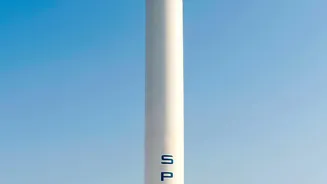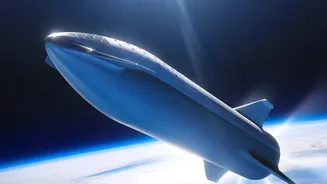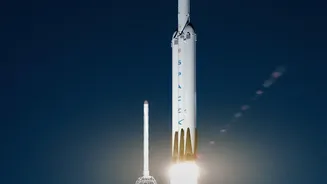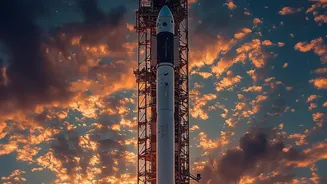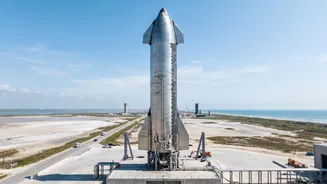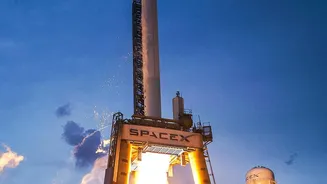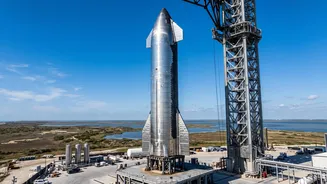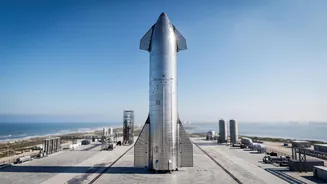

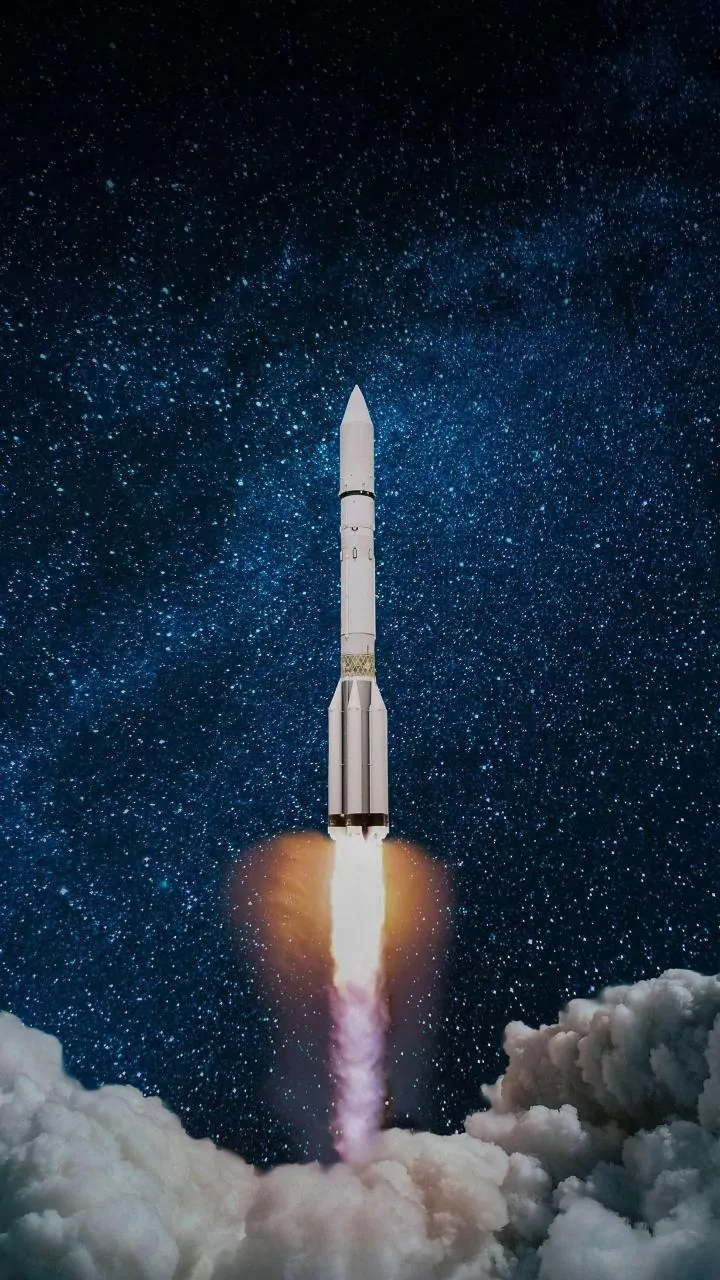
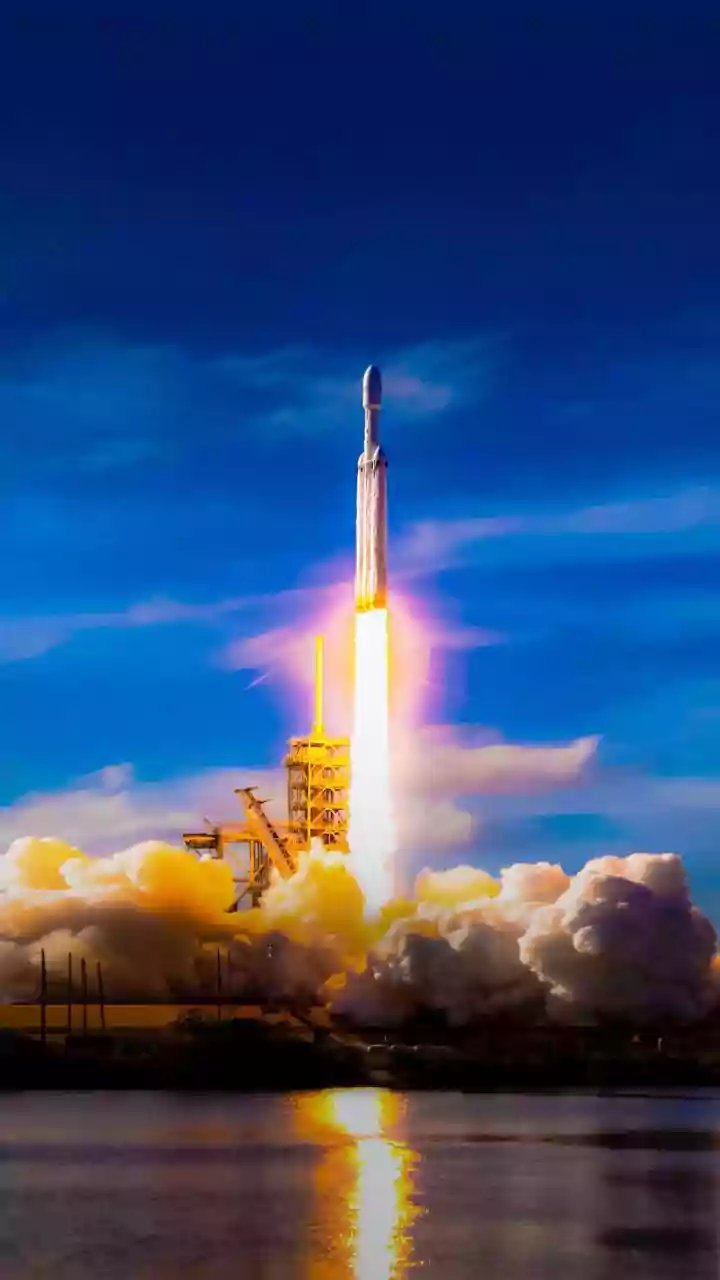
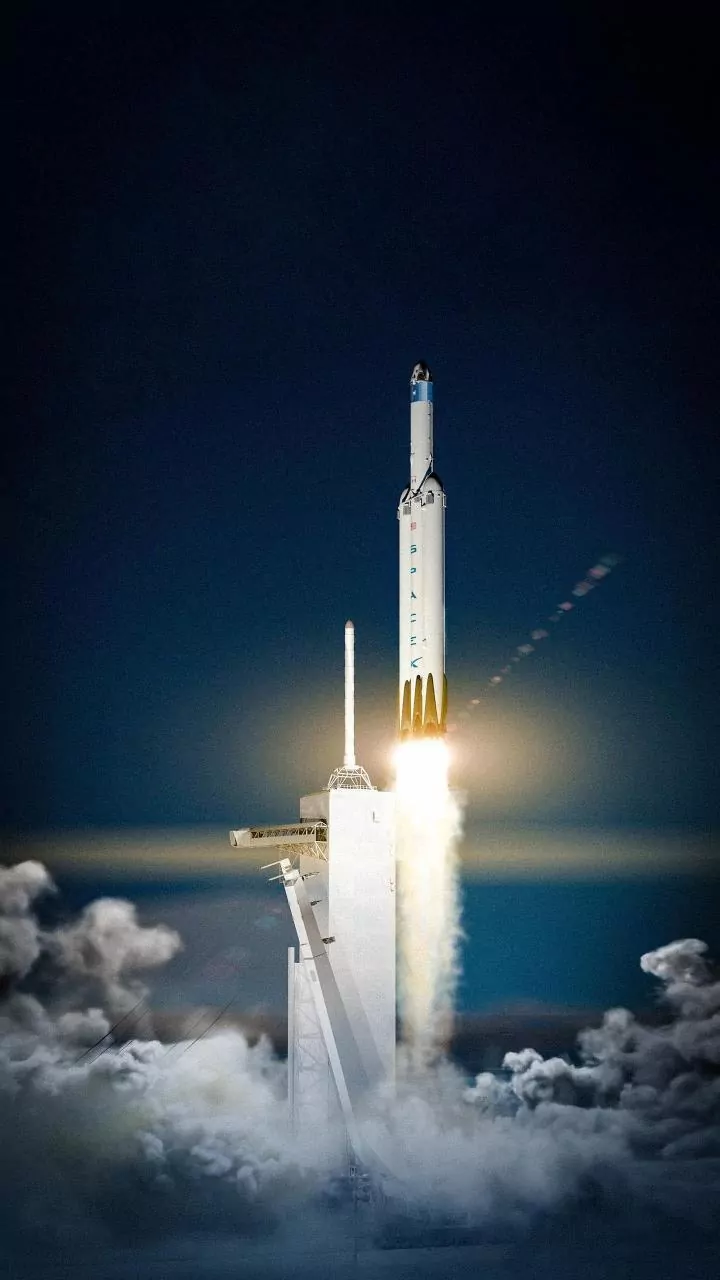
SpaceX's fifteenth Starship flight test delivered a monumental achievement in the quest for a fully reusable rocket. The mission achieved a historic first, proving that a critical piece of the puzzle is solvable and setting the stage for the next great
challenge.
A Tale of Two Landings
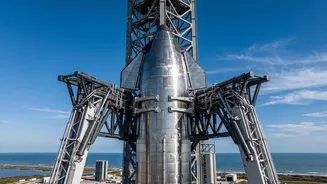
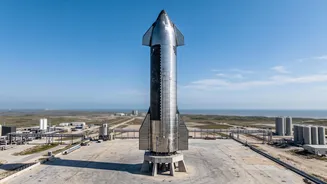
The mission, which began on November 13, 2026, had two primary objectives: recover both the Super Heavy booster and the Starship upper stage. It succeeded spectacularly at one while falling short on the other. After launching to orbit and deploying 26 Starlink satellites, the Starship upper stage, known as Ship 42, spent over 22 hours in space. It then performed a flawless atmospheric reentry and descent, returning to its Texas launch site where two giant mechanical arms on the launch tower, nicknamed 'Mechazilla', closed in to catch the vehicle in mid-air on November 14. The booster, however, had a different fate. Shortly after separating from the upper stage, its boostback burn to return to the launch site was cut short due to a low fuel reading. Its guidance system automatically aborted the tower landing and diverted the booster to a safe splashdown in the Gulf of Mexico, where it was intentionally destroyed.
Why Catching the Ship Is a Game-Changer
While the headline focuses on a 'Starship Tower Catch', the crucial detail is what was caught. The successful recovery of the Starship upper stage is widely considered the 'holy grail' of rocketry. While SpaceX had previously landed and caught its Super Heavy boosters three times, no company had ever recovered an orbital-class upper stage in this manner. The booster only reaches the edge of space before returning, but the upper stage endures a full trip to orbit and a much faster, hotter reentry. Surviving that inferno, navigating precisely back to the launch pad, and performing a powered descent into the grasp of the tower arms is an engineering feat of immense complexity. This success was the single biggest remaining question mark in proving the physical possibility of a fully recoverable Starship system.
The Booster's Automated Abort
The failure to catch the Super Heavy booster on this flight was a setback, but not a catastrophic one. The mission's flight controllers noted that the guidance, navigation, and control system (GNC) performed exactly as it should have. Detecting that the booster did not have enough propellant to safely guarantee a precise return to the tower, the system automatically triggered an abort. This prioritized the safety of the ground infrastructure over the recovery of the booster. While it means SpaceX did not achieve its goal of a full two-stage recovery on this flight, it demonstrated that its safety protocols work. The company will now investigate the root cause of the fuel issue to ensure it does not happen on future flights.
The Next Frontier: Demonstrating Reuse
With the historic catch of Ship 42, the focus now shifts squarely to the second part of the headline: demonstrating reuse. Recovery is only the first step. The ultimate goal for SpaceX is 'rapid reusability', akin to an airplane. This involves inspecting the returned vehicle, performing minimal refurbishment, refueling it, and launching it again in a short period. Engineers are now meticulously examining Ship 42 to assess the condition of its heat shield tiles, engines, and structural integrity after its trip to orbit and back. Proving that the vehicle can withstand multiple flights with quick turnarounds is the next major hurdle. Success in this area is what will ultimately drive down the cost of launching payloads—and eventually people—into orbit, which is the core of SpaceX's business model and its long-term vision for making humanity multiplanetary.