






The Details of the Plan
BMW is embarking on a significant workforce restructuring, aiming to cut around 8,000 jobs globally, which amounts to about 5% of its total staff. The reduction will be carried out through 2027 primarily via voluntary severance packages and attrition,
mainly affecting its German operations. Crucially, these measures are not across the board. The company has explicitly stated that employees directly involved in vehicle production will be excluded from the job-reduction plan. Instead, the focus is on administrative, research, development, and planning departments—the so-called white-collar roles. The move, agreed upon with the company's works council, is designed to be socially responsible, avoiding forced redundancies.
Protecting the Production Core
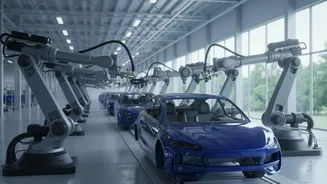
The decision to shield manufacturing staff is the most telling aspect of BMW's strategy. In an era of intense transformation, automakers recognise that their ability to build high-quality vehicles—especially complex new electric models—is their core strength. Protecting factory workers ensures that production volume and quality are not compromised. As the industry pivots to electrification, the skills of production line workers are more critical than ever. Many are being retrained and upskilled to handle the assembly of electric vehicles and battery packs. Weakening this workforce would mean slowing down the transition and compromising the launch of key future products, such as BMW's upcoming 'Neue Klasse' electric vehicle platform.
A Response to Industry-Wide Pressure
BMW's move is not happening in a vacuum. It is a direct response to a perfect storm of challenges facing the German and global auto industry. These pressures include a significant sales slump in the crucial Chinese market, where homegrown EV brands like BYD are rapidly gaining market share. Additionally, high energy costs and complex supply chains in Europe, coupled with international trade tariffs, have squeezed profit margins. By streamlining administrative and development functions, BMW aims to become leaner and more agile, freeing up capital to invest in the high-stakes EV race. The goal is to reduce overhead costs and improve profitability in a fiercely competitive landscape.
A Common Trend Among Automakers
This strategic approach—trimming corporate roles while protecting manufacturing—is becoming a common playbook among legacy automakers. Volkswagen and Mercedes-Benz have announced similar restructuring efforts, also focusing on reducing administrative overhead while safeguarding production expertise. The logic is clear: the future of these companies depends on their ability to design and build cars efficiently. While roles in administration and traditional R&D are being re-evaluated, often with an eye towards automation and AI-driven efficiencies, the hands-on work of building vehicles remains indispensable. This trend signals a broader shift in the automotive workforce, prioritising tech-focused engineering and skilled manufacturing talent above all else.