







What Exactly Is the New Rule?
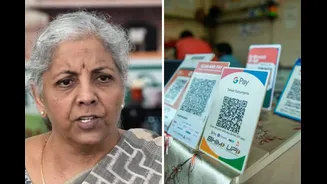
The National Payments Corporation of India (NPCI) has introduced a new framework for Unified Payments Interface (UPI) transactions. Effective October 15, 2026, any UPI payment made for booking railway tickets that exceeds Rs 2,000 will attract a flat
fee of Rs 5. This is a Merchant Discount Rate (MDR), which is essentially a processing fee that merchants pay for accepting digital payments. It's important to note this rule only applies to transactions above the Rs 2,000 threshold. If your ticket costs Rs 1,999, this new charge does not apply. Similarly, all person-to-person UPI transfers remain completely free, regardless of the amount.
The Key Question: Who Pays This Fee?
The headline's mention of a "merchant-side cost" is crucial. In this context, the merchant is the Indian Railway Catering and Tourism Corporation (IRCTC). According to railway officials and directives from the Finance Ministry, this Rs 5 fee is meant to be paid by the merchant, not the passenger. So, if you book a ticket for Rs 3,000, you should only be charged Rs 3,000, not Rs 3,005. The fee is designed to be absorbed by the service provider as a cost of doing business. The government has explicitly advised banks to ensure that merchants do not pass this MDR on to customers. While merchants are expected to follow this, it remains a key point for consumers to watch when they make future bookings.
Why Is This Change Happening Now?
For years, UPI transactions have been largely free for both users and merchants, a policy that fuelled its massive adoption. However, this has put a strain on the financial institutions that maintain the payment infrastructure. According to the NPCI, reintroducing a small, structured fee is necessary to ensure the long-term sustainability and continued investment in the UPI ecosystem. The goal is to create a revenue stream to support the system's operational costs without burdening the average user. Over 95% of all person-to-merchant UPI payments are for amounts less than Rs 2,000, so the vast majority of transactions will remain unaffected by this change.
A Special Rate for Essential Services
The Rs 5 flat fee for railways is actually a concessional rate. Under the new rules, most other regular merchant transactions above Rs 2,000 will attract an MDR of 0.4% of the transaction value. For example, a Rs 5,000 payment to a standard online retailer would incur a Rs 20 MDR. For a railway ticket of the same value, the MDR is capped at just Rs 5. This special, lower rate has been extended to other essential services as well, including fuel payments, insurance premiums, and utility bills, to prevent sharp cost increases in these critical sectors. This tiered approach shows a clear intent to balance system sustainability with consumer affordability for necessary expenses.
How This Fits into Your Booking Costs
Regular train travellers know that IRCTC already levies a convenience fee on online bookings. These fees vary based on the class of travel (AC or non-AC) and the payment method used. Historically, using UPI has often come with a lower convenience fee compared to credit or debit cards as part of a push to promote digital payments. This new Rs 5 MDR is separate from and in addition to IRCTC's own convenience fee. However, since the MDR is a merchant-side charge, it shouldn't appear as a new, separate line item on your bill. The final amount you pay should simply be the ticket fare plus the existing, applicable convenience fee.