





What Exactly Is Changing?
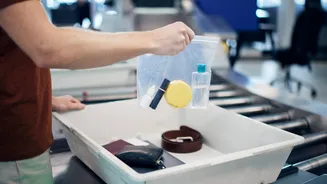
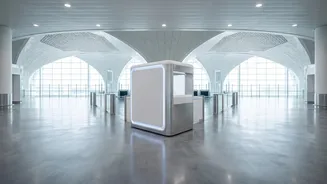
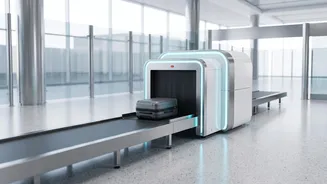
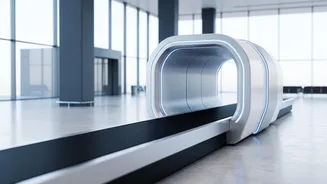
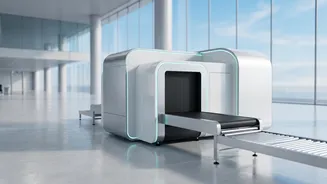
Dubai Airport is in the process of a major technology upgrade, gradually replacing its older security equipment with state-of-the-art Computed Tomography (CT) scanners. For passengers, this means the end of the frantic unpacking ritual at security checkpoints.
Where these new scanners are operational, you will no longer be required to remove large electronics like laptops and tablets from your hand luggage. The goal, as stated by Dubai Airports CEO Paul Griffiths, is to make the entire process "slicker, quicker, faster, and more convenient" for the millions of passengers who pass through one of the world's busiest hubs. The move follows successful trials and is now part of a continuous, airport-wide upgrade program.
How the New Technology Works
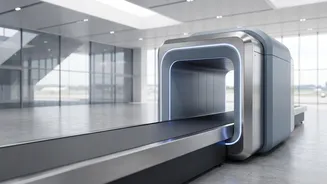
The new machines use CT technology, similar to what's used in the medical field for detailed internal scans. Instead of producing a flat 2D X-ray image, a CT scanner rotates around the bag, taking hundreds of images from different angles. Sophisticated software and artificial intelligence then stitch these images together to create a detailed, rotatable 3D model of your bag and its contents. This allows security staff to get a much clearer, more in-depth view, making it possible to identify items and assess potential threats without needing them to be physically removed and placed in a separate tray. The system can automatically detect explosives and other prohibited materials with a much higher degree of accuracy.
The Dual Benefits: Speed and Security
The most immediate benefit for travellers is, of course, speed and convenience. By eliminating the need to unpack and repack bags, security lanes can move much faster, reducing queues and overall stress. This is a significant advantage at an airport as busy as DXB, where small efficiencies can have a massive impact on passenger flow. However, the upgrade is not just about convenience. CT scanners represent a major leap forward in security effectiveness. The high-resolution 3D images provide a much more thorough analysis of a bag's contents, reducing the rate of false alarms and the need for intrusive manual searches. This enhanced detection capability ensures that safety standards are improved even as the passenger experience becomes smoother.
What About the 100ml Liquid Rule?
This is a key point for travellers to understand. While the new CT scanners are technologically capable of screening liquids inside bags, this does not mean that the 100ml liquid restriction has been abolished. For now, Dubai Airports' official guidance remains unchanged: liquids, aerosols, and gels in hand luggage should be in containers of 100ml or less, all fitting within a single transparent bag. While other airports with similar technology have started to relax liquid rules, travellers passing through Dubai should continue to adhere to the existing restrictions until an official change is announced. The primary change currently being rolled out is the ability to keep these compliant liquids—along with laptops—inside your bag during the screening process.
When and Where to Expect the Change
The rollout of the new CT scanners is a gradual and ongoing program across all terminals at Dubai International Airport. Some machines are already in operation, while others will be installed as older equipment is phased out. Reports suggest the full installation across Terminals 1, 2, and 3 is part of a project expected to be completed by the end of 2026. Because the rollout is gradual, travellers might encounter both the new and old systems at different security lanes. The key takeaway is to always follow the instructions of the security staff on duty. If you are directed to remove your laptop, you should still do so. Over time, the new, more convenient process will become the standard across the entire airport.