






Who Is John Hogue?
John Hogue is a prolific author and media personality who has built a career as one of the world's foremost authorities on Nostradamus and other prophetic traditions. He defines himself as a 'rogue scholar', and has written numerous books, appeared on countless
TV shows, and maintains a popular website where he decodes the cryptic verses of the 16th-century French seer. Hogue claims to cut through sensationalism to find the real meaning in prophecies, often linking them to current geopolitical events. His followers see him as a gifted interpreter with an uncanny track record, while critics view him as a master of vague predictions that can be retrofitted to almost any event.
The Global Crisis Prophecy
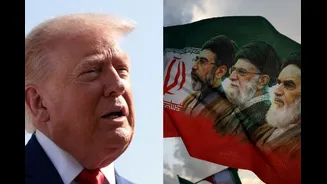
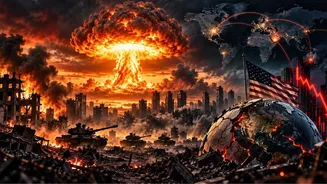
Hogue's most recent and alarming predictions, shared widely in late October 2026, paint a grim picture of the near future. Drawing from his interpretation of Nostradamus, he warns of several interconnected crises culminating by 2028. The first is a potential nuclear strike, possibly against Iran. The second is the death of a figure Nostradamus supposedly codenamed 'Mabus', whom Hogue has identified as Saudi Crown Prince Mohammed bin Salman. Hogue claims this event will trigger a devastating 27-year war that cripples global energy supplies. Finally, he predicts a complete economic and political collapse of the United States as a world power, pinpointing a two-year window from September 2026 to September 2028 for this decline.
An Examination of the Evidence
The core of the headline's claim is that these predictions are 'unsupported speculation', and a close look reveals why. Hogue’s method relies on interpreting the highly symbolic, centuries-old quatrains of Nostradamus, which are notoriously vague and open to endless reinterpretation. There is no objective, falsifiable evidence presented for these claims. For example, the 'Mabus' prophecy has been attributed to different figures by various interpreters over the years. Hogue's specific identification of the Saudi Crown Prince is an interpretive leap, not a factual deduction. Similarly, his prediction of a US collapse is based on a personal astrological cycle he calls the 'Shofar Silence', not on conventional economic or geopolitical analysis. The predictions are structured as warnings of what 'could' happen, a classic feature of prophetic claims that allows for any outcome to be explained away.
A History of Hits and Misses
Proponents often point to a high accuracy rate for Hogue's predictions, with some sources claiming it surpasses 80 percent. Hogue himself has claimed a perfect record in predicting the popular vote winner of every US presidential election since 1968. However, critics argue this track record is inflated by vague or high-probability predictions. An independent analysis of his predictions from 1994 onwards found a mixed bag of hits, misses, and unfalsifiable claims. For instance, a prediction that major earthquakes would occur in spring 2010 was technically correct, but critics noted that multiple major earthquakes happen every season, making it less of a prophecy and more of a statistical likelihood. Crucially, like many seers, Hogue did not predict some of the most significant events of our time, such as the 9/11 attacks.
The Enduring Appeal of Doom
So if the predictions are speculative, why do they command so much attention? The appeal lies in the human desire for certainty in uncertain times. Figures like Hogue offer a narrative framework that seems to explain chaotic world events, providing a sense of understanding, if not control. The idea that the future isn't fixed, but can be changed if we heed the warnings, is also a powerful and hopeful message embedded within the dire forecasts. Hogue himself often states his goal is to present potential futures so that humanity can consciously choose a different path, framing his work not as fatalistic prediction but as a call to awareness. This transforms him from a simple bearer of bad news into a guide, offering wisdom to navigate a turbulent world.