
An Evening with Venus
All through September, the planet Venus will be a brilliant beacon in the western sky just after sunset. It’s impossible to miss, shining brighter than any star. On September 22, it reaches its peak brightness for the year. Look for it in the evening
twilight; it’s a stunningly bright, white jewel that will captivate even the most casual observer. If you look closely on September 14, you'll see a slender crescent moon pass very close to the dazzling planet, creating a beautiful celestial pairing.
Spot Five Planets in One Month
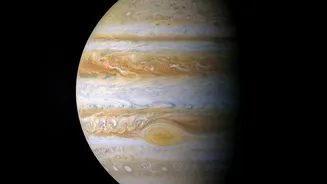
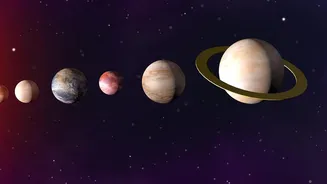
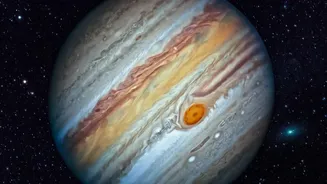
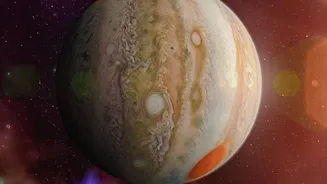
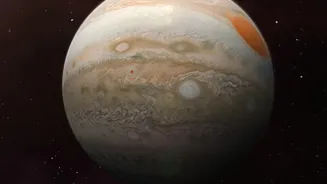
September 2026 is a special month for planet-watchers, as all five planets visible to the naked eye—Mercury, Venus, Mars, Jupiter, and Saturn—will grace our skies. While Venus dominates the evening, you can catch Saturn rising in the east shortly after sunset, visible for most of the night as a steady, yellowish point of light. For early risers, the pre-dawn sky offers its own rewards. Look to the east before sunrise to spot reddish Mars and the unmistakably bright Jupiter. On the morning of September 8, a thin crescent moon will hang beautifully close to Jupiter.
The Harvest Moon Rises
The full moon on September 26 is known as the Harvest Moon. It is the full moon that falls closest to the autumnal equinox. This timing has a unique effect: for several evenings in a row, the moon will rise very close to sunset, providing extra hours of bright moonlight. This was once a practical advantage for farmers working late to bring in their crops. When it rises, the Harvest Moon often appears large and takes on a beautiful golden or orange hue due to Earth's atmosphere. Look for Saturn shining nearby on the nights of September 26 and 27.
The Autumnal Equinox
On September 22, the September Equinox officially marks the beginning of astronomical autumn in the Northern Hemisphere. On this day, the Sun shines directly over the Earth's equator, and day and night are of approximately equal length across the globe. While this isn't a visual event you can watch in the sky, it's a significant milestone in our planet's yearly journey around the Sun, heralding the shift toward cooler, longer nights that are perfect for stargazing.
Navigating by the Stars
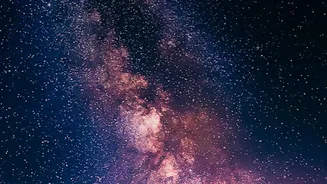
The September sky is home to some magnificent constellations. High overhead, you can find the Summer Triangle, an asterism formed by three bright stars: Vega, Deneb, and Altair. It’s one of the easiest patterns to spot. Deneb is the tail of Cygnus, the Swan, which looks like a giant cross flying down the Milky Way. To the east, look for the great square of Pegasus, the winged horse. These ancient patterns have guided travellers for centuries and are a rewarding sight for anyone willing to learn their way around the celestial map.
Tips for the Best Viewing
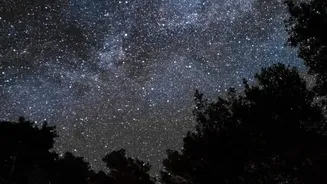
To make the most of your stargazing experience, find a location away from bright city lights. The darker the sky, the more you will see. Give your eyes at least 15-20 minutes to fully adjust to the darkness; this will allow you to spot fainter stars and details. While all the sights mentioned are visible with the naked eye, a simple pair of binoculars can enhance the view, revealing more stars and offering a closer look at the planets. Most importantly, be patient. The night sky is a slow, unfolding spectacle that rewards a quiet, unhurried approach.