



The Old Way: Use Once, Throw Away
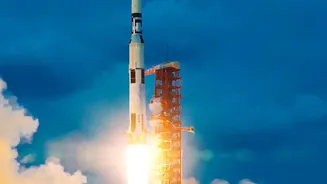
Imagine an airline having to build a brand-new aircraft for every single flight. That was the reality of space exploration for over 60 years. Rockets were expendable marvels of engineering, designed to perform their fiery mission once before their expensive
components were discarded in the ocean or burned up in the atmosphere. This model made space access incredibly expensive, with launch costs running into hundreds of millions of dollars. The first stage, or booster, is the most powerful and costly part of a rocket, accounting for a huge chunk of the total expense. Building a new one for every mission created a massive financial barrier, limiting space to governments and a few large corporations.
The SpaceX Revolution: Land, Refuel, Relaunch
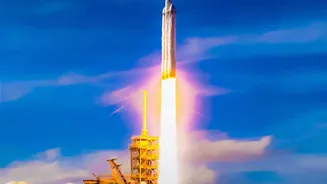
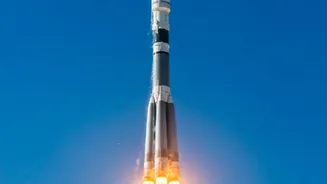
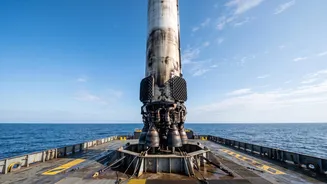
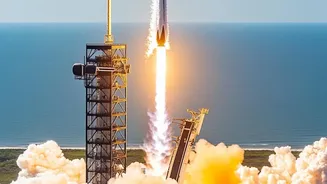
SpaceX, led by Elon Musk, fundamentally challenged this paradigm with its Falcon 9 rocket. The company achieved what many thought was science fiction: vertically landing a rocket booster back on Earth after it had sent its payload to orbit. By mastering this complex manoeuvre—using grid fins for control and engine burns to slow its descent—SpaceX turned its boosters into reusable assets. This 'secret sauce' has allowed the company to dominate the global launch market. A single Falcon 9 booster has now flown more than 35 times, a record set in 2026. This high rate of reuse drastically cuts the cost per launch. Where a traditional expendable launch might cost over $100 million, a Falcon 9 flight is advertised at around $67 million, with the potential for costs to drop even further as reusability increases.
ISRO’s Strategic Push: The Pushpak Vehicle
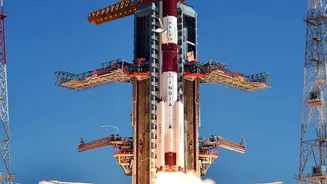
Not to be left behind, the Indian Space Research Organisation (ISRO) is making significant strides with its own reusable launch vehicle program. ISRO's solution, a winged vehicle named 'Pushpak', takes a different approach. Instead of a vertical, powered landing like SpaceX, Pushpak is designed to land horizontally on a runway like an aircraft. In a series of successful landing experiments (RLV-LEX), ISRO has demonstrated Pushpak's remarkable autonomous capabilities. In its final test in June 2024, the vehicle was dropped from a helicopter at an altitude of 4.5 km and, using its own guidance systems, performed a perfect, high-speed landing at over 320 km/h. Crucially, the vehicle used in the final test was the same one from the previous experiment, proving the reusability of its systems. This program is a critical step for ISRO towards developing a two-stage-to-orbit vehicle and bringing down India's own launch costs by a significant margin.
The Economic Big Bang
The impact of reusability extends far beyond just two agencies. It has triggered an economic 'big bang' across the entire space industry. With launch costs plummeting, deploying large satellite constellations like SpaceX's own Starlink becomes commercially viable. Twenty years ago, sending a kilogram to orbit cost around ten thousand dollars; today, it's a fraction of that, with projections suggesting it could fall to less than $100 per kilogram by the end of the decade. This democratisation of space access is fostering a new wave of innovation. Startups and countries that were previously priced out of orbit can now afford to launch their own satellites for communication, Earth observation, and scientific research. This increased competition is driving the industry forward, creating a virtuous cycle of lower costs and greater access.
A New Global Space Race
The success of SpaceX and the progress of ISRO are part of a broader, global trend. Reusability is no longer a niche experiment but a strategic priority for space-faring nations and private companies alike. In the United States, Blue Origin is developing its New Glenn rocket for orbital missions, while Rocket Lab is already recovering and reusing components of its smaller Electron rocket. In China, multiple private companies are developing reusable launch vehicles. Europe is also investing in its own reusable systems, with projects like Themis powered by the Prometheus engine. This global race is not just about national prestige; it's a competition for a slice of the rapidly growing space economy. As ISRO chairman S. Somanath has stated, reusability is now 'mandatory for launchers'.