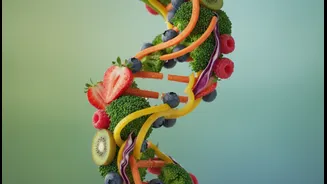








The Promise of a Personalised Plate
Welcome to the world of nutrigenomics, a field exploring the intricate dance between your genes, your diet, and your health. The concept is simple: by understanding your unique genetic makeup, you might be able to tailor your food choices to work with
your body, not against it. For instance, variations in certain genes can influence how you metabolise fats, process vitamins, or react to substances like caffeine and alcohol. A gene called MTHFR, for example, plays a role in how your body uses folate (a B vitamin). Some variations of this gene are less efficient, suggesting that individuals who have them might need to pay closer attention to getting enough folate from natural sources like leafy greens, beans, and lentils. Similarly, the APOE gene has variants that are linked to how the body processes fats and cholesterol, with some research suggesting different dietary approaches for different types.
What a DNA Test Might Reveal
A direct-to-consumer genetic test won't hand you a flawless, lifelong meal plan. However, it can provide some interesting insights that can serve as a starting point for a conversation with a healthcare professional. You might learn about a genetic predisposition to lactose intolerance, long after you started noticing that dairy doesn't agree with you. It could also shed light on how quickly your body metabolises caffeine, explaining why a late-afternoon coffee gives your friend a mild buzz while it keeps you awake all night. Some tests also look at genes associated with the metabolism of specific nutrients, like vitamins B12 and D, or omega-3 fatty acids. This information can be a helpful nudge, encouraging you to focus on including certain nutrient-rich foods in your diet, such as fatty fish for omega-3s or fortified foods for vitamin D.
Why Your Genes Aren't Your Destiny
Here's the most important takeaway: your genes are not a crystal ball. Most common health conditions, like heart disease and type 2 diabetes, and traits like weight, are polygenic, meaning they are influenced by hundreds or even thousands of genes, not just one. Furthermore, lifestyle and environment play a massive role. In fact, some estimates suggest that behaviours and social factors account for a far larger percentage of your overall health outcome than genetics alone. Think of your genes as a basic blueprint. You might have a genetic tendency towards high cholesterol, but a diet rich in fibre, low in saturated fats, and combined with regular exercise can significantly lower your actual risk. Your DNA might suggest a certain dietary path, but the choices you make every day are what ultimately pave the road.
Using Genetic Clues Wisely
So, how can you use this information without letting it cause food-related anxiety? The key is to see it as one tool in a much larger wellness toolbox. Instead of obsessing over a single gene or a single nutrient, use the insights to inform broader, healthier patterns. For example, if you find you have a variant of the APOE4 gene, which is associated with a higher risk for certain conditions, you might choose to adopt a heart-healthy, brain-protective diet like the Mediterranean diet. This pattern of eating—rich in fruits, vegetables, whole grains, and healthy fats—is beneficial for almost everyone, regardless of their genetic makeup. The genetic information simply provides an extra layer of motivation. It’s also wise to discuss your results with a doctor or a registered dietitian who can help you interpret them in the context of your overall health, blood work, and lifestyle.