









The Golden Rules of Composting
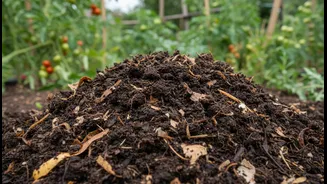
A healthy compost pile is a living ecosystem that runs on a simple formula. It needs a balanced diet of 'greens' and 'browns', adequate moisture, and a steady supply of air. Greens, such as kitchen scraps, fresh grass clippings, and coffee grounds, are
rich in nitrogen. They provide the protein that microbes need to multiply and heat up the pile. Browns are carbon-rich materials like dried leaves, straw, shredded cardboard, and newspaper. They act as the energy source for the decomposers. The ideal carbon-to-nitrogen (C:N) ratio is around 30 parts carbon to one part nitrogen. Moisture should be like a wrung-out sponge—damp, but not dripping. Finally, air is crucial for the aerobic bacteria that do the work efficiently and without foul odors. Turning the pile regularly introduces oxygen, keeping these beneficial microbes happy.
What Happens When It Pours
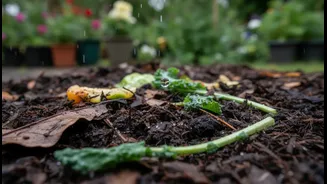
Excessive rain is the fastest way to disrupt this delicate balance. When a compost pile becomes saturated, water fills the tiny air pockets that are essential for aerobic microbes. Without oxygen, these beneficial organisms die off and are replaced by anaerobic bacteria. This shift is what causes the classic signs of a waterlogged pile: a foul, sour, or rotten-egg smell, a slimy texture, and a sudden drop in temperature. The process of decomposition slows dramatically or stops altogether. Furthermore, heavy rain can wash away, or leach, valuable nutrients like nitrogen from the pile, reducing the fertilizing power of your finished compost. What was once a productive 'hot' pile can quickly become a cold, compacted, and inefficient mess.
Adjusting the Ratio: Browns to the Rescue
The headline problem of rainy weather is too much water, and the solution is to add materials that soak it up. This is where your 'browns' come in. While you might instinctively think of stopping additions, the correct response is to change the ratio of what you add. During wet spells, significantly increase the proportion of carbon-rich materials. Think of it as giving your compost a towel. Stockpiling dry materials before the rainy season is a wise strategy. Shredded cardboard (non-glossy), torn newspaper, dry leaves, straw, and wood chips are all excellent choices. When you add kitchen scraps (greens), follow them with two to three times the volume of browns to absorb the excess moisture and restore the structural integrity of the pile. This simple adjustment to your input ratio is the key to managing a compost pile through wet weather.
Practical Fixes for a Soggy Pile
If your pile is already waterlogged, you'll need to take corrective action. The first step is to stop adding any more water-rich greens. Next, use a pitchfork to turn the pile, which will help introduce air into the compacted, wet layers. As you turn it, mix in generous amounts of dry, brown materials. Break up any clumps to ensure the dry material is well-integrated. Don't be shy with the browns—you may need a significant amount to absorb the excess water. Another effective technique is to improve drainage at the base. You can build your pile on a foundation of coarse twigs or even on a wooden pallet to allow excess water to drain away freely. For compost bins, ensure the drainage holes are not clogged.
Prevention Is Better Than the Cure
The easiest way to deal with a soggy compost pile is to prevent it from getting soaked in the first place. If your compost is in an open pile or a bin without a lid, covering it during heavy downpours is crucial. A simple tarp or a piece of corrugated sheeting will do the job. However, make sure the cover is not completely sealed; the pile still needs to breathe. If possible, position your compost bin in a sheltered location, such as under the eaves of a shed or a large tree, to reduce its exposure to direct rain. Taking these preventative steps, combined with keeping a healthy stockpile of brown materials on hand, ensures that rainy weather is just a minor challenge, not a compost catastrophe.