





The Underrated Power of Wall Push-Ups
The wall push-up is a modified version of a traditional push-up, using a vertical surface to reduce the load and make the exercise more accessible. It's an excellent starting point for anyone new to fitness or for those who find floor push-ups too challenging.
Despite being a beginner-friendly move, it effectively targets the same key muscle groups: the chest (pectorals), shoulders (deltoids), and triceps. Beyond the primary movers, wall push-ups also engage your core muscles, including your abs and obliques, to maintain a stable, straight line from head to heels. This makes it a surprisingly comprehensive exercise that builds foundational strength, improves posture, and enhances joint stability with minimal stress on the wrists and shoulders.
Perfecting Your Form: A Step-by-Step Guide
Proper form is crucial to maximize benefits and prevent injury. Follow these steps for a perfect wall push-up. First, stand facing a sturdy wall, about an arm's length away, with your feet shoulder-width apart. Place your palms flat on the wall, slightly wider than your shoulders and at chest or shoulder height. Your fingers should point toward the ceiling. Before you begin, engage your core by bracing your abs and squeezing your glutes; think of it as a moving plank. Inhale as you slowly bend your elbows to about a 45-degree angle, lowering your chest toward the wall. Keep your body in a straight line—don't let your hips sag or your head drop. Pause briefly, then exhale as you press firmly through your palms to straighten your arms and return to the starting position.
Common Mistakes and How to Avoid Them
A few common errors can undermine your efforts. One is letting the hips sag, which indicates a lack of core engagement. To fix this, consciously tighten your abs and glutes throughout the movement. Another frequent mistake is flaring the elbows out to the sides. This can strain your shoulder joints. Instead, aim to keep your elbows tucked at roughly a 45-degree angle to your body. Lastly, avoid dropping your head or leading with your chin. Your head and neck should remain in a neutral position, aligned with your spine. Focus on leading the movement with your chest to ensure proper form.
How to Progress and Add Challenge
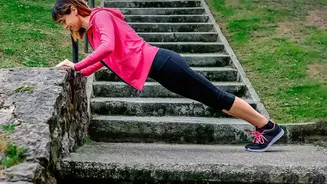
Once you can comfortably complete several sets of 10-15 wall push-ups with perfect form, it's time to increase the difficulty. The simplest way to progress is to move your feet further back from the wall. This increases the angle of your body and forces your muscles to support more of your body weight. For another challenge, try slowing down the movement, especially the lowering phase, to increase time under tension. You can also try variations like a one-armed wall push-up, placing one hand behind your back to focus the load. When wall push-ups become too easy even with these modifications, you are ready to move to incline push-ups on a lower, stable surface like a countertop or a bench, gradually working your way to the floor.