
A Sudden, Unprecedented Deluge
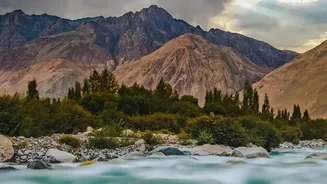
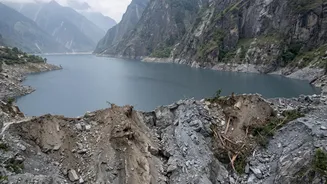
On the morning of August 26, a torrent of mud, rock, and water surged through the Bhote Koshi and Trishuli river systems in Nepal's Rasuwa, Nuwakot, and Dhading districts. The flood wave was exceptionally powerful and fast, with water levels in the Trishuli River
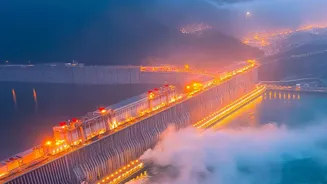
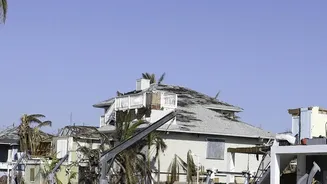
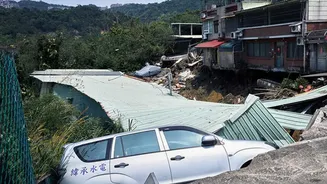
rising by as much as nine metres in just 30 minutes at one monitoring station. The disaster swept away homes, vital roads, bridges, and hydropower facilities, cutting off entire communities and destroying the Gyirong Port complex on the China-Nepal border, a major trade gateway. The scale of the event was immense, with the debris-laden flow travelling nearly 100 kilometres downstream and impacting populated areas with almost no warning. Early warning systems, designed for slower-moving monsoon floods, were overwhelmed and in some cases destroyed before they could transmit an alert.
The Real Culprit: An Ice-Rock Avalanche
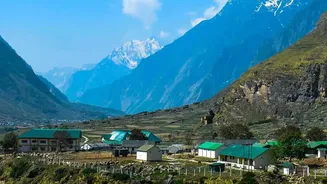
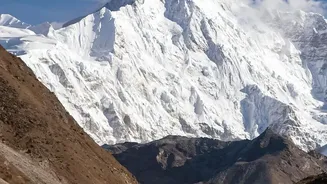
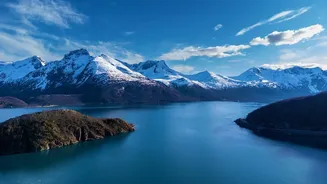
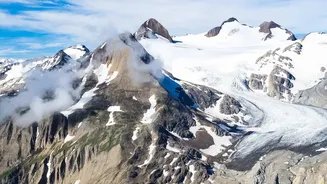
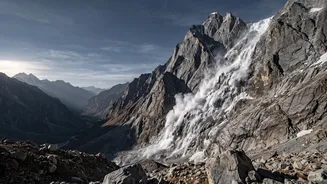
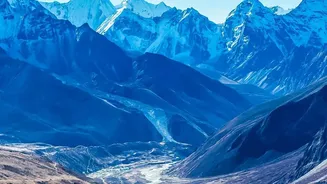
In the immediate aftermath, many assumed the cause was a Glacial Lake Outburst Flood (GLOF), a well-known hazard in the Himalayas where a lake formed by melting glaciers breaches its natural dam. However, a preliminary report from scientists at the Nepal Environment Society, along with analysis from international bodies like the USGS and ICIMOD, quickly ruled this out. Satellite imagery showed no evidence of a lake outburst. Instead, the data pointed to a massive ice-rock avalanche. A huge section of a glacier, along with the underlying bedrock, detached from Langtang-Lirung peak at an altitude of about 5,200 metres. This enormous mass of ice and rock plunged down the steep mountain, generating a seismic signal equivalent to a magnitude 5.2 earthquake.
How an Avalanche Becomes a Flood
An ice-rock avalanche transforms into a flood through a violent, high-energy process. As the mass of rock and ice fell, friction and impact generated immense heat, melting the ice and creating a slurry. This torrent picked up more loose rock, soil, and sediment as it scoured the valley floor, rapidly evolving into a fast-moving, debris-heavy flood. In this case, the avalanche descended over 2,200 metres, entering the Lhende Khola river and then surging into the larger Bhote Koshi and Trishuli rivers. Unlike a GLOF, which is primarily a release of water, this event was a catastrophic mass movement of solid material that turned into a fluid force, giving it immense destructive power.
A Warming Himalayas: The Broader Context
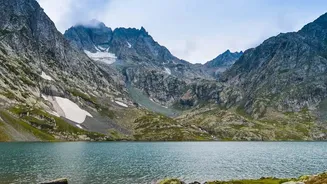
While scientists are cautious about attributing any single event directly to climate change, they agree it is making such disasters more likely. The Himalayas are warming at a rate significantly faster than the global average. This warming is degrading permafrost—the permanently frozen ground that acts like glue, holding steep rock faces together. As this permafrost thaws, mountain slopes become less stable, increasing the risk of major landslides and rockfalls. Furthermore, accelerating glacier melt not only creates and expands glacial lakes but can also make the glaciers themselves more unstable. The Nepal disaster is seen by many experts as a terrifying example of the kinds of new and evolving threats emerging in the world's highest mountains.
Implications for India and the Region
The events in Nepal serve as a stark warning for the entire Himalayan region, including India. States like Uttarakhand, Himachal Pradesh, Sikkim, and Arunachal Pradesh share similar geography and are exposed to the same climate-driven risks. The 2021 Chamoli disaster in Uttarakhand was also triggered by a similar rock-ice avalanche, highlighting the cross-border nature of this threat. The Trishuli river, where this flood occurred, is a tributary of the Gandak river, which flows into India's Gangetic plain. Disasters upstream in Nepal can have devastating consequences for downstream communities in Bihar and Uttar Pradesh. This event underscores the urgent need for enhanced cross-border scientific collaboration, data sharing, and the development of more sophisticated early warning systems capable of detecting these rapid-onset hazards.