


More Than Just a Conference
SMOPS-2026, the International Conference on Spacecraft Mission Operations, brought together experts from global space agencies like ISRO, NASA, and ESA to deliberate on the next generation of mission management. Held in Bengaluru, the event was a focal
point for discussions on AI, automation, and robotics in complex operations. While the topics ranged from human spaceflight to managing large satellite constellations, a central theme emerged: the transformative, and sometimes challenging, role of artificial intelligence in executing complex, high-stakes missions. ISRO Chairman V. Narayanan noted that AI and machine learning have moved from theoretical concepts to a 'need of the hour' in the space sector.
The Promise of AI Autonomy
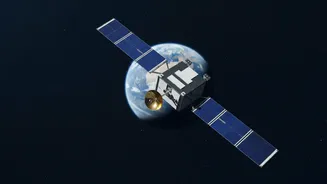
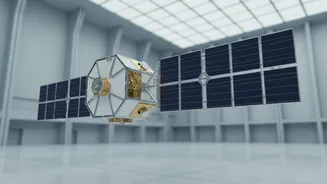
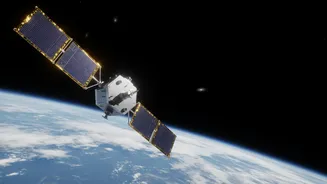
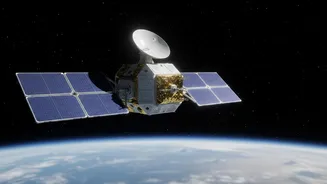
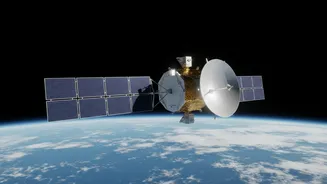
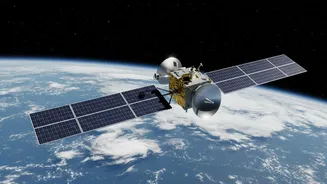
The core of the discussion revolved around AI's ability to make mission operations more efficient and autonomous. Presentations and papers explored how AI can handle massive volumes of data from sensors, enabling real-time analysis and decision-making that would be impossible for human operators alone. For instance, in simulated scenarios, AI systems demonstrated the capacity to manage complex satellite constellations, reroute assets in response to unforeseen events, and process intelligence data at incredible speeds. This capability is crucial for everything from deep space exploration, where communication lags make direct human control impractical, to managing the ever-increasing traffic in Earth's orbit. The goal is to create systems that can operate independently, adapt to changing conditions, and predict potential issues before they become critical failures.
The 'Human-in-the-Loop' Reality
Despite the focus on autonomy, a key revelation from SMOPS-2026 was the consensus that the future is not about replacing humans, but about creating powerful human-AI synergy. Experts repeatedly underscored the limitations and 'brittleness' of current AI. While AI excels at data-driven, logical tasks, it struggles with ambiguity, ethical nuances, and understanding a commander's broader intent—elements that require human judgment. Reports from various simulations show that the most successful outcomes occur when AI provides recommendations and handles rapid tactical execution, while a human commander retains ultimate authority, especially for critical decisions. This 'human-in-the-loop' or 'human-on-the-loop' model ensures that accountability and ethical oversight remain firmly in human hands.
Challenges on the Horizon
The path to seamless autonomous operations is not without significant obstacles, a fact openly discussed at the conference. One of the biggest hurdles is trust. For a human operator to confidently rely on an AI partner, the AI's reasoning must be transparent and understandable. Another major challenge is security; as missions become more reliant on AI and data networks, they also become more vulnerable to cyber threats. Furthermore, developing AI that is robust enough to handle completely novel situations—events not covered in its training data—remains a fundamental research problem. Overcoming these issues of trust, security, and adaptability is paramount before truly autonomous systems can be widely deployed in critical missions.