




A Dismissal of Replacement Theory
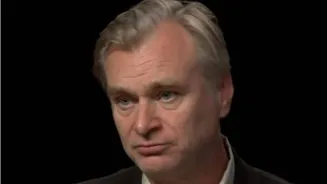
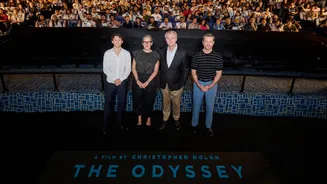
While promoting his new film, 'The Odyssey', Christopher Nolan addressed the growing anxiety around AI's role in the creative industries. He firmly dismissed the more alarmist predictions, stating that the idea of AI replacing human creativity wholesale
is “a nonsense.” This stance directly confronts the panic that has rippled through Hollywood, which was a central issue in the 2023 writers’ and actors’ strikes. Nolan noted an interesting phenomenon: while Wall Street and tech investors have eagerly embraced AI, the public, particularly younger audiences, have shown a strong 'disdain' for it. He pointed to the popularisation of the term “AI slop” by young people as evidence of their quick and harsh judgment of machine-generated content that lacks a human touch.
The Audience Rejection of 'AI Slop'
Nolan believes this public skepticism, especially from Gen Z, is significant. He told reporters he has never seen such a swift and widespread dismissal of a new technology by the very audience it is often meant to capture. Citing his own young adult children, he observed that they identify and reject low-quality AI content “immediately and harsh.” In his view, audiences are currently gravitating toward more authentic and tangible filmmaking after years of heavily virtual environments. He pointed to the success of young filmmakers like Kane Parsons ('Backrooms') and Curry Barker ('Obsession'), who have gained attention for their practical and inventive approaches, as proof that there is a renewed interest in real, tactile forms of storytelling.
A Tool, Not a Creator
However, Nolan's critique is not a blanket rejection of all technology. He is careful to distinguish between AI as a creative author and AI as a helpful instrument. He fully expects that AI will lead to the development of useful “imaging tools” for filmmakers. This aligns with his long-held philosophy of using technology to solve practical problems. For example, he has previously spoken about using digital tools to paint out wires from complex stunts, which allows for greater safety and flexibility on set. The practical AI tools emerging in the industry include software for AI-powered editing, automated color matching, visual effects compositing, and even cleaning up audio. These are applications that assist and augment the creative process, rather than attempting to originate it.
Why Nolan's Voice Carries Weight
Nolan’s perspective is particularly resonant because he is not an anti-technology Luddite. He is a director renowned for pushing the boundaries of cinematic technology, from the complex visual effects in 'Inception' to the large-format spectacle of 'Oppenheimer' and 'The Odyssey'. At the same time, he is famously committed to practical effects and analog filmmaking, shooting on film and even avoiding a smartphone to protect his creative focus. This dual identity—as both a tech innovator and a staunch defender of the human element—gives his nuanced take on AI a unique authority. His main concern is not the technology itself, but how it is used. He argues that companies can use AI as a way to evade responsibility for their actions, and that attributing godlike power to it lets people off the hook.