







1. Master Kettlebell Flows
Kettlebell training is already known for building power, but linking movements together into a seamless 'flow' takes it to another level. A flow is a sequence of exercises performed without rest, such as moving from a swing to a clean, then into a press.
This continuous motion forces your muscles to work in coordination, building real-world strength that depends on timing and control. The rhythmic nature of transitioning smoothly from one pattern to the next trains your body to manage force while under fatigue. The hips drive the power, the core transfers it, and the upper body—shoulders, back, and arms—guides the weight. This not only builds explosive strength but also significantly improves grip and core stability. To start, choose a lighter kettlebell than you would for single-rep sets and focus on mastering the transitions between two or three basic movements before attempting longer, more complex sequences.
2. Unleash Power with Medicine Ball Slams
For a pure expression of explosive power, few exercises are as effective or satisfying as the medicine ball slam. This movement is inherently rhythmic, especially when performed for multiple reps. The exercise begins by raising the ball overhead and then using your entire body—led by your core and lats—to powerfully throw it down into the ground. This action trains the exact muscles used in throwing and grappling sports. To maximize power development, the focus should be on speed and force with each repetition, rather than performing a high number of slow reps. A popular variation is the Rotational Slam, where you twist your torso and slam the ball to the side of your body. This variation places a greater emphasis on the obliques and develops rotational power, which is crucial for many athletic activities.
3. Embrace Plyometric Push-Ups
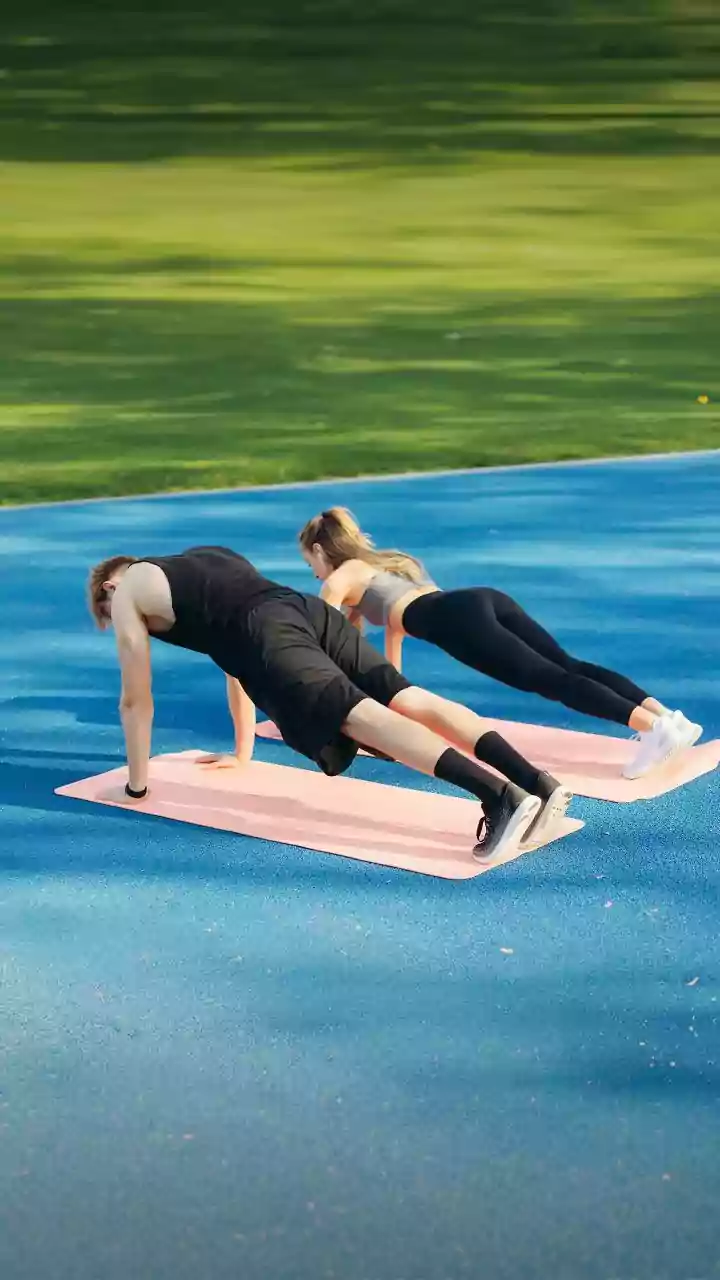
The standard push-up is a staple for upper-body strength, but its plyometric variations are designed specifically for power. Plyometrics involve a rapid stretch and contraction of the muscles, which trains your fast-twitch muscle fibers to produce force quickly. The most common version is the Clapping Push-Up, where you explosively push yourself off the ground with enough force to clap your hands before landing softly and moving into the next rep. This develops explosive chest, shoulder, and tricep power. To build up to it, you can start by simply pushing off the ground without the clap, focusing on getting your hands to leave the floor. More advanced variations, like the 'Superman' push-up where both hands and feet leave the ground, challenge your power and core stability even further. The key is to maintain a straight body line and focus on the quality and explosiveness of each push.
4. Explore Animal Flow Movements
Animal Flow is a bodyweight training system that uses ground-based movements inspired by animals to build strength, mobility, and coordination. Many of its core movements, or 'flows', are fantastic for developing upper-body power in a rhythmic, controlled manner. Movements like the 'Side Kickthrough' and 'Crab Reach' require you to support and move your bodyweight in fluid, multi-planar patterns. For instance, the Side Kickthrough starts in a 'Beast' position (on all fours with knees lifted) and involves rotating your body while kicking one leg through, a motion that builds powerful rotational strength in the shoulders and core. The Crab Reach enhances shoulder stability and mobility as you bridge your hips up and reach one arm overhead. These exercises teach body control and build functional strength by forcing your muscles to stabilize and generate power through dynamic, flowing sequences.
5. Wield a Steel Mace
The steel mace, a tool with its weight unevenly distributed at the end of a long lever, is purpose-built for developing rhythmic, rotational power. Signature exercises like the 360 and the 10-to-2 involve swinging the mace around your body in a fluid, circular motion. This dynamic movement challenges your grip, core, and shoulders in ways that traditional weights cannot. The continuous rhythm required to control the mace's momentum builds tremendous stability and strength throughout the shoulder girdle and back. Because of the offset weight, your stabilizer muscles have to work overtime to control the path of the mace, developing a resilient and functional form of upper-body power. Starting with a light mace is critical to master the form before progressing, as the momentum can be challenging to control initially.