
A Milestone Unveiled
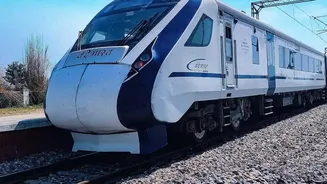
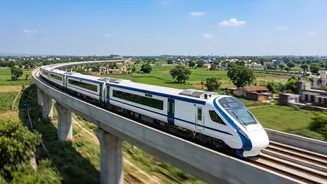
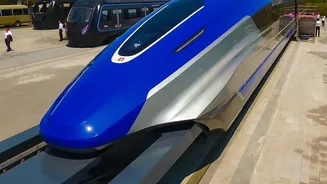
The completion of the first test coach marks a critical phase for the Mumbai-Ahmedabad High-Speed Rail (MAHSR) project. According to Railways Minister Ashwini Vaishnaw, this development is a key step towards commencing trials for the country's first high-speed
rail service. This isn't just a prototype; it is the first piece of rolling stock manufactured for testing on the new corridor, bringing the project out of the realm of pure civil construction and into the next stage of system integration. The coach's readiness signals that after years of groundwork, the physical reality of the bullet train is taking shape.
The Priority Corridor: Surat to Bilimora
All eyes are on the 50-kilometre stretch between Surat and Bilimora in Gujarat. Officials have identified this section as the priority corridor, targeting it to become the first operational segment of the bullet train network. The target for commissioning this line is August 2027. By focusing on a smaller, manageable section first, the National High Speed Rail Corporation Ltd (NHSRCL) can conduct real-world testing and begin services in phases. Progress in this area is advanced, with significant work on viaducts, bridges, and stations already completed. Civil construction on the connecting Vapi-Surat section is also slated for completion by December 2026, further paving the way for the 2027 launch.
Inside Japan's E5 Shinkansen
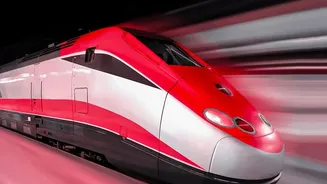
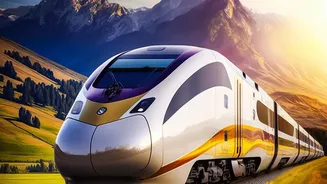
The trains set to run on this corridor are based on Japan's proven E5 Series Shinkansen technology, renowned for its safety and punctuality. These trains are engineered to operate at a speed of 320 kmph, drastically cutting travel time. The design of the E5 series incorporates a long, aerodynamic nose which helps in reducing the 'tunnel boom' phenomenon — a loud noise created when trains enter tunnels at high speed. Passenger comfort is a key feature, with spacious seating, climate-controlled interiors, and advanced safety systems like automatic braking and anti-derailment mechanisms. While the Japanese E5 series has three classes of seating, the Indian version will be configured with Economy and Executive classes, featuring amenities like rotating seats to enhance the passenger experience.
The Bigger Picture: A 508-Kilometre Vision
The Surat-Bilimora section is just the beginning. It is part of the larger 508-km MAHSR corridor that will connect Mumbai with Ahmedabad, passing through Maharashtra, Gujarat, and the Union Territory of Dadra and Nagar Haveli. The entire corridor will feature 12 modern stations, including major hubs like Mumbai (BKC), Thane, Vapi, Surat, Vadodara, and Ahmedabad. While the initial opening is targeted for 2027, the project will be rolled out in successive phases, eventually linking the two financial powerhouses and reducing travel time to under three hours. The project, whose foundation was laid in 2017, involves complex engineering, including elevated viaducts, river bridges, and even an undersea tunnel at Thane Creek.
Economic Engine and Future Connectivity
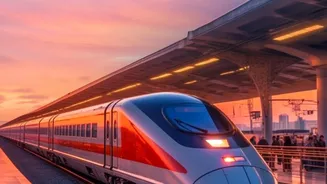
The bullet train is more than just a fast mode of transport; it is envisioned as a catalyst for economic growth and regional development. By providing rapid connectivity between key industrial and commercial centres, the project is expected to boost business, tourism, and create employment opportunities. The development of domestic manufacturing capabilities for high-speed train components is also a significant aspect of the project's 'Make in India' goals. With the first test coach ready and construction advancing steadily, the 2027 target for the first service appears increasingly achievable. It represents a significant stride towards modernizing India's railway infrastructure and setting the stage for a potential network of high-speed corridors across the nation.