





1. Troy: Where the Long Journey Began
Every odyssey needs a starting point, and for Odysseus, it was the smouldering ruins of Troy. After a brutal 10-year war, concluded by his cunning Trojan Horse ploy, he set sail for his home in Ithaca, expecting a short trip. Instead, he embarked on another
10-year saga. For centuries, Troy was considered purely mythical, but in the 1870s, excavations at Hisarlık in modern-day Turkey uncovered the layered ruins of a city that perfectly matched ancient descriptions. Now a UNESCO World Heritage Site, the archaeological remains reveal a powerful, frequently rebuilt Bronze Age city that occupied a strategic position between Europe and Asia. Standing among these ancient stones, you can almost hear the echoes of the war that launched the world's most famous voyage.
2. Land of the Lotus-Eaters: The Tunisian Coast of Forgetfulness
Blown off course for nine days, Odysseus and his crew first made landfall in a place of dangerous bliss: the Land of the Lotus-Eaters. Here, the natives consumed a fruit that induced a state of blissful apathy, erasing all desire to return home. Odysseus had to forcibly drag his men back to the ships to continue their journey. Ancient writers like Herodotus and Polybius identified this place with the island of Djerba, off the coast of Tunisia. The region was known for date-like fruits, and the idea of a land that makes one forget their past seems a fitting metaphor for the temptations sailors faced after long, arduous journeys at sea.
3. The Cyclops's Lair: Sicily's Volcanic Coast
One of the most terrifying encounters in the epic occurs on the island of the Cyclops Polyphemus. This one-eyed giant traps Odysseus and his men in a cave, devouring them one by one. Odysseus's clever escape—blinding the giant and sneaking out under his sheep—is a high point of his cunning. This savage island is widely associated with Sicily, specifically the area around Mount Etna. The volcanic landscape and the huge, basalt sea stacks known as the Cyclopean Isles off the coast of Aci Trezza, provide a dramatic backdrop that fits the myth perfectly. Legend holds that these very rocks are the ones the blinded Polyphemus hurled at Odysseus's escaping ship.
4. Circe's Island: The Sorceress's Promontory
Next, the crew landed on Aeaea, home to the enchantress Circe, who turned unwary sailors into swine. With the help of the god Hermes, Odysseus overcame her magic, and she became his ally and lover for a year, offering crucial advice for the journey ahead. This mythical island is strongly identified with Monte Circeo, a dramatic limestone promontory on the southwest coast of Italy. In ancient times, the surrounding marshlands would have made the mountain appear as an island from the sea. The name itself, Circeo, is a direct link to the sorceress, and its many caves have yielded traces of prehistoric settlement, adding to its aura of ancient power and mystery.
5. Scylla and Charybdis: The Strait of Messina
Circe's most harrowing advice concerned a narrow channel guarded by two monsters. On one side was Scylla, a six-headed beast who snatched sailors from their decks, and on the other was Charybdis, a massive whirlpool that could swallow a whole ship. This gave rise to the idiom "between a rock and a hard place." This perilous passage is almost universally identified with the Strait of Messina, the turbulent channel separating Sicily from mainland Italy. The strait is notorious for its powerful currents and whirlpools, giving a real-world basis for the myth's terrifying imagery. Odysseus chose to sail closer to Scylla, sacrificing six men to save his ship from the all-consuming vortex of Charybdis.
6. Calypso's Island: A Gilded Cage in Malta
After losing his entire crew, Odysseus washed ashore on Ogygia, the island of the beautiful nymph Calypso. She held him captive for seven years, promising him immortality if he would be her husband. While many locations have been proposed, a strong tradition identifies Ogygia with Gozo, Malta's sister island. A specific cave overlooking the striking red sands of Ramla Bay is even known as Calypso's Cave. The island's tranquil beauty and isolation fit Homer's description of a place so enchanting it could make even a hero forget his quest for home.
7. Ithaca: The Elusive Destination
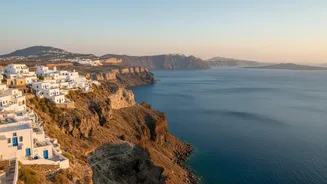
The entire ten-year journey was driven by one goal: returning home to Ithaca. The modern Greek island of Ithaca in the Ionian Sea has long been accepted as Odysseus's kingdom. While some details in Homer's description don't perfectly match the island's current topography, the connection is strong. Archaeological finds, including a potential Mycenaean-era palace and inscriptions bearing Odysseus's name, suggest that ancient inhabitants certainly believed this was the home of the legendary king. The rugged, beautiful island, with its deep-set harbour in Vathy, remains a powerful symbol of homecoming and the ultimate reward for a journey endured.