





Why Sitting Is So Tough on Your Hips
To understand the solution, we first need to grasp the problem. When you sit for prolonged periods, your body adapts to that position. The muscles at the front of your hips, known as the hip flexors, remain in a constantly shortened state. Over time,
these muscles can become tight and restricted. Simultaneously, the muscles on the opposite side, your glutes, become less active and weaken from disuse. This combination creates a significant muscular imbalance around your pelvis. This doesn't just lead to that 'tight' feeling; it can pull on your lower back, alter your walking gait, and even increase the risk of knee pain as other parts of your body are forced to compensate for what the hips can no longer do efficiently.
The Rise of the At-Your-Desk Stretch
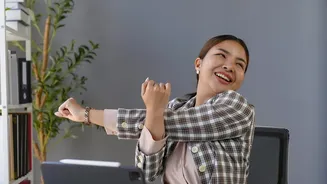
Enter desk yoga. The idea is simple and appealing: perform a few gentle yoga poses like a seated spinal twist or a figure-four stretch without ever leaving your chair. It feels productive and seems to directly target the areas that feel stiff. For many, it's a welcome interruption to the monotony of sitting still, offering a moment of mindful movement and temporary relief. These short breaks are certainly better than no movement at all. The World Health Organization recommends limiting sedentary time and replacing it with activity, and a quick desk-side stretch is one way to do that. However, when the goal is to genuinely resolve the deep-seated mobility issues caused by sitting, the effectiveness of these quick fixes comes into question.
Flexibility vs. Mobility: A Crucial Distinction
Here's the core of the issue: many desk yoga routines focus on flexibility, but what desk workers truly need is mobility. The terms are often used interchangeably, but they are not the same. Flexibility refers to a muscle's ability to be passively stretched, like using your hands to pull your knee to your chest. Mobility, on the other hand, is the ability to actively move a joint through its full range of motion with control and strength. You can be very flexible but still have poor mobility if you lack the strength and coordination to control the movement. A passive stretch can provide temporary relief, but it doesn't teach your body how to actively use that new range of motion or correct the underlying muscular weakness.
A Smarter Approach to Desk-Bound Hips
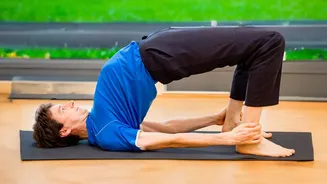
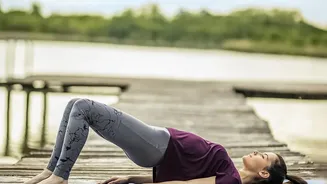
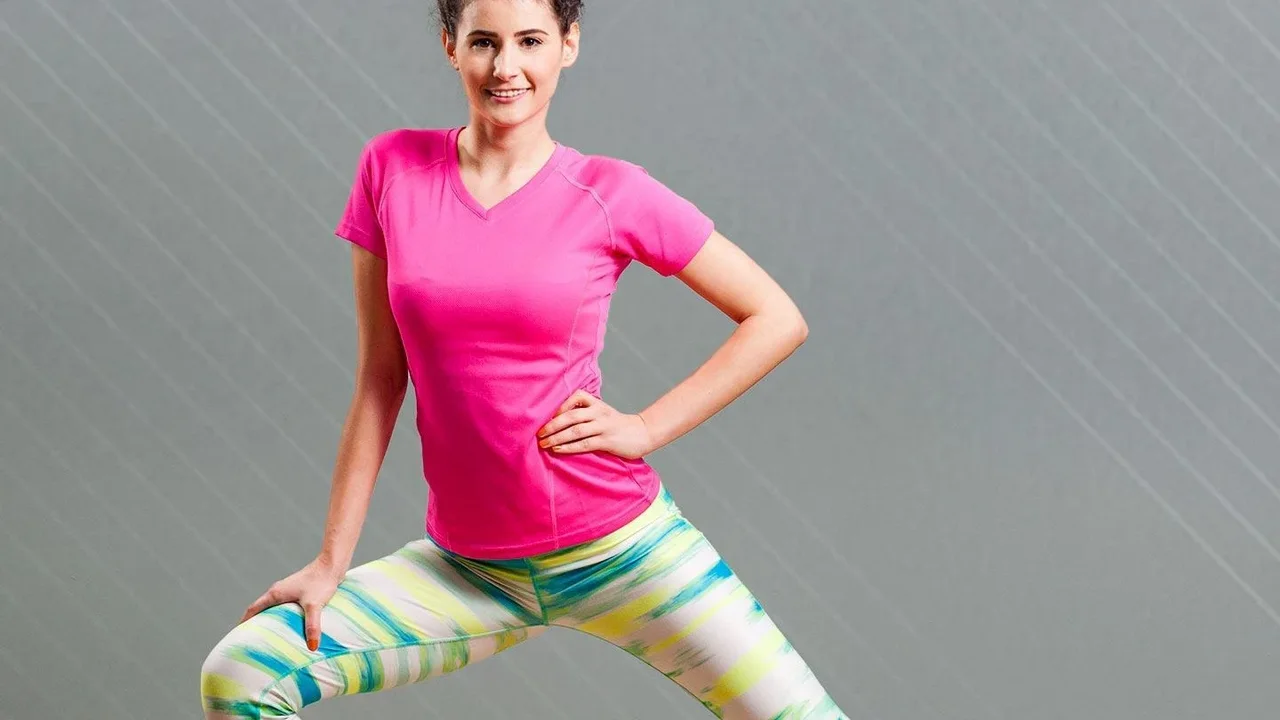
Instead of just passively stretching, a more effective approach combines active lengthening with strengthening. The goal is to counteract the effects of sitting by activating the muscles that sitting turns off. Taking frequent breaks to stand up and walk around every 30 to 60 minutes is the first and most crucial step. When you do take a movement break, focus on exercises that target the root cause. A standing lunge, for example, actively opens the hip flexors of the back leg while engaging the glute. A simple glute bridge, which can be done on the floor, directly strengthens the gluteal muscles that have become inactive. Other powerful movements include bodyweight squats, which encourage the hips to move through a full, controlled range of motion. These active movements are more effective at restoring function than a simple passive stretch held for 30 seconds.
Building Long-Term Hip Health
Think of desk-based movements as 'movement snacks'—essential for breaking up long periods of sitting but not a replacement for a full meal of exercise. The ultimate goal is to build resilient hips that can handle the demands of a sedentary job. This means incorporating dedicated mobility and strength work into your routine outside of office hours. A well-rounded approach includes exercises that move the hips in all directions: flexion (like squatting), extension (like lunges or bridges), and rotation. By pairing mobility drills with strengthening exercises, you teach your body not just to access a greater range of motion, but to control it. This integrated approach is what truly resolves the tightness and weakness cycle, leading to healthier hips, a happier lower back, and more effortless movement in all aspects of life.