


A Galaxy with Three Hearts
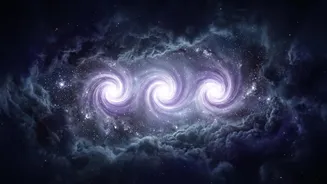
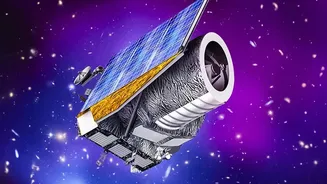
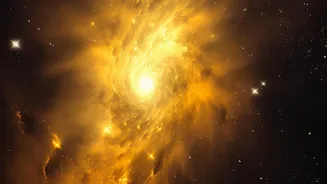
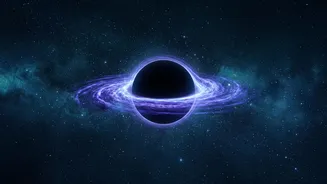
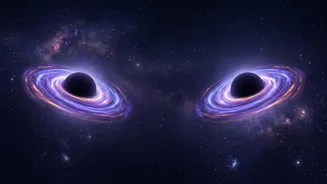
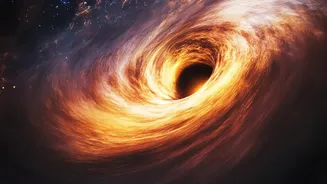
In a remarkable finding, astronomers using the James Webb Space Telescope (JWST) have identified not one, not two, but three supermassive black holes within a single, distant galaxy. This cosmic trio offers a rare glimpse into the chaotic processes that
shaped the early universe. While a third black hole is located further out, two of them are locked in a surprisingly close embrace, separated by a mere 620 light-years. To put that in perspective, while it sounds vast to us, in galactic terms it is an incredibly small distance, suggesting they are on an inevitable collision course.
Seeing the Invisible
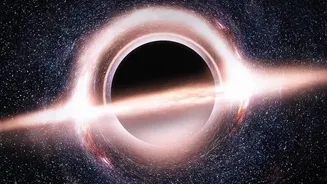
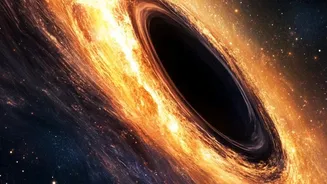
So how do you spot something that, by definition, consumes light? Astronomers didn't see the black holes themselves, but rather their powerful influence on the space around them. As each black hole actively 'feeds' on surrounding gas and dust, the material heats up and glows brightly, creating what is known as an active galactic nucleus. The team identified these three active nuclei by studying the unique patterns in the light emitted by hydrogen gas, which is whipped into a frenzy by the intense gravity. Without the unprecedented detail from the JWST, this cosmic crowd would have likely been mistaken for a single object.
A Merger in the Making
This discovery provides powerful evidence for how galaxies—and their central black holes—grow. In the early universe, galaxy collisions were common. As two galaxies merged, their central black holes would have been drawn toward each other. This finding shows that the process was efficient at bringing these behemoths together. The two closely-orbiting black holes, with a gap of just 620 light-years between them, are expected to merge in the next few hundred million years. Such an event would unleash powerful gravitational waves and create an even more massive black hole, demonstrating a key pathway for how the universe's earliest cosmic giants were built.
Clues to an Ancient Mystery
One of the great puzzles in cosmology is how supermassive black holes grew to billions of times the mass of our sun so quickly after the Big Bang. This system offers a vital clue. The data revealed that the black holes in this galaxy are growing at an unusually rapid rate. The combined mass of the stars in the host galaxy is about 1.3 billion times that of our sun, and its black holes account for a significant portion of that total. This suggests that such multiple-merger systems could be a crucial, and perhaps previously underestimated, factor in the rapid assembly of massive structures in the early cosmos.
Rewriting the Cosmic Map
Perhaps the most exciting implication is that we may have been undercounting the number of active black holes in the distant universe. Systems that were once thought to contain a single, massive black hole might actually host multiple, hidden giants. This discovery implies that there could be many more of these systems waiting to be found. Uncovering them will help scientists piece together a more accurate history of galactic mergers and finally understand the origin story of the universe's most massive and mysterious objects. Each new discovery redraws our map of the cosmos, revealing a universe more dynamic and interconnected than we ever imagined.