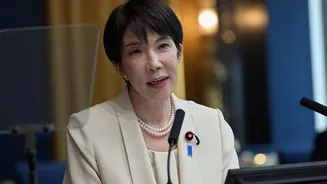









The Prime Minister's Sleep Schedule
In a social media post in July 2026, Japanese Prime Minister Sanae Takaichi revealed that a sleep schedule of zero to three hours per night has become her norm since taking office. She mentioned finally getting five hours of sleep during a national holiday,
which she spent catching up on policy documents, thousands of emails, and household chores like ironing and sewing. This wasn't the first time Takaichi's work habits have made headlines. She has previously mentioned sleeping around two hours a night and once summoned aides for a 3 a.m. meeting to prepare for a budget hearing. These revelations have sparked a national conversation in Japan, a country already grappling with a deeply embedded culture of overwork.
A Political Brand Built on Relentless Work
Sanae Takaichi, Japan's first female prime minister, has long cultivated an image as a tireless worker. Upon her election as leader of the ruling Liberal Democratic Party, she famously declared she would “cast aside the idea of 'work-life balance'” and promised to “work, work, work, work, and work.” She even encouraged her party members to “work like horses.” While she later clarified she wasn't encouraging others to overwork, her public statements and personal habits have consistently projected an ethos of self-sacrifice for the job. For some, this is a sign of admirable dedication, while for critics, it glorifies a dangerous and outdated standard.
The Shadow of 'Karoshi'
The debate around Takaichi's schedule is particularly potent in Japan because of the phenomenon of 'karoshi', which literally means 'death from overwork'. For decades, the country has struggled with a corporate culture that often equates long hours with loyalty and productivity, sometimes with fatal consequences. High-profile cases, including the deaths of employees at major corporations and government bureaucrats due to overwork, have led to calls for labor reform. While attitudes are gradually shifting, Takaichi's comments have been seen by some as a step backward, reinforcing a punishing culture that the country has been actively trying to change.
Is a Sleep-Deprived Leader an Effective Leader?
Beyond the cultural context, Takaichi's routine raises practical questions about governance. Opposition politicians have expressed concern that chronic sleep deprivation could impair judgment and pose a risk to national crisis management. Scientific research supports this concern. Studies have shown that sleep deprivation has effects comparable to alcohol intoxication, impairing cognitive performance, attention, and emotional regulation. While some leaders throughout history have famously survived on little sleep, research suggests that sleeplessness can kill the charisma and control needed for effective leadership. A leader's exhaustion can sabotage not only their own performance but also create a sleep-depriving environment for their team.
A Standoff Between Tradition and Modernity
The public reaction to Takaichi's schedule has been mixed. Some defend her work ethic as necessary for a leader tackling significant national issues like economic security and a weak yen. Her post about catching up on domestic chores has also been interpreted as an appeal to conservative voters, showing she can manage both political duties and traditional household roles. However, many others, particularly younger generations, see it as out of touch. They argue that true leadership involves delegation and prioritising well-being to ensure the quality, not just the quantity, of work. As one opposition leader noted, “Resting is part of her job.”