



The Warming Engine: Why Moisture Lingers Longer
The basic physics is surprisingly simple: a warmer atmosphere holds more energy and, therefore, more moisture. For every degree Celsius the atmosphere warms, its capacity to hold water vapour increases by about 7%. This fact is the engine behind the change.
As global temperatures rise due to greenhouse gas emissions, the atmosphere acts like a larger, thirstier sponge. More water evaporates from oceans, lakes, and land. But because the warmer air can hold this extra moisture for longer, the water vapour doesn't condense and fall as rain as quickly. This extends the time water spends in its gaseous state, a period known as its atmospheric residence time. Scientific consensus confirms that anthropogenic warming is projected to increase this global residence time, effectively lengthening the distance moisture travels between where it evaporates and where it falls as precipitation.
Tracing the Journey of a Water Droplet
Scientists can track this extended journey using sophisticated methods. One of the most powerful techniques involves analysing stable isotopes of water. Water molecules come in slightly different weights depending on the isotopes of hydrogen and oxygen they contain. These variations act like fingerprints, allowing researchers to trace the origin of water vapour and understand the processes it has undergone, such as its source of evaporation and its path through the atmosphere. By taking continuous measurements from the ground, balloons, and satellites, scientists can build a global picture of how moisture moves. These observations, combined with powerful climate models, confirm that water vapour content in the atmosphere is increasing by 1 to 2% per decade, providing a clear signal of a changing hydrological cycle.
When It Rains, It Pours
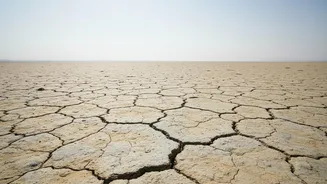
A longer travel time for moisture doesn't mean more gentle, consistent rain. In fact, it often means the opposite. Because the atmosphere is holding more moisture for longer, when conditions are finally right for a storm to form, there is a much larger reservoir of water to draw from. This leads to an increase in the frequency and intensity of extreme weather events. The phenomenon of 'atmospheric rivers'—long, narrow corridors of concentrated moisture—is expected to become more intense. These systems can carry enormous amounts of water vapour from the tropics towards other regions. A warmer world means these atmospheric rivers will be wider, longer, and carry even more moisture, increasing the risk of severe rainfall and flooding when they make landfall. The result is a more volatile pattern: longer dry spells in some areas, punctuated by devastatingly heavy downpours in others.
What This Means for India’s Monsoon
For India, a country whose agriculture and economy are deeply intertwined with the seasonal monsoon, these changes are critical. The predictability of the monsoon is already eroding, with recent years marked by delayed onsets, prolonged dry spells, and sudden, intense bursts of rain. A warmer climate is making the monsoon more erratic. The increased capacity of the atmosphere to hold and transport moisture over long distances directly impacts these patterns. While an El Niño event might traditionally suppress rainfall, a warming climate can modify its influence, leading to unexpected outcomes. This new reality, where moisture travels farther and falls more intensely, means India faces a dual threat: an increased risk of severe drought in some regions and a greater danger of catastrophic flooding in others. This challenges everything from farming cycles and water storage management in reservoirs to urban planning for flood resilience.