






The Reigning Champion: Allahabad Safeda
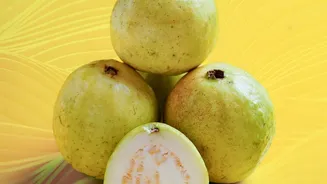
The Allahabad Safeda is arguably the most celebrated guava variety in India, and for good reason. It is renowned for its round shape, smooth yellowish-white skin, and creamy white flesh that is both sweet and pleasantly flavoured. This variety has a soft,
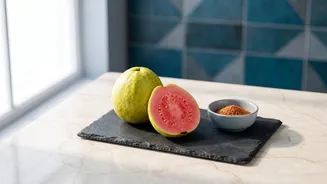
delicate texture and a relatively low seed content, making it a favourite for eating fresh, often with a sprinkle of black salt. Its excellent quality also makes it the preferred choice for processing into juices, jellies, and jams. Grown widely across the subcontinent, the Safeda has the highest production among Prayagraj's guavas, cementing its status as the face of the region's horticultural pride. Its popularity is such that it is often considered one of the best guava varieties in the world.
The Crimson Jewel: Allahabad Surkha
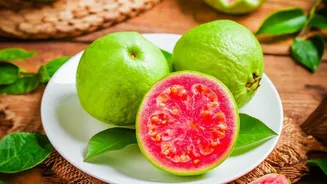
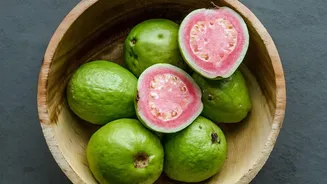
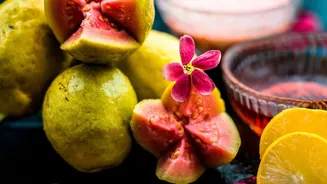
While Safeda is the most produced, the Allahabad Surkha is perhaps the most visually stunning and unique. This variety boasts an apple-red exterior and a deep, succulent pink flesh, which is why it's named 'Surkha', meaning red. Unlike the Safeda, the Surkha was granted the prestigious Geographical Indication (GI) tag in 2007-08, recognising its unique qualities tied to its specific origin. Legend has it that the proximity of the orchards to the Sangam—the confluence of the Ganga, Yamuna, and mythical Saraswati rivers—intensifies the pink hue of the fruit. Cultivated in the Doab region of the erstwhile undivided Allahabad district, this apple-shaped guava has a strong, sweet flavour and is known for its medicinal properties. Its distinctiveness has not only made it a local treasure but also a product with growing international demand.
The Supporting Cast of Cultivars
Beyond the two giants, Prayagraj's orchards are home to several other noteworthy varieties that contribute to its diverse guava portfolio. These include the 'Narma' and 'Patta', each with its own identity. Another significant type is the 'Chittidar', which is very similar to the Safeda but is distinguished by the presence of small pinkish-red dots on its skin. The 'Lalit' is another important variety, known for its attractive pink pulp, yellow skin, and high productivity. These lesser-known guavas play a crucial role in the local economy and provide a wider palette of tastes and textures for connoisseurs. They ensure that the region's reputation is built on a foundation of rich biodiversity, not just a single star player.
The Secret in the Soil
What makes Prayagraj's guavas so special? The secret lies in the unique soil and climatic conditions of the region. The alluvial soil of the Doab, where the Ganga and Yamuna rivers meet, is considered ideal for guava cultivation. This specific geography is credited with giving the fruits, especially the Surkha, their characteristic colour and sweetness. The area is so vital that the state government has declared blocks like Muratganj and Chail as a designated 'fruit belt'. Efforts under schemes like the National Horticulture Mission have helped support farmers with better agricultural practices and micro-irrigation to preserve this precious commodity, as increasing urbanisation threatens the traditional growing areas. The distinct flavour profile of Prayagraj's guavas is a direct result of this irreplaceable terroir.
Looking to the Future
To combat challenges like wilt disease and changing weather patterns, agricultural scientists are actively working to secure the future of Prayagraj's guava belt. New, improved varieties are being introduced to ensure the legacy continues. These include 'Red Diamond', with its deep red pulp and high sweetness; 'Awadh Bhushan', which boasts a longer shelf life; and 'Hisar Safeda', an improved, larger version of the classic Allahabadi Safeda. These varieties are bred to be more resilient to high temperatures, ensuring that production can be sustained. This forward-thinking approach, combined with a rich history, demonstrates a commitment to keeping Prayagraj at the forefront of guava cultivation in India and beyond. The demand is already global, with recent orders for Safeda and Surkha varieties coming from as far as England and Dubai.