






A New Dawn for Indian Space
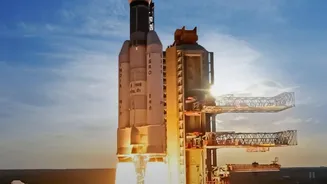
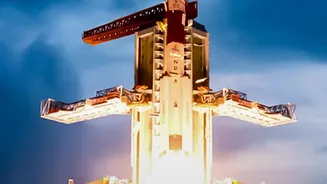
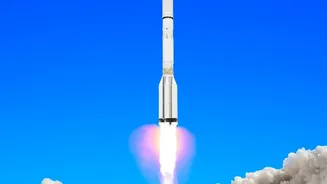
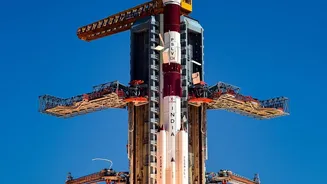
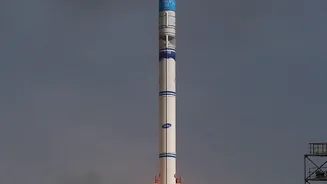
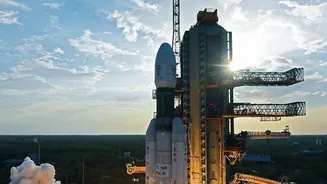
On July 18, 2026, Hyderabad-based startup Skyroot Aerospace made history. Its Vikram-1 rocket successfully lifted off from Sriharikota, delivering its payloads into low Earth orbit. This single event marked India as only the third country, after the US
and China, to have a privately developed rocket achieve orbital launch. The mission, codenamed 'Aagaman' (Arrival), was not just a win for Skyroot but a watershed moment for India's entire private space sector, which was opened up for private participation in 2020. For years, space was purely the government's domain. Skyroot’s success signals the start of a new era, where private firms can complement the work of the Indian Space Research Organisation (ISRO).
The Entrepreneur's Audacious Bet
Long before the Vikram-1 lit up the sky, Mukesh Bansal, the founder of Myntra and Cure.fit, made a crucial decision. In 2018, two former ISRO scientists, Pawan Kumar Chandana and Naga Bharath Daka, reached out to him on LinkedIn with an audacious pitch: to build rockets privately in India. At the time, no clear policy for private space activities existed, and the idea of a private company launching orbital rockets was seen as unrealistic. While most investors were focused on software and consumer internet, Bansal saw potential in the duo's passion and vision. He became Skyroot’s first and, for a time, only angel investor, putting in an initial ₹10 crore when the company was little more than a concept.
The Long, Patient Road to Liftoff
Bansal’s investment was an exercise in extreme patience. Rocket development is a capital-intensive, high-risk game with long timelines. Unlike software startups that can iterate quickly, building a launch vehicle requires years of painstaking research, development, and testing where a single failure can be catastrophic. Skyroot was founded in 2018, but its first major public milestone came in November 2022 with the successful suborbital launch of Vikram-S. That test was a vital stepping stone, proving their technology and building confidence. All the while, early investors had to hold their nerve, trusting in the team's engineering prowess and the government's promise to create a supportive regulatory framework through bodies like IN-SPACe. Bansal's faith was steadfast; he even injected an additional ₹2 crore during the COVID-19 pandemic to ensure the team could stay together.
From Vision to a Billion-Dollar Valuation
The successful Vikram-1 launch has turned that patient bet into a monumental payoff. Skyroot, now valued at over a billion dollars, is a leading player in the global small satellite launch market. The Vikram-1 rocket is designed to serve this growing market by offering dedicated, on-demand launches for small payloads, something its founders have likened to a "cab service to space". For Bansal, the financial return has been extraordinary, with his initial investment of about ₹12 crore multiplying nearly 60 times in value to over ₹700 crore, including partial exits. More importantly, his early and continued support provided the critical runway for Skyroot to navigate the challenges of deep-tech innovation.
A Blueprint for Deep Tech in India
The Skyroot saga offers a powerful blueprint for the future of venture investing in India. It demonstrates that backing ambitious, hardware-intensive 'deep tech' ventures can yield massive rewards, provided investors are willing to adopt a long-term perspective. For decades, Indian venture capital has largely shied away from sectors requiring patient capital. The success of Vikram-1 is a compelling argument for diversifying beyond consumer tech and software. It proves that India possesses the engineering talent to build world-class technology from the ground up and that there are visionary entrepreneurs ready to tackle hugely complex problems. This success story could unlock a new wave of investment into other deep-tech fields like advanced materials, robotics, and biotechnology.