



A Sweet Finding in Deep Space
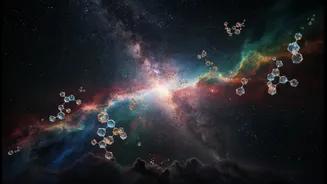
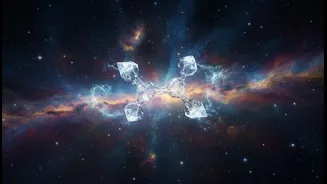
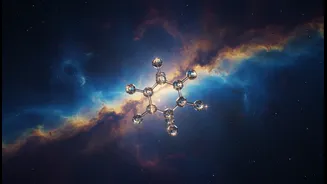
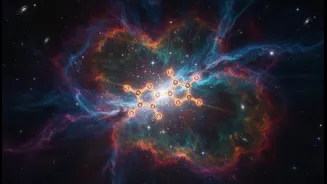
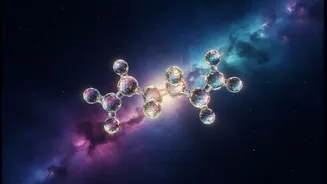
Astronomers have made a landmark detection of a 'true' sugar molecule floating in a vast cloud of gas and dust near the center of our Milky Way galaxy. An international team identified erythrulose, a four-carbon sugar, in a molecular cloud known as G+0.693−0.027,
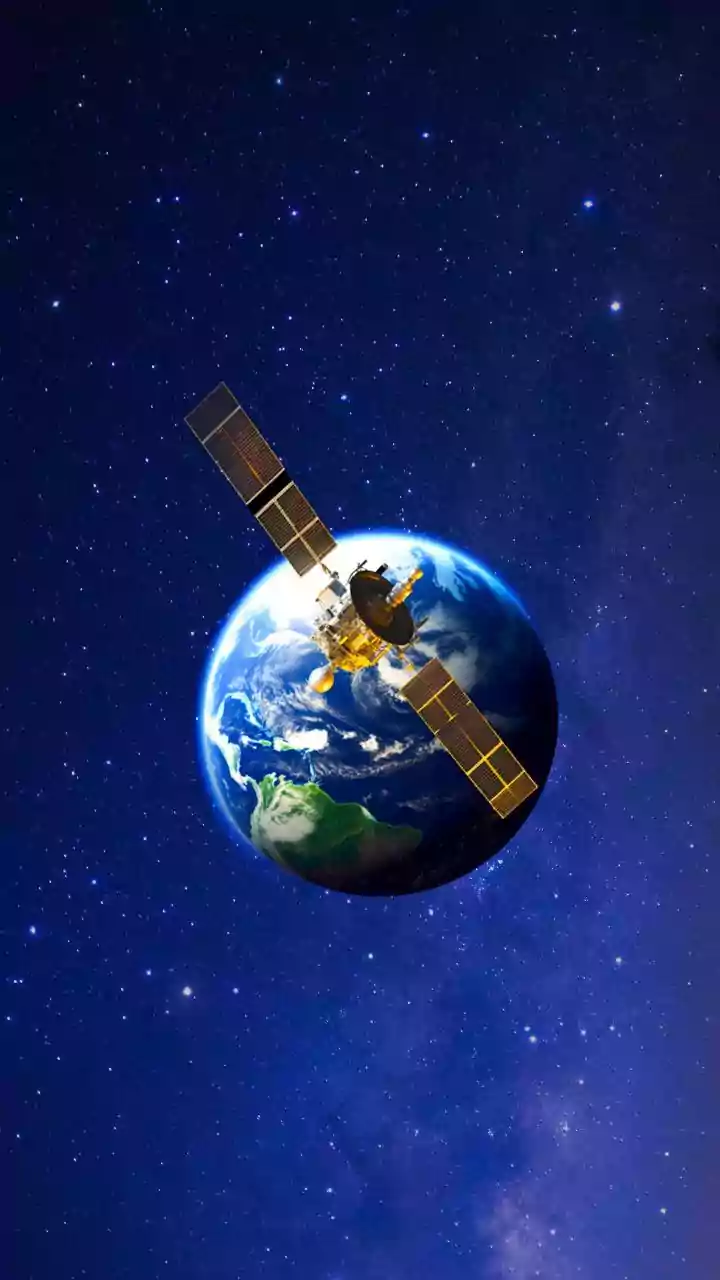
located approximately 27,000 light-years from Earth. This isn't just any cosmic dust bunny; these clouds are stellar nurseries, the very places where new stars and planets are born. Using powerful radio telescopes in Spain, scientists picked up the faint radio signals—a unique molecular fingerprint—emitted by the sugar molecules. The discovery, published in the journal Nature Astronomy, marks the first time a sugar with three or more carbon atoms has been definitively identified in the space between stars.
More Than Just a Sugary Treat
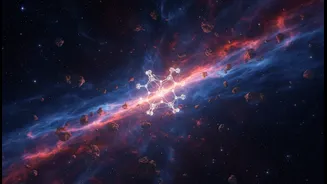
When we hear 'sugar', we might think of the kind we stir into our tea. But in biology, sugars are fundamental. They form the structural backbone of RNA and DNA, the molecules that carry the genetic instructions for all known life. While simpler molecules like glycolaldehyde (a two-carbon sugar-like molecule) had been found in space before, scientists distinguish 'true sugars' as having at least three carbon atoms. The discovery of erythrulose is significant because it belongs to the same chemical family as ribose, the five-carbon sugar that is a crucial component of RNA. This finding provides a missing link, showing that more complex sugars necessary for prebiotic chemistry can form naturally in the harsh environment of space, even before planets exist to host them.
From Stardust to Life's Recipe
So, how could a sugar molecule from a distant gas cloud be relevant to life on Earth? The leading theory is that the ingredients for life were delivered to our young planet billions of years ago. During a period known as the Late Heavy Bombardment, Earth was pelted by asteroids and comets. These cosmic deliveries could have carried a precious cargo of water and complex organic molecules forged in interstellar space. Scientists have previously found sugars like ribose, along with all the informational units of DNA and RNA, preserved inside meteorites and pristine samples from asteroids like Bennu and Ryugu. The detection of erythrulose freely floating in a star-forming cloud reinforces this idea, suggesting these vital ingredients are available right from the start as planetary systems form.
An Unexpected Chemical Pathway
Interestingly, the discovery of erythrulose challenges some existing ideas about how complex molecules form in space. The prevailing theory was that molecules grow one carbon atom at a time. However, the team found a surprising abundance of four-carbon erythrulose but no signs of simpler three-carbon sugars in the same cloud. This suggests that the sugar may have formed by combining two smaller, two-carbon molecules. This provides a new, more efficient pathway for creating complex organic structures in the cold, sparse environment of a molecular cloud. It shows that the universe has multiple ways of assembling the chemical toolkit needed for life, making these building blocks potentially more common than previously thought.
What's Next in the Cosmic Search?
This discovery is a major milestone, but it's not the final chapter. The ultimate prize for astrochemists is detecting ribose—the five-carbon sugar at the very heart of RNA—in interstellar space. Finding it would provide an even more direct link to the chemistry that may have kickstarted life on Earth. Scientists will continue to point their telescopes at molecular clouds like G+0.693−0.027, which are proving to be rich reservoirs of complex molecules. At the same time, analysis of pristine samples from asteroids, like those returned by NASA's OSIRIS-REx mission, will continue to provide a cleaner inventory of the solar system's early chemistry, free from earthly contamination. Each new molecule found adds another piece to the puzzle of our cosmic origins.