






The Thirst Behind the Cloud
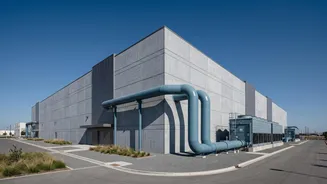
Every time you use an AI chatbot, generate an image, or use a cloud service, you are sending a request to a data centre. These facilities are warehouses packed with thousands of powerful computer servers that run 24/7. Like any high-performance engine,
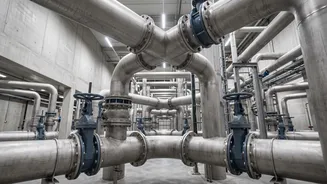
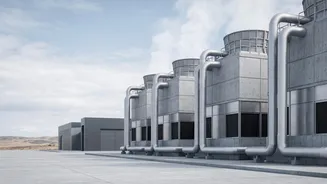
these servers generate a tremendous amount of heat. To prevent them from overheating and failing, data centres require constant cooling. While some use air conditioning, many of the largest and most efficient facilities rely on evaporative cooling systems. These systems are effective but consume enormous amounts of water, which is heated, turns to steam, and is then released, carrying heat away from the servers. A significant portion of this water is lost to the atmosphere in the process.
Why AI Drinks More Water
The computational demands of Artificial Intelligence are far more intense than traditional computing. Training large language models and processing complex AI queries require specialised, high-density processors (like GPUs) that run hotter than standard server chips (CPUs). This increased heat load means more cooling is needed. An AI-optimised data centre therefore operates at the more water-intensive end of the spectrum. Research has estimated that training a single advanced AI model can consume millions of litres of water. While this initial training is a one-time, intensive process, the bigger issue is the cumulative impact of billions of daily interactions with these AI models after they are deployed.
A Staggering Water Footprint
The numbers associated with data centre water usage are staggering. Globally, major tech companies like Google and Microsoft have reported double-digit annual increases in their water consumption, driven largely by their data centres. A single large-scale, or 'hyperscale', data centre can consume millions of litres of water per day, comparable to the water needs of a small town. Projections for India are particularly stark. According to a 2026 assessment by the Council on Energy, Environment and Water (CEEW), India's data centres consumed approximately 150 billion litres of water in 2025. With the country's AI and digital infrastructure boom, this figure is projected to more than double to 358 billion litres by 2030.
India's Digital Dilemma
India's ambition to become a global AI leader is colliding with its reality as a water-stressed nation. The country's data centre capacity is expanding rapidly, with major hubs concentrated in and around cities like Mumbai, Chennai, Hyderabad, and Bengaluru. Many of these regions already face significant water shortages. Bengaluru's data centres, for example, are located in a city that experienced a severe water crisis in 2024. This has led to friction on the ground. In places like Thane and Visakhapatnam, local communities have protested proposed data centres, fearing the additional strain on already limited water and electricity resources. In Visakhapatnam, activists have voiced concerns over a large project, arguing the city cannot spare water when rationing is already common.
The Search for a Cooler Future
The industry is aware of the challenge and is exploring solutions. One of the most promising is a shift from air and evaporative cooling to more advanced liquid cooling technologies. Methods like direct-to-chip cooling, where a liquid coolant circulates in sealed pipes right on the processor, are far more efficient at heat removal and can drastically reduce water use. Other strategies include building 'closed-loop' systems that recycle water instead of constantly consuming it, using non-potable sources like reclaimed municipal wastewater, and strategically locating data centres in naturally cooler climates to reduce the need for artificial cooling. For its part, Google has stated it will use advanced air cooling for its Visakhapatnam project to protect local water resources.