



A New Generation of Martian Aviators
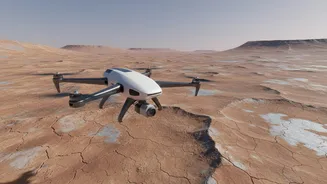
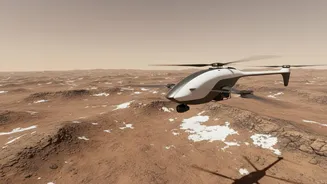
Building on the groundbreaking success of the Ingenuity helicopter, which proved powered flight was possible in Mars's thin atmosphere, the Skyfall mission represents a major leap forward. Announced in March 2026, this mission concept, developed by NASA's
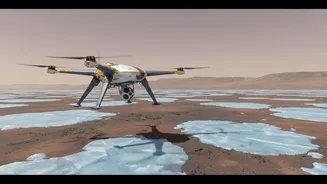
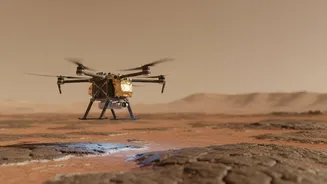
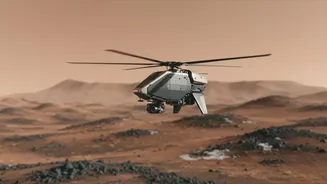
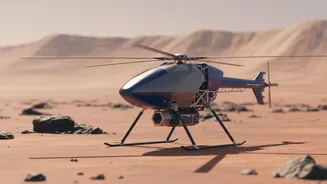
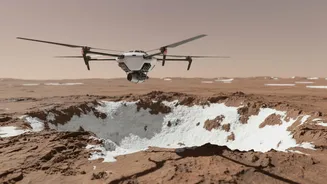
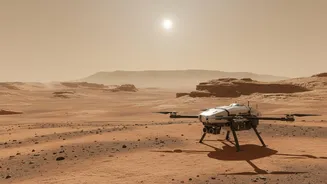
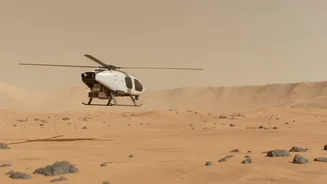
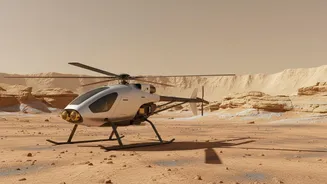
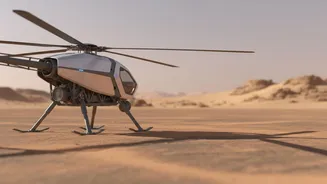
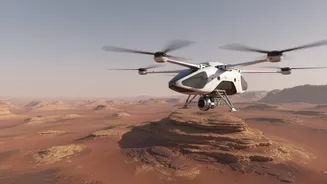
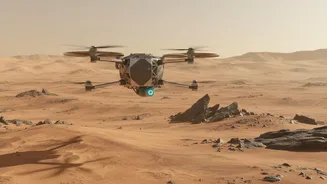
Jet Propulsion Laboratory (JPL) and AeroVironment, isn't about a single tech demonstration. Instead, it proposes sending a team of three highly capable helicopters to the Red Planet. These next-generation aircraft are designed not just to fly, but to perform complex science. Unlike their predecessor, which was a passenger on the Perseverance rover, the Skyfall helicopters are slated for a far more dramatic entrance. The mission plan involves a daring mid-air deployment—the 'Skyfall maneuver'—where the helicopters would fly themselves to the surface from a descending entry capsule, eliminating the need for a costly and complex lander.
Peering Beneath the Red Dust
So, how will these helicopters 'read' the subsurface ice? The answer lies in a suite of sophisticated instruments. The primary tool is a lightweight, ground-penetrating radar (GPR). In a clever design twist, the antenna for this radar is a flexible, fabric-based 'cape' that unfurls during flight. As a helicopter flies low and slow, this GPR will send radar waves into the ground, capable of penetrating up to 10 feet deep. These signals will bounce off underground layers, and by analyzing the returning echoes, scientists can create a detailed map of what lies beneath, including the tell-tale signature of water ice. This aerial perspective allows the helicopters to cover far more ground than a rover could, mapping vast swathes of terrain in detail that's impossible to achieve from orbit.
Why Ice is the Ultimate Treasure
The search for subsurface water ice isn't just an academic exercise; it's a critical step for future human exploration of Mars. Water is heavy and expensive to launch from Earth, so the ability to access it on-site—a concept known as In-Situ Resource Utilization (ISRU)—is a game-changer. Future astronauts could mine this ice and process it into drinking water, breathable air (by splitting it into hydrogen and oxygen), and even rocket fuel for the return journey home. Finding accessible ice deposits in regions that are also safe for landing is therefore a top priority. The Skyfall mission is designed to do exactly that: identify and certify landing zones that are not only flat and hazard-free but also rich in this vital resource.
More Than Just a Map
Beyond its primary goal of ice mapping, the Skyfall mission will collect a wealth of other valuable data. The helicopters will be equipped with near-infrared cameras to analyze the composition of the Martian dust and rocks, providing context for the radar findings. They will also carry advanced meteorological sensors to measure air temperature and wind speeds from various altitudes, giving us a much richer understanding of Martian weather patterns. Each helicopter will operate independently and can transmit its findings directly to orbiting spacecraft, a significant upgrade from Ingenuity, which relied on the Perseverance rover to relay its data to Earth. This autonomy allows for rapid, parallel scouting of large areas.
From Concept to Martian Skies
While still a concept, the Skyfall mission is rapidly taking shape. Engineers at JPL are already testing the advanced rotor blades needed to carry heavier scientific payloads in the thin Martian air. The mission has a proposed launch date of 2028, traveling to Mars aboard a novel spacecraft called Space Reactor-1 Freedom, which will itself be a demonstration of advanced nuclear electric propulsion. If successful, the Skyfall helicopters won't just create a map of Martian ice. They will create a roadmap for future exploration, guiding the first human pioneers to the resources they need to survive and thrive on another world, turning science fiction into operational reality.