






The Weightless Dance in Russian Skies
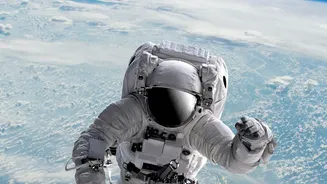
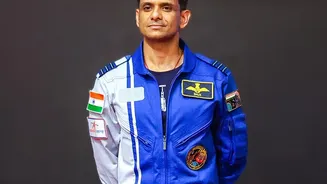
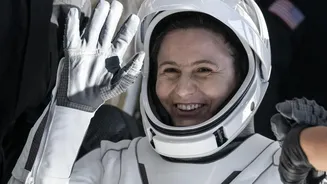
The experience of floating, often called zero gravity, is one of the most defining aspects of space travel. To prepare for this, India's four astronaut-designates—all decorated Indian Air Force pilots—underwent a critical phase of their training in Russia.
At the Gagarin Cosmonaut Training Center (GCTC) near Moscow, a place steeped in space history, the crew boarded a massive Ilyushin Il-76 MDK aircraft. This plane is no ordinary transport; it is a flying laboratory designed to simulate weightlessness. By executing a series of precise parabolic arcs—steep climbs followed by sharp dives—the aircraft creates brief periods of microgravity, lasting about 25 to 30 seconds each time. During these intervals, the astronauts can float freely inside the padded cabin, learning to control their movements, perform tasks, and acclimatise their bodies to an environment without up or down. Viral videos from this training captured the crew performing somersaults and moving in mid-air, a fascinating glimpse into the surreal physics of space.
Why Russia? A Legacy of Collaboration
The decision to train in Russia was built on a long-standing partnership in space exploration and Russia's unparalleled experience in human spaceflight. The GCTC in Star City has been the premier training ground for cosmonauts and international astronauts for decades. This is the same facility where Rakesh Sharma, the first Indian in space, prepared for his mission in 1984. The generic spaceflight training for the Gaganyaan crew, which concluded in March 2021, spanned 13 months and was incredibly comprehensive. It included not just parabolic flights but also punishing centrifuge sessions to simulate high G-forces during launch and re-entry, as well as survival training for various terrestrial conditions should their capsule land off-target. This foundational training provided the crew with the essential skills and physiological conditioning required before they could move on to the specifics of their own mission.
From Moscow to Bengaluru: The Next Chapter
While the Russian chapter was fundamental, the focus of the astronauts' preparation has since shifted back home. The Indian Space Research Organisation (ISRO) has established a world-class Astronaut Training Facility in Bengaluru, the hub of the Human Space Flight Centre (HSFC). Here, the training is highly specific to the Gaganyaan mission. The astronauts are working with full-scale mock-ups of their crew module, learning the intricacies of its systems, and rehearsing every phase of their planned three-day mission in orbit. The regimen includes everything from mastering flight procedures on advanced simulators to physical fitness routines that incorporate yoga. They have also conducted recovery drills with the Indian Navy in Kochi to prepare for their final splashdown in the Indian Ocean. This domestic phase ensures the crew is intimately familiar with the Indian-made technology that will carry them to space and bring them home safely.
The Road Ahead for Gaganyaan
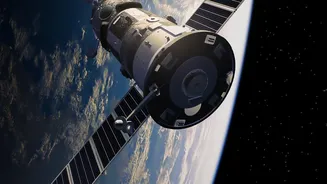
Every training exercise is a step toward the ultimate goal: launching three astronauts into a 400-kilometre orbit above Earth. Before that happens, ISRO is meticulously following a schedule of uncrewed test flights to validate every system. The first of these, the G1 mission, is slated for the latter part of 2026 and will carry a humanoid robot named 'Vyommitra' to test the life-support systems. ISRO has repeatedly emphasised that human safety is paramount, and the program will only proceed after every component—from the human-rated LVM3 rocket to the crew escape system—is proven to be reliable. In a recent update on November 24, 2026, the ISRO Chairman confirmed that preparations are in their final phase, rejecting reports of delays and stating that the rocket components are ready. The first crewed flight is anticipated to take place in 2027 or 2028, marking India's entry into a select group of nations with independent human spaceflight capability.