








The Race for AI Dominance
The world of artificial intelligence is fueled by one thing above all else: computing power. As AI models become more sophisticated, their demand for processing power grows exponentially. OpenAI, the company behind ChatGPT, finds itself at the forefront
of this AI arms race, where the biggest constraint is no longer just ideas, but the physical infrastructure needed to bring them to life. The company has reportedly increased its planned spending on compute power to $750 billion through 2030, a figure that highlights the immense resources required. This projection is a response to a critical bottleneck: the scarcity of advanced AI chips, which are essential for both training new models and running existing ones for millions of users.
A Vision Beyond Cloud Computing
Historically, tech companies have relied on cloud providers like Amazon Web Services and Microsoft Azure for their computing needs. OpenAI is no different, with massive contracts with Microsoft and others. However, the $750 billion projection signals a strategic shift. Relying on others is no longer enough. The plan reportedly involves not just renting capacity, but actively shaping and building the next generation of data centers and even influencing the creation of the semiconductor chips themselves. Some reports from early 2024 even detailed CEO Sam Altman's ambitions to raise trillions to build a network of chip fabrication plants, or 'fabs', to solve the supply-chain crunch at its source. While those larger figures remain speculative, the $750 billion projection shows the company is moving toward greater control of its own infrastructure destiny.
The Blueprint for Expansion
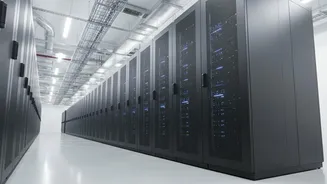
A key part of this strategy is taking direct ownership of the infrastructure build-out. One concrete example is 'Project Camellia', a planned $20 billion data center campus in Georgia. This single project is set to consume at least 3.2 gigawatts of power, an amount comparable to a small city and representing a huge portion of the state's planned new energy capacity. By leading the design and development, OpenAI aims to create facilities perfectly tailored to the unique demands of AI workloads, which require dense deployments of GPUs, advanced cooling, and unprecedented levels of electricity. This move from being a 'tenant' in someone else's data center to a 'landlord' of its own is a costly but strategic gamble to ensure it has the power it needs for years to come.
The Immense Cost of Creation
Building the physical world of AI is extraordinarily expensive. A single state-of-the-art semiconductor fab can cost between $10 billion and $20 billion and take three to five years to build. These facilities are among the most complex construction projects on Earth, requiring vast cleanrooms and highly specialized equipment that itself can cost hundreds of millions of dollars per machine. Furthermore, construction costs in the U.S. are significantly higher than in parts of Asia, adding another layer of financial pressure. OpenAI's plan to encourage the building of dozens of such fabs, whether through direct investment or partnerships, explains the almost unbelievable scale of its financial projections.
Feasibility and Financial Headwinds
While the ambition is clear, the financial reality is daunting. OpenAI is reportedly not yet consistently profitable, with losses in 2025 reportedly outpacing its multi-billion dollar revenue stream. This makes the company heavily dependent on its major investor, Microsoft, and its ability to raise enormous sums from other global investors. Concerns have been raised internally about the ability to pay for future computing contracts if revenue growth slows, highlighting the high-stakes nature of its spending. This massive investment is a bet that future AI advancements will create enough value to justify the astronomical upfront costs. For now, the entire AI ecosystem, from chipmakers to power companies, stands to benefit from this wave of spending, regardless of OpenAI's ultimate profitability.