







The Cult of Celluloid
In an age of digital everything, Christopher Nolan remains one of Hollywood’s most powerful defenders of shooting on physical film. For him, celluloid isn’t just nostalgia; it’s a tool for creating an immersive, high-resolution experience that digital can’t
replicate. His upcoming epic, ‘The Odyssey,’ starring Matt Damon, is the culmination of this philosophy, becoming the first feature film shot entirely using IMAX 70mm cameras. This format is the director’s holy grail, delivering unparalleled clarity, scale, and a unique aspect ratio that fills a viewer's entire field of vision. Nolan has long argued for the superiority of these large formats, which capture images on a negative that is exponentially larger than standard 35mm film, resulting in a richer and more detailed picture. This commitment means that for films like ‘The Odyssey,’ the creative choice of format dictates not just how the movie looks, but where it can be properly shown.
What Is 15/70mm IMAX?
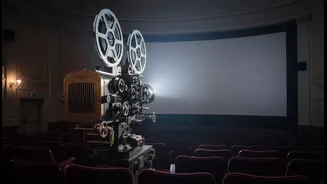
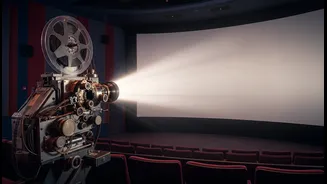
Not all IMAX experiences are created equal. The term you need to know is “15/70,” which refers to the film stock itself. The film is 70mm wide, but each frame is 15 perforations (the small holes on the side of the film strip) long. This creates a frame size that is roughly nine times larger than a standard 35mm frame. When projected, it creates an image of staggering size and quality with a unique 1.43:1 aspect ratio, which is much taller and more square than typical widescreen formats. This is what Nolan considers the ultimate cinematic presentation. However, projecting it requires a massive, complex piece of machinery that runs the film horizontally. These projectors are rare, expensive to maintain, and require specialised expertise that has dwindled since the industry’s shift to digital projection over a decade ago. The film print for a single movie can weigh over 200 kilograms and stretch for kilometres.
The Scarcity of Spectacle
The headline’s claim of just 41 theatres is spot on. Only a handful of venues worldwide have the specific 15/70mm IMAX projectors needed to screen ‘The Odyssey’ as Nolan intended. For his previous film, 'Oppenheimer,' the number was around 30, and while a few more have been added for 'The Odyssey', the number remains incredibly small. These theatres are concentrated in North America, with a few in Europe and Australia. This scarcity turns a movie screening into a pilgrimage for die-hard fans, with tickets for these exclusive showings selling out months in advance and cinephiles often travelling across states or even countries. The financial reality is that maintaining a 70mm film projector for just one or two major releases a year is not viable for most multiplexes, which rely on the flexibility of digital systems to show a wide variety of films.
The Indian Experience
For moviegoers in India, the situation is straightforward: you cannot see ‘The Odyssey’ in 15/70mm IMAX. While India once had several true 70mm IMAX screens in cities like Mumbai and Hyderabad, they have since been closed or converted to digital formats. Today, a 70mm projector exists at the Gujarat Science City in Ahmedabad, but it is used for educational documentaries, not commercial blockbusters. When you see 'IMAX' advertised in India, you are seeing a digital IMAX projection. The best available option for Indian audiences is IMAX with Laser, specifically 4K laser projection systems, which offer a brighter, sharper image and better contrast than standard 2K digital IMAX. While this is still a premium and impressive experience, it does not replicate the towering 1.43:1 aspect ratio and unique visual texture of the 70mm film print that Nolan champions.