



In the bustling symphony of Mumbai, few sounds are as comforting as the sizzle of a batata vada hitting hot oil. This isn't just street food; it's the city's heartbeat, a quick, affordable, and beloved breakfast for millions on the move.
The Birth of a Legend
The story of vada
pav begins in the 1960s, a time of significant social and economic change in Mumbai. Amidst the city's thriving textile mills, a street vendor named Ashok Vaidya had a simple but revolutionary idea outside Dadar railway station. He catered to the thousands of mill workers who needed a meal that was cheap, filling, and portable enough to eat on the run. He took a traditional Maharashtrian snack, the batata vada—a spiced potato fritter—and placed it inside a 'pav', a soft bread roll introduced to India by the Portuguese. With a smear of chutney, this humble creation became an instant success, providing a perfect, on-the-go meal for the working class.
Anatomy of an Icon
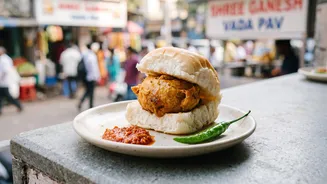
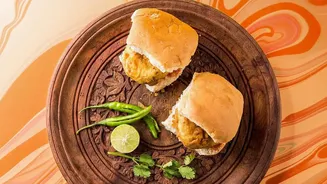
What makes a vada pav so irresistible is its perfect harmony of textures and flavours. At its core is the vada, a ball of mashed potatoes seasoned with mustard seeds, curry leaves, turmeric, ginger, garlic, and green chillies. This spicy mixture is then coated in a batter made from gram flour (besan), often with a touch of rice flour for extra crispiness, and deep-fried to a perfect golden brown. This hot, crispy vada is then nestled inside a soft, unsweetened pav. The final, crucial touch comes from the chutneys. Typically, a fiery dry garlic chutney and a fresh, herby green coriander chutney are slathered inside the bun, adding layers of pungent and zesty flavour. Often served with a fried green chilli on the side, it's a snack that hits every note: soft, crispy, spicy, and savoury.
The Great Equaliser
More than just a quick meal, the vada pav is a powerful social equaliser in a city of stark contrasts. From business tycoons stepping out of luxury cars to students, office workers, and daily wage labourers, Mumbaikars from all walks of life share a common love for it. At a vada pav stall, social and economic distinctions blur. Everyone stands together, united by the shared experience of enjoying this simple, delicious snack. This ability to bring people together is a significant part of its enduring appeal, making it a true symbol of Mumbai's inclusive spirit.
A Symbol of Resilience
The vada pav's popularity also became intertwined with the city's political landscape. During the 1970s, as Mumbai's textile industry faced turmoil and mill closures, the Shiv Sena political party championed the vada pav as a symbol of Marathi pride and entrepreneurship. They encouraged former mill workers to set up their own vada pav stalls, positioning it as an indigenous answer to Western fast food. This transformed the snack from mere sustenance into a statement of cultural identity and resilience. It became the 'common man's food', a symbol of the city's grit and ability to innovate in the face of hardship.
An EverEvolving Classic
While the classic recipe remains the gold standard, the vada pav has proven to be incredibly versatile. Today, you can find countless variations across Mumbai and beyond. Some vendors add a slice of cheese for a gooey, modern twist, while others experiment with different chutneys or even stuff the pav with a samosa instead of a vada. Chains like JumboKing have commercialised it, branding it as the 'Indian burger' and opening outlets across the country. Despite these innovations, the soul of the vada pav remains unchanged. It is a testament to its timeless design that even with new interpretations, the original continues to be the most cherished.