




A New Digital Brain for Lunar Science
NASA and IBM recently launched the NASA-IBM Lunar Foundation Model, one of the first open-source artificial intelligence models built specifically for lunar science. Unlike traditional AI, which requires building specialized algorithms for each new task,
this 'foundation model' is pre-trained on a vast trove of unlabeled data. This allows it to acquire a broad knowledge base that can be quickly adapted for various scientific jobs, from mapping craters to identifying unique geological features. Think of it less as a single-purpose tool and more as a versatile digital brain that can be fine-tuned by scientists around the world for their specific research needs, significantly speeding up the process of discovery.
The Power of Partnership
This venture continues a long-standing relationship between the two giants, who first collaborated to help put humans on the Moon during the Apollo missions. Today, the challenge is different. NASA has spent decades gathering an extraordinary amount of data about the Moon, with missions like the Lunar Reconnaissance Orbiter (LRO) collecting petabytes of information—more than all other NASA planetary missions combined. Sifting through this data manually is an immense task. By partnering with IBM, a leader in AI, NASA can leverage advanced technology to make its enormous scientific archives more explorable and useful. This collaboration is part of NASA's broader strategy to use AI to turn massive datasets into actionable knowledge.
Mapping the Moon in High Definition
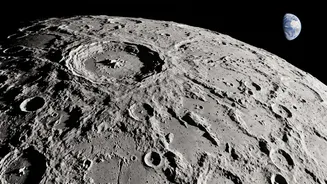
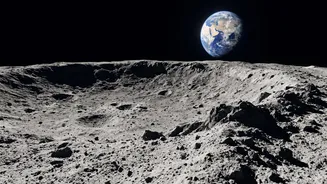
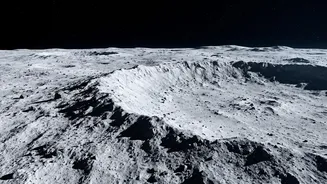
So, what can this new AI actually do? Its applications are crucial for the success of future missions, like those under the Artemis program. The model excels at identifying and mapping lunar features with incredible efficiency. For example, it can spot craters, which are essential for dating the lunar surface and planning safe landing sites for astronauts and infrastructure. The model can also identify unusual volcanic formations known as 'irregular mare patches', providing clues about the Moon’s thermal history. Crucially, it helps in the hunt for water ice, a resource vital for a future Moon base, by predicting where it might be stable in the Moon's permanently shadowed regions. The model has already proven to be more accurate and efficient than previous methods in several tasks.
Why Open-Source Is a Game Changer
Perhaps the most significant aspect of this project is its open-source nature. The model is publicly hosted on Hugging Face, a collaborative AI platform, with its full codebase available for anyone to use and experiment with. This democratizes access to cutting-edge tools that were once the domain of a few well-funded institutions. By making the model available to the global scientific community, NASA and IBM are inviting researchers, students, and enthusiasts worldwide to build upon their work. This approach not only accelerates lunar science but fosters a more inclusive and collaborative scientific community, a core goal of NASA's Open-Science Initiative.
From Lunar Dust to Earthly Impact
The Lunar Foundation Model is part of a growing family of AI models born from the NASA-IBM partnership, including the Prithvi models designed for Earth observation. These earlier models are used for tasks like monitoring disasters, tracking deforestation, and predicting crop yields. The technology and techniques developed for exploring the Moon have direct applications back on Earth. The ability to analyze vast amounts of geospatial data can help us better understand our own planet, manage resources, and respond to climate change. This synergy demonstrates how the quest to explore other worlds can drive innovation that benefits all of humanity, turning the challenges of space exploration into solutions for problems here at home.